Indian Passport Holders: Good News! Indian tourists can travel to 5 countries without visa, know complete information

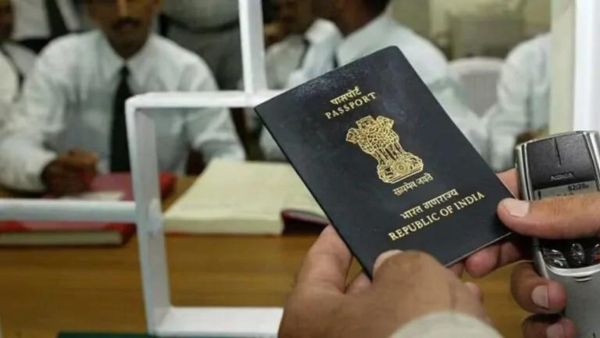
Today we will introduce you to 5 such countries, where you can travel without visa and it will be budget friendly for you. Travel Without Visa: Everyone is very fond of travelling. For this, he finds a destination with his family, friends or partner in different seasons and goes there and enjoys his trip. Among these, there are many people who dream of a foreign tour, but sometimes lack of visa, passport and money allows this dream to remain a dream. So, today we will introduce you to 5 such countries, where you can travel without visa and it will be budget friendly for you. To go here you just need to have an ID card. Moreover, you do not need any kind of paper work. Indonesia Indian tourists do not require a visa to visit Indonesia. One can stay here for maximum 30 days. There are many ancient temples and places full of natural beauty in this country, where you can explore. Let us tell you that the beauty of the beaches, beaches and natural environment here attracts tourists. Mauritius Mauritius is also included in the list of countries where Indian tourists can enter without visa. During this period you can stay in this country for 90 days. Here you can explore Belle Mare Plage Beach, Sir Seewoosagar Ramgoolam Botanical Garden, Black River Gorges National Park, Chamarel and local markets etc. which will be very budget friendly. Macau If you are dreaming of traveling abroad in a low budget, then you can go to Macau. Here you will get entry without visa, where you can stay for 30 days. One can visit Macau Tower, St. Augustino Church, Ruins of St. Paul, Macau Sarvil Fortress, Wahanisa Villa, Fisherman’s Wharf, etc. Fiji Moreover, you can visit Fiji without a visa. During this period you can stay there for 120 days. Let us tell you that this trip will also be budget friendly. During these days, you can also go to the local market, where you will get a chance to see and buy traditional clothes etc. Thailand Generally, Thailand is one of everyone’s favorite foreign tours, which is known for tourism, cultural diversity and natural beauty. Here you can explore places like Bangkok, Pattaya. Here you can stay for 90 days without visa.

Read more

Trending: Passengers' Double New Year Dream Shatter As 'Time-Travel' Flight Gets Delayed

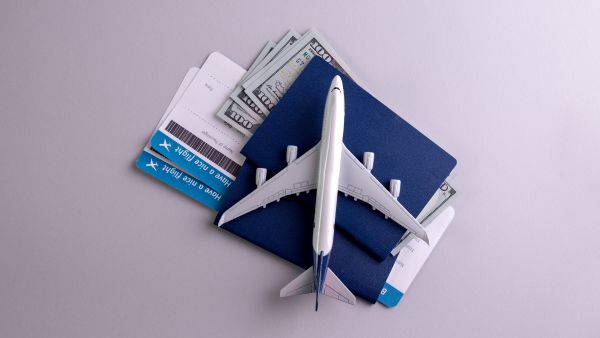
United Airlines came up with an exciting advertisement last week when they promised the passengers a unique experience of celebrating New Year’s Eve twice within 24 hours. The offer of time travel might initially seem like a scam, but it can actually happen when a flight passes over the International Date Line. United Airlines invited its customers to travel on the UA200 flight, which would depart from Guam at 7:35 am on January 1, 2024, and touch down in Honolulu, Hawaii at 6:50 pm on December 31, 2023. What makes the rare thing possible is the time gap between Guam and Hawaii, which is almost 20 hours. United Airlines announced the offer of double New Year through a post on X (formerly Twitter). Sharing details of the UA200 flight, the company wrote, “You only live once, but you can celebrate New Year’s Eve twice!” Lured by the offer, many customers had planned a trip to Hawaii on January 1 with the hope of ringing in the New Year for the second time. However, all of the passengers were left disappointed after the UA200 flight ended up being delayed for more than six hours. The plane ultimately jetted off from Guam at around 2 PM and landed in Hawaii a few minutes after midnight on New Year’s Day, according to tracker FlightRadar24. Keeping aside the unfortunate occurrence, the 4828km route from Guam to Hawaii has a remarkable record of punctuality as 95 per cent of flights usually arrive on time. The last time when a flight got delayed on this route was on April 20. According to the travel news site One Mile at a Time, the latest delay happened due to the flight’s previous two journeys.

Read more

How Opening of India's Longest Sea Bridge Will Change Travel in Mumbai Region

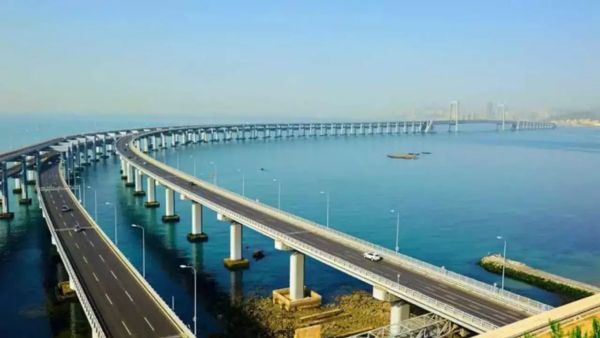
To be named the Atal Bihari Vajpayee Sewri-Nhava Sheva Atal Setu, the six-lane Mumbai Trans Harbour Link is expected to accommodate 70,000 vehicles daily. It will have a maximum speed limit of 100 kmph for vehicles. The Mumbai Trans Harbour Link (MTHL), also known as the Sewri-Nhava Sheva sea link, is all set for inauguration on January 12. Spanning nearly 22 Kms, this is India's longest and the world's 12th longest sea bridge. Apart from being a vital connector between Mumbai and Navi Mumbai, the MTHL will help save commuters travel time in many ways. How Will Mumbai Trans Harbour Link Help Mumbaikars Save Travel Time? The trans harbour link will begin at Sewri in south Mumbai, crossing over Thane creek and terminating at Chirle in the distant outskirts of Navi Mumbai. Once open, it will cut down the travel time between Mumbai and Navi Mumbai to 20 minutes, benefiting scores of people who commute on the route every day. Motorists can expect savings of nearly 30-45 minutes during peak hours when traveling from south Mumbai to the New Airport Influence Notified Area (NAINA) and the Mumbai-Pune expressway, as compared to the conventional routes via Eastern Freeway and Sion-Panvel highway. During non-peak hours, traveling from CSMT to the mouth of the Mumbai-Pune Expressway at Kalamboli junction takes 71 minutes via Sion-Panvel road. This time is expected to come down to 68 minutes with MTHL. The MTHL will also link Third Mumbai, the proposed city around Navi Mumbai International Airport, to Mumbai. The MTHL bridge will provide faster connectivity with proposed Navi Mumbai International Airport, JNPT Port, Mumbai–Pune Expressway, and Mumbai–Goa Highway.

Read more

India's First Submarine Tourism Initiative To Set Sail In Gujarat’s Dwarka

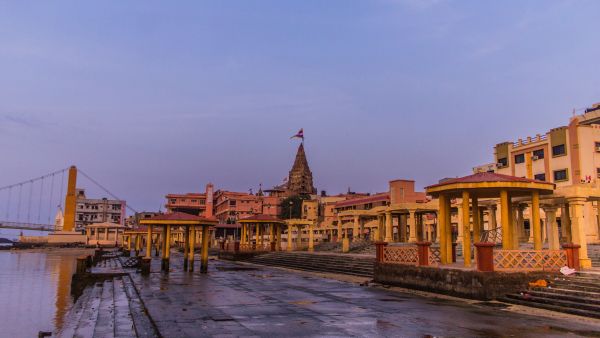
Much like submersible expeditions that take you to see the Titanic shipwreck, India too will soon foray into deep-sea tourism, with the Gujarat government announcing a venture with Mazgaon Dockyard Limited (MDL) to acquire a submarine, marking a significant move into the unexplored realm of underwater experiences. The state government has inked a Memorandum of Understanding (MoU) with Mazgaon Dockyard Limited (MDL) which will soon offer tourists unique glimpses of the pristine waters surrounding Bet Dwarka, a small island near the existing Dwarka, and the submerged ancient city of Dwarka in the Arabian Sea. Dwarka’s History The submerged city of Dwarka is of great relevance to Hindus and is believed to have been founded by Lord Krishna. As per the epic Mahabharata, this fortified city of Krishna spanned nearly 84 km and was situated at the confluence of the Gomti River and the Arabian Sea. It was, however, sunk after the death of Krishna. The submerged city has since fueled numerous archaeological investigations along the Indian shoreline, revealing submerged walls, pottery, sculptures, and artifacts believed to be from the ancient fortified city. According to reports, the official announcement of this pioneering submarine tourism endeavor is anticipated to take place during the Vibrant Gujarat Global Summit scheduled for January 10 in Gandhinagar. If all goes according to plan, the government aims to operationalize the project before Diwali in October 2024, making it India's first underwater tourism facility through a submarine. What You Can Expect The collaborative effort between the Gujarat government and MDL will see the construction of a 35-tonne submarine capable of carrying 30 passengers. The vessel will boast seating for 24 passengers in two rows, each equipped with windows to allow passengers a breathtaking view of the oceanic beauty at depths of 300 feet.

Read more

Visa-Free Travel and Smart Card Tips for Indian Jetsetters in 2024

2023 saw international travel across most parts of the world rebound strongly. With a fast-growing economy, increased disposable income, and a keen enthusiasm to explore and experience the world, the Indian traveler is now widely sought after by many countries, some of whom have rolled out the red carpet by offering visa-free travel to Indian passport holders. This is great news for last minute holiday planners who can choose from options like Sri Lanka, Thailand, Malaysia, Vietnam, and Nepal, among others, to visit without having to get a travel visa, as long as they have the essential passport (valid for at least six months beyond the planned departure date), a valid return ticket, accommodation bookings and travel insurance. The aforesaid countries also accept card payments, which further enhance the travel experience, making it hassle-free, safe and convenient. According to a recent survey conducted by Visa, the global leader in digital payments, 95% of Indian travelers said they intended to use their credit, debit or travel prepaid cards for payments at international travel destinations. Sridhar Keppurengan, Business Head, Cross Border Payments, India and South Asia, Visa, shares a few insights on how to make the most of credit cards in your international travels. 1. Enable your card for “International” transactions Do remember to enable your credit/debit card or even your travel prepaid card for international transactions. Specifically, enable the “International/ Online” feature for hotel and cab bookings before and during the trip, and the “International/POS and Contactless” option for shopping, dining and other card payments during the trip. 2. Look for travel promotions offered by your card Cards typically offer travel-related benefits, either in the form of free lounge access, discounts on flight bookings, travel insurance, car rentals, and entertainment options at your destination. These offers come in handy and enable you to go the extra mile, literally. Ensure your “Card limit” is fully available for use Make sure to have enough credit limit to cover most of the trip expenses. Many of us do not actively monitor the remaining limits for the month, so it’s a good idea to pay off your credit card bills before traveling to ensure the limit is fully available or prepay as you spend during the trip. Alternatively, you can request a card upgrade or a limit increase from your bank. Forex markup rates vs. Rewards While cards in general offer favorable currency conversion rates compared to currency exchanges, some cards offer lower forex markup fees in lieu of rewards, while others do not offer discounted forex markup fees, but provide generous rewards on international travel spends. Make your choice based on what works for you. 3. Tokenization – Tap to pay using your phone One has much to carry during a trip, and your smartphone can reduce the need to pull out your wallet as often. Tokenisation is currently available for Android phones in India, where your cards can be stored securely on high-end smartphones and wearables. At many countries, you can simply unlock your phone and tap it at a merchant’s point-of-sale (POS) device, or even at a Metro/Bus/Train gate or payment terminal to take a ride. 4. Pay in the destination currency Merchants and ATMs often give tourists the choice to complete a transaction in the destination currency or simplify it by displaying it in the tourist’s familiar home currency. However, cardholders must remember that the latter may come with an additional fee. Unless this is a feature you really prefer, you could opt to pay in the foreign currency. 5. Remember, the card is always in your “Control” One of the most compelling features of the Reserve Bank mandated card controls is just that – Offering cardholders greater “Control” over their cards! You can turn on or switch off card features as well as set spend and transaction limits on your mobile banking apps, thus adding extra layers of safety and security to your transactions. The digital payment’s Global Travel Intentions survey revealed that Indian travelers cited relaxation and the desire to explore and learn something new as key motivators for cross border travel. However, anxieties related to cash payments or handling foreign currencies are common concerns among travelers visiting a new country. Card payments are a great way to allay these anxieties, so vacations can truly be what they are desired to be – Relaxing and Rejuvenating!

Read more

Revolutionising Travel: Delhi-Dehradun Expressway to cut travel time between two cities to half – Here’s when it will open for public

Exciting news awaits road travelers as the construction of the six-lane Delhi-Dehradun Greenfield Access Controlled Expressway is in full throttle. This expressway, spanning 212 kilometers, commences from the Delhi-Mumbai Expressway near Akshardham in Delhi. According to media reports, the expressway will become operational sometime in March this year. The mega project is divided into four sections and will traverse through Shastri Park, Khajuri Khas, the EPE interchange at Khekra in Mandola, Baghpat, Shamli, Saharanpur in Uttar Pradesh, finally connecting Dehradun, Uttarakhand. The initiative, costing over Rs 10,000 crore, aims to significantly reduce travel time. Delhi-Dehradun travel time cut by almost half Once completed, the travel duration for Delhi to Haridwar or Dehradun in Uttarakhand will be cut to about 2 hours 30 minutes respectively, a considerable reduction from the current six to five hours journey. The expressway boasts a 12-kilometer-long wildlife elevated corridor, the largest in Asia, promoting free movement for wildlife. Additionally, a 340-meter tunnel near the Dat Kaali temple in Dehradun is designed to minimize wildlife disruption. Moreover, the Ganeshpur-Dehradun section features multiple animal passes, mitigating the risk of animal-vehicle collisions. Driving regional economy According to the authorities involved in the project, the corridor’s construction will not only stimulate the regional economy but also drive tourism. The comprehensive project encompasses the construction of five road overbridges, 110 vehicle underpasses, 76 kilometers of service roads in densely populated zones, along with a collective stretch of 29 kilometers of elevated sections and the establishment of 16 entry-exit points throughout the corridor The expressway has been engineered for a minimum speed of 100 kilometers per hour, with planned amenities every 25-30 kilometers. This development is anticipated to boost regional economic growth, particularly benefiting Uttarakhand’s tourism sector. The project operates under the EPC mode, promising enhanced road user experiences and heightened connectivity.

Read more