

Mexico: Army-run Mexicana airlines' first flight takes off to Tulum, aims to transform travel landscape
- Dec 27,2023
- Hindustan Times
Mexico launched its army-run airline Tuesday, when the first Mexicana airlines flight took off from Mexico City bound for the Caribbean resort of Tulum.It was another sign of the outsized role that President Andrés Manuel López Obrador has given to Mexico’s armed forces. The airline’s military-run holding company now also operates about a dozen airports, hotels, trains, the country’s customs service and tourist parks.Gen. Luís Cresencio Sandoval, Mexico’s defense secretary, said that having all those diverse businesses run by the military was “common in developed countries.” In fact, only a few countries like Cuba, Sri Lanka, Argentina and Colombia have military-run airlines. They are mostly small carriers with a handful of prop planes that operate mostly on under-served or remote domestic routes. But the Mexicana airline plans to carry tourists from Mexican cities to resorts like Cancun, Puerto Vallarta, Los Cabos, Zihuatanejo, Acapulco and Mazatlan. Flights appear to be scheduled every three or four days, largely on weekends. The carrier hopes to compete mainly on price: the first 425 tickets sold offered prices of about $92 for the flight from Mexico City to Tulum, which the government claimed was about one-third cheaper than commercial airlines. However, Mexicana's first flight didn't go according to plan. The company said Flight MXA 1788 had to be re-routed to the colonial city of Merida because of poor weather conditions in Tulum. After a wait, it finally took off again and arrived in Tulum about five hours after it took off from Mexico City, about double the usual travel time. Mexicana also hopes to fly to 16 small regional airports that currently have no flights or very few. For those worried about being told to “Fasten your seatbelt, and that’s an order,” the cabin crew on the Mexicana flight appeared to be civilians. In Mexico, the air force is a wing of the army. Sandoval said the airline began operations with three Boeing jets and two smaller leased Embraer planes, and hopes to lease or acquire five more jets in early 2024. López Obrador called the takeoff of the first Boeing 737-800 jet “a historic event” and a “new stage,” marking the return of the formerly government-run airline Mexicana, which had been privatized, then went bankrupt and finally closed in 2010. The airline combines Lopez Obrador's reliance on the military — which he claims is the most incorruptible and patriotic arm of the government — and his nostalgia for the state-run companies that dominated Mexico's economy until widespread privatizations were carried out in the 1980s. López Obrador recalled fondly the days when government-run firms operated everything from oil, gas, electricity and mining, to airlines and telephone service. He bashed the privatizations, which were carried out because Mexico's indebted government could no longer afford to operate the inefficient, state-owned companies. “They carried out a big fraud,” the president said at his daily morning news briefing. “They deceived a lot of people, saying these state-run companies didn't work.” In fact, the state-run companies in Mexico accumulated a well-deserved reputation for inefficiency, poor service, corruption and political control. For example, Mexico's state-run paper distribution company often refused to sell newsprint to opposition newspapers. When the national telephone company was owned by the government, customers routinely had to wait years to get a phone line installed, and were required to buy shares in the company in order to eventually get service, problems that rapidly disappeared after it was privatized in 1990. While unable to restore the government-run companies to their former glory, the administration depicts its efforts to recreate them on a smaller scale as part of a historic battle to return Mexico's economy to a more collectivist past. “This will be the great legacy of your administration, and will echo throughout eternity,” the air traffic controller at Mexico City's Felipe Angeles airport intoned as the first Mexicana flight took off. López Obrador has also put the military in charge of many of the country's infrastructure building projects, and given it the lead role in domestic law enforcement. For example, the army built both the Felipe Angeles airport and the one in Tulum. Apart from boosting traffic at the underused Felipe Angeles airport, the army-run Mexicana apparently will provide flights to feed passengers into the president’s Maya Train tourism project. The army is also building that train line, which will connect beach resorts and archaeological sites on the Yucatan Peninsula. The army, which has no experience running commercial flights, has created a subsidiary to be in charge of Mexicana.
Read more
Indonesia starts offering 5-year multiple entry visas to boost tourism
- Dec 27,2023
- timestravel
As per the latest development, Indonesia has recently announced a significant change in its visa policy, which aims to provide a boost to its tourism sector. This strategic move involves the introduction of a five-year visa policy, which will allow visitors to stay there up to a maximum of 60 days. If reports are to go by, Indonesia as the largest economy in Southeast Asia, is strategically positioning itself to become more appealing to global travellers. Effective from December 20, this visa policy signifies a departure from the traditional 30-day single-entry tourist visa. The extended duration and multiple entries are integral parts of the government's comprehensive efforts to stimulate economic growth, as per Immigration Chief Silmy Karim. An innovative aspect of the new policy is the facilitation of online applications, with the added convenience of payment through credit cards, streamlining the entry process for foreigners. Indonesia's decision to extend the visa duration aligns with its ambition to compete more effectively with neighbouring tourist destinations. The conventional 30-day tourist visa, which is extendable by an additional 30 days, often comes with limitations for those seeking more prolonged stays or multiple entries. As such, this new policy will not only accommodate their preferences, but will also facilitate their travel, potentially making Indonesia a more attractive option for international tourists. Reports add that as of December 8, the country had already welcomed nearly 10 million foreign tourists, thereby surpassing the initial target of 8.5 million for the year. Despite this accomplishment, Indonesia lags behind its neighbouring nations such as Malaysia, Thailand, and Vietnam in terms of overall tourist arrivals. Malaysia, for instance, recorded 26 million arrivals, Thailand 24 million, and Vietnam 11.2 million. To address this gap, Indonesia has set an ambitious target of attracting 40 million foreign tourists by 2025. In the competitive landscape of global tourism, neighbouring countries like Malaysia, Thailand, and Singapore are also actively revising their visa policies to attract visitors, especially from emerging markets such as China and India. By offering more flexibility and easing entry requirements, these nations are positioning themselves as desirable destinations for international travellers. Therefore, Indonesia's recent visa policy signifies a bold step toward fostering economic growth through tourism. By extending visa durations and facilitating online applications, the country aims to position itself as a more accessible and attractive destination on the global tourism map.
Read more
Driving positive change through sustainable and responsible tourism
- Dec 26,2023
- The Economic Times
As we wrap up 2023 and move towards a new year, it is noteworthy to see the hospitality industry’s significant shift towards sustainability and responsible tourism. Travellers are increasingly seeking eco-friendly accommodations and experiences that positively impact the environment and local communities. Recognizing the urgency to address environment and social challenges, the industry is prioritizing sustainable tourism as a crucial element the journey toward a better future. The global hospitality industry has undergone a tremendous shift towards growing and operating sustainability. Responsible tourism is taking centre stage, with travellers increasingly seeking eco-friendly accommodations and experiences that have a positive impact on the planet and local communities. As the hospitality industry acknowledges the urgent need to address environmental and social challenges, sustainable tourism has become a critical component of our journey towards a better future. The evolution of travellers: Driving change through conscious choices Travellers have evolved into conscious consumers who prioritise sustainability in their choices. The modern globetrotter seeks to align their travel experiences with eco-friendly values, from reducing carbon footprints to preserving cultural heritage. A global study commissioned by IHG Hotels & Resorts revealed that 83 per cent of consumers noted Our efforts to create a sustainable future The global hospitality industry has been actively responding to the changing consumer mindset for sustainable tourism by spearheading various initiatives and practices from energy-efficient technologies to waste reduction initiatives. In 2019, IHG Hotels & Resorts became the first hotel company to commit to replacing bathroom miniatures with full-size amenities across all brands – and we took this further in 2021 with a commitment to eliminate single-use items or move to reusable or recyclable alternatives across the guest stay by 2030. As one of the world’s leading hotel companies, IHG Hotels & Resorts embraces the responsibility and opportunity to make a positive To help our hotels achieve our sustainability goals, we deploy IHG Green Engage, an online environmental management platform. The platform is a global standard and helps our properties across the globe measure, report and manage their use of energy, water and manage waste, while simultaneously minimising their utility costs and environmental impact. More than 200 Green Solutions are available to help our hotels make greener choices and we recognize their progress through four levels of certification. IHG is also implementing initiatives such as introducing bulk amenities as a part of our goal to eliminate single-use plastic items and introducing AI-based technology to reduce food waste, and collaborating with local stakeholders to tackle water sustainability issues in areas of greatest risk. Additionally, we continue to work with the hotels to reduce carbon emissions in line with climate science. There is a big focus on improving energy efficiency across our properties by introducing an Energy Reduction Metric in 2022, which remains a key area of focus this year as well. Future outlook: Advancing sustainable and responsible tourism Embracing sustainability is not just a trend but a necessary step towards a resilient and thriving hospitality sector. We should envision a future where travelers are drawn to India not only for its rich cultural experiences but also for the authentic and eco-friendly adventures it offers. To achieve this vision, we must work collectively and prioritise sustainability in all aspects of our operations. Government bodies, hoteliers, suppliers, and travellers must work hand in hand to create a more sustainable and responsible tourism ecosystem.
Read more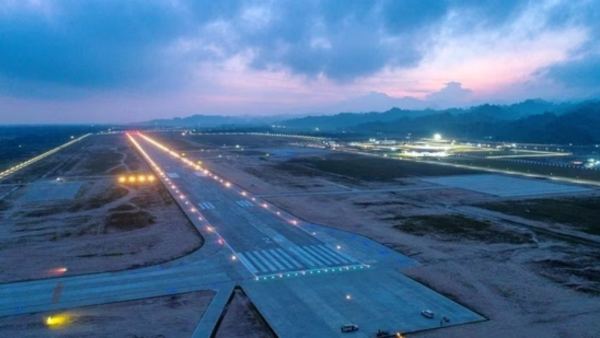
Itanagar skyline set to shine: Donyi Polo airport gains all-weather license for night operations
- Dec 26,2023
- Hindustan Times
The Donyi Polo airport in Itanagar is likely to start operations soon even during the night with the granting of an all-weather licence by the Director General of Civil Aviation (DGCA). Arunachal Pradesh Chief Minister Pema Khandu has announced about the all-weather licence, unlocking the possibility for night landings."So happy to share a significant milestone for Arunachal Pradesh! Donyi Polo Airport has been granted an all-weather licence, unlocking the possibility for night landings," Khandu wrote on X and posted the letter issued by the DGCA on the microblogging platform. The chief minister said the development marks a giant leap towards ensuring seamless air connectivity to the northeastern state and also opens new avenues for growth. The Donyi Polo airport in Itanagar, the first greenfield airport in Arunachal Pradesh, was inaugurated by Prime Minister Narendra Modi in November 2022. The name of the airport reflects the traditions and rich cultural heritage of Arunachal Pradesh and its age-old reverence for the sun ("Donyi") and the moon ("Polo"). The airport has been developed in an area of more than 690 acres, at a cost of over ₹640 crore. With a 2,300-metre runway, the airport is suitable for all-weather operations. The airport terminal is a modern building that promotes energy efficiency, renewable energy and recycling of resources, an official said. The development of the new airport in Itanagar has not only improved connectivity in the region but also acted as a catalyst for the growth of trade and tourism, thus providing a boost to economic development. Several airports in five northeastern states -- Mizoram, Meghalaya, Sikkim, Arunachal Pradesh and Nagaland -- have seen flights take off for the first time in 75 years, according to the official. Aircraft movement in the northeast has also witnessed an increase of 113 per cent since 2014 -- from 852 per week in 2014 to 1,817 per week in 2022.
Read more
5 dreamy hilly destinations for a perfect winter vacation
- Dec 26,2023
- Hindustan Times
Winter season is here. There is always something different at this time of the year as everything turns vibrant, joyful and warm! Exploring different places with vast landscapes anywhere in India would be just wonderful for you, especially with all the excitement in the air. It's worth it, whether it's for the stunning views of snow-capped mountains or the thrilling Christmas/New Year party on the beach in the best of weather. Explore our carefully selected list of the top 5 amazing destinations to visit in December to help you organise your travel plans for the month. (Unsplash/Yoav Aziz) Srinagar, Jammu and Kashmir: Srinagar is a contemporary water world, dominated by the Jhelum River, the tree-lined Nagin Lake and Dal Lake with its winding canals. Embrace your sea legs and take a daytime or sunset cruise on one of the wooden boats known as shikaras to really immerse yourself in the local way of life. On land, explore the terraced hillsides of the 400-year-old Mughal Gardens and shop for locally made items such as embroidered shawls and hand-woven silks designed by Emperor Jehangir for his wife.(Pixabay) Gulmarg, Jammu and Kashmir: Gulmarg, also known as the 'meadow of flowers', is a snow lover's dream come true. Situated in the centre of the Kashmir valley, Gulmarg receives abundant snowfall, making it a skier's and snowboarder's paradise. One of the world's highest cable cars, the Gulmarg Gondola, offers sweeping views of the snow-capped Himalayas.(File photo) Auli, Uttarakhand: Auli's natural beauty is abundant, with old oaks, pine trees, and apple orchards all over the place. In addition to skiing, you may take a variety of excursions across the Garhwal Himalayan ranges and take in the breathtaking vistas of the snow-covered peaks. Auli's glistening slopes and pristine surroundings make it a well-liked skiing resort in India. Nestled amidst the Himalayan range, Auli is a well-known hill town featuring multiple ski resorts, surrounded by apple orchards, oaks, and deodars. The Nanda Devi, Mana Parvat, and Kamat Kamet mountain ranges are situated there, 2800 meters above sea level.(Unsplash) Tawang, Arunachal Pradesh: The charming town of Tawang in Arunachal Pradesh is a pure and unspoilt tourist destination, offering a striking contrast of nature's colour palette, where deep emerald forests give way to stark icy peaks and snow-capped mountains. Tawang takes you on an adventure that begins with travelling over zigzagging and twisting mountain passes, including Sela, one of the highest motorable roads in the world, to reach the town. Surrounded by spectacular snow-capped mountain ranges to the east, Tawang is dotted with charming Buddhist temples.(Unsplash) Kufri, Himachal Pradesh: With its amazing winter snowscapes, Kufri is a great place for adventure seekers and hill station lovers. The town receives significant snowfall from January to March. The Himalayan Nature Park, a high altitude zoo with a variety of flora and fauna, is the most popular attraction in Kufri. Travellers visit Mahasu Peak to enjoy the spectacular views of the snow-capped mountain station. Kufri's breathtaking beauty and abundance of tourist attractions have earned it the reputation of being one of the most beautiful hill stations in the country.
Read more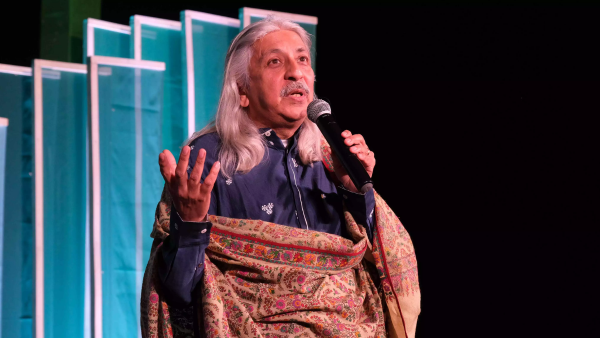
India finally paying attention to business brought in by festival tourism: Sanjoy K Roy
- Dec 26,2023
- The Economic Times
“The minute you start investing within an economy in control of creative industry, or sector space, you are upskilling the gig economy. And the gig economy, because of the nature of the beast that it is, it trickles. The impact of trickling down is huge,” said Sanjoy K Roy, Managing Director, Teamwork Arts in an interview with ETTravelWorld. If it were the traditional fairs at one point that attracted community participation with underlined business prospects, organised festivals that aim to draw the youth and specific interest groups are beginning to gain attention and grow in terms of scale in recent times. Corporate support to such events has been an important factor in promoting culture as well and boosting tourism growth. Curated festivals like Mahindra Kabira that is held on the ghats of River Ganga in Varanasi or The Sacred Amritsar or even Jaipur Literature Festival (also put together by Teamworks Arts) are only case in point of an opportunity to combine cultural immersion with tourism prospects. “There’s a huge opportunity here. If you marry built heritage with cultural tradition and bring in a sense of hospitality, food, etc, it is only automatic that tourism will grow. The minute you bring in people from anywhere else into a city or a place, you are contributing to the local economy,” said Sanjoy K Roy, Managing Director, Teamwork Arts. Recently, the Mahindra Kabira Festival concluded its seventh immersive and experiential two-day sojourn on the historic ghats of Varanasi. The gathering of delegates from across the world were treated to a programme of classical, folk and fusion music and insightful discourse inspired by Kabir, heritage walks, temple visits, Ganga Arati, boat rides, and a range of food curated daily with signature local Banarasi dishes. “For Mahindra Kabira, as many as 400 people flew in from different places. Once they reached, beyond attending the festival, they sought retail therapy, explored local foods and the city, used local transportation, including boats at the ghats. So at the very grassroot, you are contributing and giving back to the economy,” he said. And once the wheel is set rolling comes upskilling driven by quality. This is followed by investment in doing it differently, he added. “The minute you start investing within an economy in the control of creative industry, or sector space, then you are upskilling the gig economy. And the gig economy, because of the nature of the beast that it is, it trickles. The impact of trickling down is huge,” he said, adding, “Which is the reason there was a study which said for every million dollars of investment into the built economy, you create nine to 11 jobs. For every million dollars of investment into the creative industries or sector, you create 111 to 117 jobs. So the impact is huge.” In terms of revenue generated, according to Roy, a festival such as this brings in an additional revenue of INR 10-15 cr over the five days to the city, over and above that generated through tourism. Teamwork Arts organises 33 odd festivals in as many 72 cities, shared. In terms of government participation, Roy said the festivals need not necessarily be inspired or subsidised by the government but are definitely supported by the local economy. This is where the role of the corporates comes in. A healthy support from the corporates allows one to create much larger and interesting ecosystems, he shared. Commenting on the corporate versus the government support to such large-scale cultural events, Roy said the ideal situation is when you have all three coming together – the government, locals and the corporates. “The government is responsible for good policies to be able to enhance this. So whether it is at the taxation level, or the city planning level, or whether just in the cleaning up of the city or the streets, it would all make a difference,” he said. Citing the example of political will, he shared that a noticeable shift in the experience can be seen from after PM Narendra Modi took over the task of cleaning up Varanasi. “We have seen a complete transformation over the last 10 years. The Prime Minister had a specific person appointed from the city who ensured that the place remains clean even after the event is over. This speaks volumes of the will of the authority to encourage such events and the concurrent development,” he said. Listing out the challenges, Roy pressed the need for a proper policy especially when it comes to permissions. A lot of which, he said, in the current scenario, relied on the administrative support and will.
Read more