
India emerges as key tourist market for German Tourism with 85% growt in 2023
- Nov 16,2023
- The Economic Times
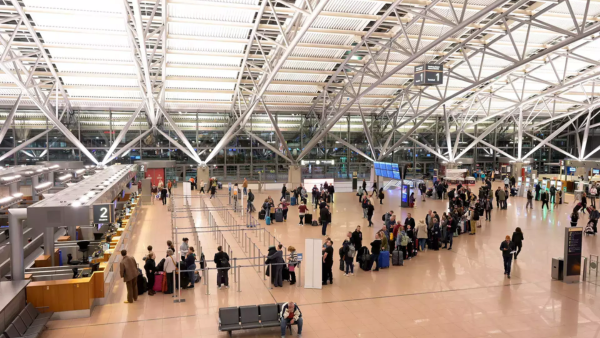
Germany has witnessed a noteworthy recovery in tourism, with a 496 per cent increase fr January to August 2023 compared to the same period in 2021. Although the overall figure remain 15 per cent below the pre-pandemic levels of 2019, the substantial 85 per cent increase from 2022 indicates Germany's enduring appeal.Germany's commitment to eco-friendly tourism is yielding significant results, with a remarkable 85 per cent growth in Indian visitors recorded from January to August 2023. The surge in incoming flights from India positions the country as a crucial and potential market for German tourism. Renowned for its enchanting natural landscapes and rich cultural experiences, Germany has witnessed a noteworthy recovery in tourism, with a 496 per cent increase from January to August 2023 compared to the same period in 2021. Although the overall figures remain 15 per cent below the pre-pandemic levels of 2019, the substantial 85 per cent increase from 2022 indicates Germany's enduring appeal.The German National Tourist Board (GNTB) revealed that India contributed significantly, with a staggering 496 per cent rise in visits during the first eight months of 2023 compared to 2021. India's contribution to overnight stays further solidifies its position as a vital Asian market for inbound tourism to Germany, providing 541,579 stays in the first half of 2023. To sustain this positive momentum, GNTB reintroduced its 'Simply Feel Good' campaign, offering valuable tips on environmentally friendly travel practices to reduce carbon footprints. This campaign aligns with the preferences of conscientious travelers, emphasizing Germany's commitment to eco-friendly travel experiences.Simultaneously, the 'Embrace German Nature' campaign, executed through collaborations with influencers and digital campaigns in the Indian market, has successfully highlighted Germany's diverse natural wonders. Ranging from protected landscapes and cycling trails to rejuvenating spas, the campaign resonates well with Indian travelers seeking immersive wilderness experiences. As visitors increasingly prioritize environmental consciousness and cultural exploration, Germany stands poised to offer enriching experiences to a growing audience. The positive growth signals a promising future for Indo-German tourism relations.
Read more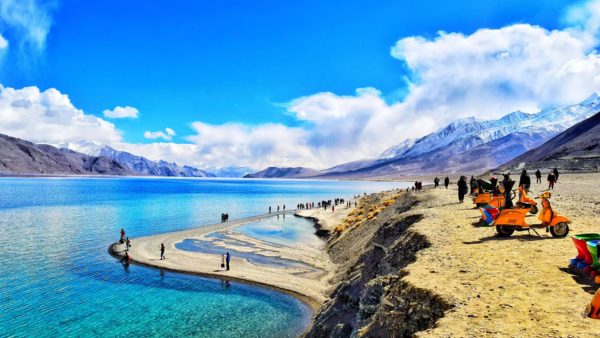
From obstacles to opportunities: Ho India looks to grow Border Tourism
- Nov 16,2023
- The Economic Times
Despite efforts, remote border areas in India struggle with the provision of basic amenitie and efficient transportation options for potential tourists. This gap limits tourist footfall a also obstructs the growth of related commercial activities. Urging a comprehensive approach, the sector experts that ETTravelWorld spoke to emphasised on revising policie effective marketing, simplified visa structures, investment in infrastructure, better accessibility, among others. India's foray into border tourism confronts a spectrum of challenges despite the government's proactive measures. The Vibrant Villages Programme, aimed at opening up northern border villages to tourists, and engagement with public representatives by the Ministry of Home Affairs are notable initiatives. However, the vast tourism potential in India's border regions remains largely untapped, primarily due to the inherent remoteness and associated accessibility challenges of these locations. Infrastructure deficiencies pose a significant hurdle. Despite efforts, remote border areas struggle with the provision of basic amenities and efficient transportation options for potential visitors. This infrastructure gap not only limits tourist footfall but also obstructs the growth of related commercial activities.Security considerations loom large, as outlined in the 2022 White Paper on Border Tourism by PHDCCI. India shares its borders with multiple nations, some of which face security challenges, potentially dissuading tourists. The intricate task of balancing security measures without deterring potential visitors remains a critical aspect that demands nuanced solutions. According to Yogesh Srivastav, Director General at WTC Business & Industry Association, the diverse cultural landscape of border areas is another challenge. Managing this diversity requires careful consideration to respect local traditions and prevent potential conflicts. Cultural sensitivity issues, therefore, form a substantial barrier to the seamless promotion and sustainability of tourism activities in these regions. Regulatory hurdles further complicate the landscape. The need for permits and adherence to complex security procedures hampers the ease of doing business in border tourism. In light of these multifaceted challenges, Srivastav said there is need for a comprehensive approach to address issues ranging from security concerns to cultural sensitivities, to foster sustainable and inclusive growth in these often-overlooked areas. Strained geopolitical relations, particularly with China and Pakistan— countries sharing the majority of India's international borders—present a formidable challenge to the nation's border tourism, according to Tsering Namgyal, Chairman of IATO Ladakh Chapter. This geopolitical tension has resulted in adverse conditions and imposed various restrictions on opening borders for tourism. Namgyal points out, "Our strategic defense policies are also not soft when it comes to border tourism."Supporting this perspective, Nasir Shah, Chairman of IATO Jammu & Kashmir Chapter, underscores the importance of fostering positive relations with neighboring countries as a foundational step for advancing border tourism, particularly in Jammu & Kashmir. Shah cites the successful Suchetgarh Border Tourism in the Jammu region as an example. However, he notes setbacks following the 2016 Pulwama attack, leading to the suspension of initiatives due to strained relationsbetween India and Pakistan. On the brighter side, Namgyal said that India has immense opportunities to improve the conditions of economically marginalised and geographically isolated villages along the borders as many of our border villages in India and habitats have immense tourism potential. In line with this, he urged the Government of India to reassess and take decisive steps to revise border policies, specifically by opening restricted border areas for tourism. Namgyal suggests that such a bold move would not only enhance border security but also revitalise the economy of border communities, creating new job opportunities. Namgyal also draws attention to successful international case studies, such as the China-Vietnam border and cross-border tourism initiatives, as well as effective border tourism policies between South AfricaBotswana and Zimbabwe, offering valuable lessons for consideration for India. Suresh Singh Budal, CEO of Pacific Asia Travel Association- Nepal Chapter, emphasised that India serves as the dominant source market for regional tourism, just as it is a major market for other international destinations. . Acknowledging India's significant influence in both inbound and outbound tourism, Budal highlighted challenges hindering seamless travel.The hurdles of travel formalities and permission limitations significantly impact tourists, especially those from Bangladesh and Nepal, says Budal, who face constraints like double-entry visa limitations for land entry into India. This constraint has inflated air travel costs, leading potential travelers to seek alternatives beyond regional borders. Post-pandemic, surging long-haul flight fares further discourage regional travel. Budal urges a reassessment of travel arrangements, emphasizing the government's crucial role in simplifying formalities to encourage regional tourism. Challenges for travel businesses, agents: As mentioned in the PHDCCI White Paper, the travel agents and hospitality providers encounter a series of challenges when promoting Border Tourism packages. Security concerns, often compounded by the need for permits, can deter potential tourists, making it crucial for travel agents to stay informed about the security situation and guide clients through permit procedures. Infrastructure limitations, such as inadequate roads and accommodations, require collaboration with local authorities for improvement. Overcoming risk perceptions, complex documentation, and cultural sensitivity adds to the complexity travel agents face. Moreover, the lack of information and limited marketing attention to border destinations, as mentioned by Srivastav, intensify challenges. As a Ladakh-based operator, Namgyal highlights challenges faced by From obstacles to opportunities: How India looks to grow Border Tourism, ET TravelWorld https://travel.economictimes.indiatimes.com/news/destination/states/from-obstacles-to-opportunities-how-india-looks-to-grow-border-tourism/105250… 7/14 local tour operators, including inadequate infrastructure, poor mobile connectivity, and border permit hurdles for foreign travellers. The absence of primary health centers with proper oxygen facilities at key border tourist destinations like Pangong Lake, Hanle, and Tsomoriri Lake tourist circuits, compounds operational difficulties in Ladakh, he said. From J&K perspective, Shah stated that currently, there are no existing challenges; potential difficulties may arise once Border Tourism activities commence. “Presently, Suchetgarh Border Tourism is the sole ongoing initiative from the industry perspective. The government should further focus on improving road infrastructure, establishing stadium stands resembling the model ofWagah Border, creating toilet blocks and the inclusion of multiple restaurant chains which would contribute to the overall development of Border Tourism facilities,” he suggested. To enhance Border Tourism packages, Srivastav suggested strategic approaches for travel agents and hospitality providers. These include creating educational tours focusing on history and geopolitics, ensuring safety measures through collaborations with local security forces, and implementing robust emergency response plans. Collaborating with local communities and promoting responsible tourism practices helps share benefits with locals. A strong online presence, effective use of social media showcase, providing specialised training to guides and staff will also contribute to the overall appeal of Border Tourism packages. Opportunities:Border destinations in India, once secluded, now draw large numbers of travellers. Official data underscores the potential of Border Tourism to uplift local communities, especially in regions like the northeast and Jammu and Kashmir (J&K). The Line of Control, from Bangus Valley to Tangdhar, offers stunning landscapes and diverse opportunities for adventure and leisure tourism. Sikkim leverages border tourism with attractions like Nathu La pass, stimulating the local economy and prioritising eco-tourism. Arunachal Pradesh embraces tourism, generating income through homestays and guiding services while showcasing its diverse tribal cultures. Nagaland's Hornbill Festival, internationally acclaimed for tribal traditions, not only generates income but also promotes cultural preservationIn Meghalaya, increased tourism has not only generated employment but also spurred infrastructure development in remote areas. Hanle, near the Chinese border in Ladakh, is a successful example of Border Tourism, renowned for its night observatory and the distinction of being India'sfirst "Dark Sky sanctuary." Formerly restricted, plans are underway to allow foreign tourists to spend nights in Hanle. Overall, Ladakh has also witnessed a massive tourism surge in the last few years, creating jobs and boosting local industries. “Local villagers have embraced tourism by opening small homestays here, along with the restaurants, and engaging in guiding services, transforming the economic landscape. Similarly, Thang, a petite village near Turtuk in the Nubra Valley on the Pakistan border, has opened its doors to tourists, significantly boosting the economy, employment opportunities, and offering a glimpse of rich cultural traditions to the outside world,” noted Namgyal. Meanwhile, the Wagah Border in Punjab, continues to draw in 25,000 daily visitors for its flag-lowering ceremony, embodying the shared history between India and Pakistan. When asked how Punjab is making efforts to push border tourism, Rakhee Gupta Bhandari, Principal Secretary Tourism & Cultural Affairs, Govt of Punjab, shared, “In addition to Atari, we have other notable borders like Hussainiwala and Sadqi, and we have ambitious plans for their development. While work has already begun at Atari and Wagah, we're planning for Sadqi as well. The current government is actively promoting these three borders in various ways.” “We are fortunate to have these borders, and when I say 'fortunate', I'm referring to the immense tourism opportunities they offer,” she added. Learning from the best; paving the way aheadTaking a cue from initiatives like the Schengen Area in Europe, which enables passport-free travel across 26 countries, and the Nordic Passport Union allowing free movement, Budal sees them as valuable examples for India. He emphasises the need for neighboring countries like Bangladesh, Sri Lanka, Nepal, Bhutan, and Pakistan to facilitate easy travel within the region. Budal suggests introducing promotional packages, shifting focus from international destinations, and actively promoting the unique experiences India offers to specific target markets. He emphasised the need for heightened collaboration among National Tourism Organisations (NTOs) at the private business level, advocating for partnerships and relationships between businesses. Stressing the importance of collaboration beyond government levels, he urged dialogue between the Nepalese government and India, India with Bangladesh, and other neighboring countries to revitalise the region's products and services. Srivastav emphasised that nations excelling in border tourism prioritize infrastructure, effective marketing, simplified visas, and cultural exchange. He suggests India should draw inspiration from these strategies, particularly investing in roads, airports, and accommodations for improved accessibility. A significant portion of the population residing near J&K borders resides below the poverty line, shared Shah, stressing on the need to do a robust and enthusiastic promotion of tourism activities. “With this, the local communities surrounding these borders will undoubtedly experience benefits, leading to economic growth.”
Read more
Air India enters into interline partnership with Alaska Airlines for 32 destinations in US, Mexico, Canada
- Nov 16,2023
- Business Today
Tata-owned Air India has established an interline partnership with Alaska Airlines (AS) under which Air India passengers will be able to avail seamless connections to and from 32 destinations across US, Mexico, and Canada, a report on CNBC TV18 said. Some of the prominent destinations within the network of Alaska Airlines are New York JFK, Newark-New Jersey, Washington DC, Chicago, San Francisco, Vancouver, and others.The agreement encompasses bilateral interlining, enabling both airlines to offer tickets for travel on each other’s networks. Besides this, the two airlines have agreed upon a Special Prorate Agreement, under which Air India will be allowed to offer ‘through fares’ for routes covering Alaska Airlines’ network. A Through Fare is the fare charged from the point of boarding to a destination that is not on the current route.At present, Air India operates 47 non-stop flights per week, which connect Delhi, Bengaluru, and Mumbai to five major US cities -- New York, Newark, Washington DC, Chicago, and San Francisco. On Friday, Air India CEO and managing director Campbell Wilson said the airline will introduce over 400 new weekly flights during the upcoming winter season, with approximately 50 per cent of the flights serving international destinations.In an internal communication to the employees, Wilson said the northern winter 2023 schedule will see it take deliveries of more than 30 new aircraft and add more than 400 weekly flights. "We (Air India) have just entered the northern winter 2023 schedule, which will see us take deliveries of more than 30 new aircraft and add more than 400 weekly flights. Around 200 of these new flights will be on international routes, adding frequencies and connecting new city pairs between India and North America, Europe, and Southeast Asia," Wilson wrote in the mail, which was reviewed by Business Standard. At present, the airline runs approximately 2,900 weekly flights, with roughly 32 per cent dedicated to international routes, according to aviation analytics firm Cirium's data. "We are also hoping to launch four new international stations in the next few months, of which we will share more details in due course, as well as more interline partnerships. On the latter, our latest partner is Alaska Airlines, which will help expand our connectivity to multiple destinations in the US, Mexico, and Canada," Wilson noted. As per the Winter Schedule 2023, the airline claims that it has ramped up frequency by 25x weekly flights (each way) on eight international routes across points in Southeast Asia, United States, and Europe. This includes the weekly frequencies on Mumbai-Singapore increasing from 7x to 13x, Delhi-Bangkok from 7x to 14x, Delhi-Dhaka from 7x to 12x, Delhi-Newark (New Jersey) from 3x to 4x, Delhi-San Francisco from 10x to 11x, Delhi-Washington D.C. from 3x to 4x, Delhi-Copenhagen from 3x to 4x, Delhi-Milan from 4x to 5x, Mumbai-Doha from 7x to 9x.Air India has also opened flights on four new routes, including Bengaluru-Singapore, Kochi-Doha, Kolkata-Bangkok, and Mumbai-Melbourne. The company recently announced that it is starting flights on Bengaluru-Melbourne, Mumbai-Melbourne, Kochi-Doha and Kolkata-Bangkok routes.
Read more
Adapting to post-pandemic travel trends: Reshaping hospitality in a new era
- Nov 16,2023
- The Economic Times
The growing influence of business-leisure travellers, the rise of the digital era, hyperpersonalisation, and sustainable practises, have shaped the future of the industry in this era.In the wake of the global COVID-19 pandemic, the hospitality landscape has undergone a remarkable transformation. As the world has embraced a new normal, the hospitality industry has been quick to adapt, responding to the evolving needs and expectations of travellers. The growing influence of business-leisure travellers, the rise of the digital era, hyper-personalisation, and sustainable practises, have shaped the future of the industry in this new era. Now, the industry is roaring back, and is laser-focused on its growth. According to recent reports, the Indian hospitality sector continued to witness Year-on-Year (Y-o-Y) growth in performance in Q2 2023, primarily driven by the significant rise in Average Daily Rate (ADR) of 16.4 percent over Q2 2022, resulting in a RevPAR growth of 15.4 percent. Adversity often leads to innovation, and the pandemic acted as a catalyst for the industry to evolve and embrace new travel trends. It's not just hospitality that's changing—it's an entire philosophy of service, experience, and accommodation. Some of the major trends that are redefining the hospitality sector are:Cleanliness has always been paramount in the hospitality industry, but the post-pandemic world has elevated it to an art form. Today's travellers seek not just comfort but also the assurance of a meticulously sanitised environment. Accommodations that once prided themselves on luxury linens and elegant furnishings now underline their rigorous cleaning protocols. It's no longer a matter of choice; it's a commitment to the safety and well-being of every guest. Embracing contactless conveniences The check-in desk, once a bustling hub of activity, has given way to a more discreet and efficient counterpart: contactless check-in. The power to access rooms, request services, and interact with the property rests comfortably within the guests' smartphones. This subtle shift reflects the industry's responsiveness to the contact-free expectations of the modern traveller. It's about more than convenience; it's about minimising risk while maximising experience. Flexibility as a guiding principle. The shift towards flexible stays is being propelled by evolving traveller preferences and requirements. Modern travellers are in pursuit of distinctive and tailor-made encounters that transcend conventional hotel services. While leisure and business travellers comprise a vital part of the current guest categories, the industry has expanded to appeal to new types of consumers such as digital nomads, locals looking for staycations, people who travel frequently for work, and more. No caps on length of stay, co-working spaces, fitness centres, and amenities suited for longer visits, including kitchenettes, washers and dryers, and in-room coffee machines, complement today’s flexible lifestyles. Technology: From convenience to experience Technology has always been a silent partner in hospitality, streamlining processes behind the scenes. But now, it steps into the spotlight as an enabler of the guest experience. From contactless check-ins and payments to the use of artificial intelligence, hotels and other hospitality establishments are embracing technology to enhance guest experiences. This year, we can expect to see more technological innovations, such as virtual and augmented reality and the integration of smart devices in hotel rooms. From 360-degree views of restaurant ambiance to interactive tourist information maps, these technologies enable customers to engage with and visualise destinations before making their booking decisions. Where work meets wanderlust.The walls that once separated work from leisure have crumbled, reshaping the very notion of travel. Remote work has untethered us from cubicles and office routines, and accommodations are adapting to this new reality. The rise of remote work-friendly stays—spaces that seamlessly blend the comforts of a home with the efficiency of an office —reflects the hospitality industry's commitment to catering to both professional needs and personal aspirations. Sustainability: From trend to responsibility A growing consciousness of our impact on the planet has spurred a shift towards eco-friendly accommodations and practices. Hotels are embracing renewable energy, reducing waste, and involving local communities in their endeavours. Sustainable travel isn't just a checkbox —it's a legacy of care we leave behind. Hybrid hospitality: The next chapter We stand at the threshold of a new chapter: the era of hybrid hospitality. It's a term that encapsulates the convergence of trends—cleanliness, technology, flexibility, remote work-friendly spaces, and sustainability. This amalgamation isn't a haphazard collection; it's a holistic philosophy that envisions an accommodation as more than just a transient abode. It's a space that seamlessly adapts to the ever-changing needs of the modern traveller—a place that offers the comfort of a home, the functionality of an office, and the services of a hotel. In conclusion, as the winds of change sweep through the hospitality industry, it's evident that we're not merely adapting to trends; we're fundamentally redefining the way we serve and engage with our guests. These shifts herald a new era—one that fuses innovation with tradition, safety with experience, and convenience with aspiration. This journey is more than a response to external pressures; it's a conscious choice to evolve and grow, ensuring that the hospitality we offer today is a reflection of the desires and dreams of the travellers of tomorrow.
Read more
Viking to Launch New Ship for Mekong River Cruises
- Nov 16,2023
- Travel Pulse
Viking announced the addition of a new ship to its river fleet in Southeast Asia. Designed for the Mekong River, the Viking Tonle will join its sister ship, the Viking Saigon, which debuted in 2022, sailing between Kampong Cham, Cambodia and Mỹ Tho, Vietnam, as part of Viking's popular 15-day Magnificent Mekong itinerary. The ship is under construction and scheduled to debut in October 2025. To meet the strong demand for its Mekong River voyages, Viking has added sailing dates in 2025 and has opened the 2026 season for booking. "The rich history and culture of Vietnam and Cambodia have always made the Mekong River a fascinating destination for our guests," said Torstein Hagen, Chairman of Viking. "With the addition of an identical sister ship in 2025, we look forward to introducing even more curious travelers to the treasures of this fantastic region in the years to come." Built specifically to navigate the Mekong River, the new three-deck Viking Tonle will host 80 guests in 40 outside staterooms. Featuring the clean Scandinavian design for which Viking is known, all staterooms have hotel-style beds and floor-to-ceiling sliding glass doors with a Veranda or French Balcony. Guests will also enjoy a spa and fitness center, pool and open-air sky bar on its upper deck. During the 15-day journey, guests will explore the cultural treasures of Vietnam and Cambodia with 16 guided tours. Hotel stays in Hanoi, Siem Reap and Ho Chi Minh City (Saigon) bracket an eight-day Mekong River voyage. Guests can explore the Old Quarter of Hanoi and attend a performance by Apsara dancers, taste the distinctive fresh ingredients from bustling markets and local restaurants, wander the Khmer temple complex of Angkor Wat, a UNESCO World Heritage Site, visit Ta Prohm, where jungle vines embrace ancient ruins and see the sights of Phnom Penh by cyclo rickshaw.
Read more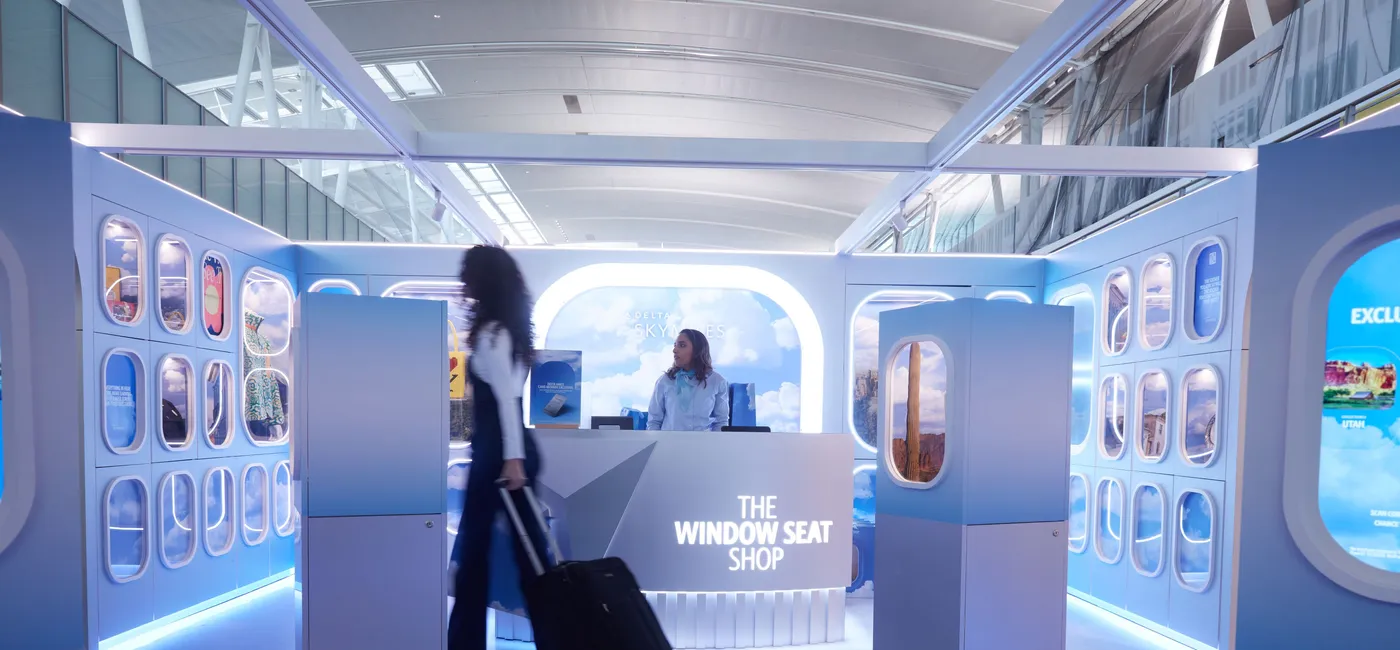
Delta Air Lines Opens Window Seat Shop at New York City’s JFK Airport
- Nov 16,2023
- Travel Pulse
Bringing window shopping to a new level, Delta has announced the opening of its Window Seat Shop at John F. Kennedy’s International Airport’s Terminal 4 (JFK). Beginning November 14, Delta’s Window Seat Shop a curated pop-up experience featuring coveted artisan gifts and goods from around the world will bring Delta SkyMiles Members a taste of what the airline’s top destinations have to offer while giving shoppers the opportunity to earn Medallion Qualification Dollars (MQDs) toward 2025 Status. Customers can purchase goods at the JFK terminal and online at delta.com/windowseatshop. The online shop is exclusively available to Delta SkyMiles American Express Card Members on Tuesday, November 14, 2023, and opens to all members on Wednesday, November 15. “Our SkyMiles Members’ loyalty means everything to us, and experiences like these are representative of what our Members can continue to expect from us,” said Delta Chief Marketing Officer Alicia Tillman. “We want them to feel the same excitement we feel when we’re able to give them the opportunity to have new experiences, whether that’s taking them directly to an adventure in a new location or bringing the best products from some of our top destinations to inspire future adventures directly to them.” Featured curated products include: 1. Skateboard decks from WAFFLESNCREAM, Nigeria’s first skateboarding company aiming to support young Africans interested in extreme sports and skate culture. 2. Quirky, cult-favorite real-bread lamps from Japanese artisan Yukiko Morita. 3. Hand-crafted pottery from Brazilian gallery Elysian Collective. 4. Natural, organic skincare from CHILL Cape Town, inspired by the botanicals of South Africa and the African continent. Members can also shop for experiences, like the opportunity to hit the court at Madison Square Garden for a shootaround before settling into a courtside seat for a New York Knicks game or flying a private hot air balloon over the southwestern U.S. The Window Seat Shop opened with help from New York icon Carmelo Anthony, a Platinum Medallion Member and small business owner. “I’ve been a Delta customer and SkyMiles Member for years, so being part of The Window Seat Shop’s opening event was a full-circle moment,” said Carmelo Anthony. “As a business owner myself, I’ve always felt that my values and Delta’s have aligned. The Window Seat Shop is a perfect example of how Delta helps to elevate small business owners from around the world, while also providing one-of-a-kind experiences for its SkyMiles Members.” Shoppers who are not SkyMiles Members can join the program in person at JFK and online at delta.com/joinskymiles.
Read more