
Middle East Airline Fleet Replenishment Slowed By Program Delays
- Nov 09,2023
- AIN
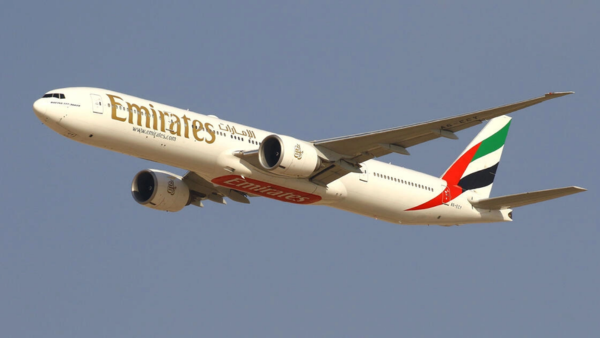
Today, 795 Airbus aircraft fly in service in the Middle East region compared with 727 for Boeing. Delays to major new airliner programs continue to hamper plans for fleet renewal at Middle Eastern carriers. Since the outbreak of Covid, the region's fleets have remained static but as demand for air travel approaches pre-pandemic levels, one might anticipate an increase in new orders as 2023 draws to a close. For instance, as of October 12, Emirates flew 260 aircraft—119 Airbus A380s and 144 Boeing 777s, including 123 777-300ERs and 11 freighters. Back in September 2019, Emirates operated 268 aircraft and awaited delivery of another 231. Qatar Airways now has accumulated about 255 Airbus and Boeing aircraft and awaits another 195 on order, while Etihad Airways’ fleet consists of 90 aircraft from the same airframers, with a further 105 units on order. According to Rob Morris, global head of consultancy with Cirium, delays to the 777X program represent a key to fleet replacement, if not expansion, at the region’s major airlines. “Fleet growth at Emirates, Etihad, and Qatar is inextricably linked to the 777X and A350 programs,” he told AIN. “The timeline for certification of the former remains uncertain and the A350 backlog at all three typically includes small scale in 2024 with concentration from 2025 onwards. Hence, fleet growth is likely to remain limited until greater progress is evident on the B777X.” Dan Taylor, head of consulting with IBA, said that Middle East commercial passenger air travel broadly had returned to pre-Covid levels, despite some significant global headwinds affecting the industry. “Airlines are facing unprecedented challenges including high oil prices, supply chain delays and cost inflation, continuing geopolitical instability, and elevated interest rates,” he told AIN. “On the positives, airlines have been able to successfully increase fares as demand for air travel remains strong for now. Delays at the OEMs are having a knock-on impact on airlines’ ability to grow capacity at expected rates, but the production volumes are set to return to 2018 levels by mid-2025.” With an expected available seat kilometer (ASK) growth of five percent per year forecast for the next five years, airlines have accumulated a large order backlog to both support the growth and to replace aging aircraft, Taylor believes. There are currently 1,169 commercial aircraft on order for Middle East operators; the largest backlog resides with Emirates, which carries orders for 120 Boeing 777s, 30 Boeing 787s, and 50 Airbus A350s, Taylor explained. Big Two OEMs Struggle to Support Growth According to Richard Aboulafia, managing director of AeroDynamic Advisory, Emirates needs to replenish its fleet but delays have confounded that plan. “Everyone else thinks smaller is beautiful: the A350, the B787, and, in Qatar’s case, intriguingly, A321s. When you talk about the challenge and the importance of scaling down and being more flexible in your route network with smaller jets, it really hits you just how badly the aircraft delivery delays damage or delay that strategy," he commented. In his view, turning around the situation will prove critical in the ongoing contest between the world's top two airframers. “It could be an irony or just bad news, but Boeing has the better widebody strategy," he said. "Then again, Boeing's execution has been much worse. If you win with the A350, you’re probably on safer ground, and more likely to get your replacement jets faster. Will [the B777X arrive in] 2025? Will it be 2026? Who the heck knows? And then the B787, of course, has had problems all of its own. Obviously, the line shut down. It sure looks like it’s a much smaller number of airlines cheering for the return of widebodies.” Aboulafia believes Emirates’ fleet in two years’ time will not look radically different from its current form. “This is a maturing market that faces a lot of competition from upstart players, and whether it’s Turkish or Ethiopian [Airlines], everybody, most of all Air India, wants some of their traffic back,” he said. “Emirates did amazing work expanding over the past 15 to 20 years, going after other people’s traffic, and now they want it back. "Then, of course, there’s the giant elephant in the corner: Crown Prince Mohammed bin Salman, the Saudi wealth fund, and whether they can turn Saudi Arabia into another giant Dubai. That’s a long-term thing. Nevertheless, if you’re in strategic planning at Emirates, you’ve got to be just a little bit terrified.” Low-cost Carriers Seize New Opportunities IBA’s Taylor said the region had seen the rise of low-cost carriers (LCCs) in recent years with the emergence of Flydubai, Air Arabia, and, more recently, WizzAir. “LCCs now make up 13 percent of the overall region’s capacity (ASKs) and with large numbers of aircraft on order; this will only increase,” he said. “LCCs in Europe and North America have been very successful in competing with legacy carriers on mature routes as well as creating new markets such as in the price-sensitive leisure segments." According to IBA, in the Middle East, much of the traffic growth to date has centered on long-haul transfer, using its prime location to connect many global destinations. The UK-based consultancy now sees the LCC airlines creating and growing new domestic and intra-region routes aided by better inter-government traffic rights agreements. As a result, regional LCCs have expanded their fleets rapidly with record aircraft orders. “Flydubai has 137 Boeing 737 types and Air Arabia 120 Airbus orders, for example," Taylor explained. "Airbus is leading the order count in the region with a total of 594 ahead of Boeing’s 560 aircraft. Airbus already has 795 aircraft in service in the region against 727 aircraft for Boeing and the new aircraft orders will only increase the lead.” Cirium’s Morris said Flydubai has illustrated the potential for the co-existence of LCCs in the Gulf region, with its network complementing Emirates rather than cannibalizing it. “The significant order backlog for LCCs across the region—Jazeera, SalamAir, Flyadeal, FlyNas, Air Arabia, and others—indicates the potential in other parts of the region for the LCC model to stimulate and fulfill local demand in the medium- and longer term,” he commented. In Cirium's view, the freighter market in the region has not mirrored Airbus’s dominance with passenger jets. “Airbus does have some progress with Etihad’s A350F commitment but that is relatively small scale when compared to Qatar’s 777-8F order,” Morris said. “It does seem likely that Boeing will retain freighter dominance in the Middle East for a while longer yet.” Saudi Arabia to Challenge Gulf Rivals The anticipated launch in 2025 of the new national carrier, Riyadh Air, and plans for fleet expansion by existing players such as Saudia, Flyadeal, and FlyNas would facilitate the arrival of a higher number of visitors and enable tourism growth, according to Al Jazira Capital's recent analysis of the Saudi Arabian travel and tourism sectors. Plans call for new carrier Neom Airlines to serve the new residential developments in the Kingdom’s northwest region. “A national aviation strategy, which was launched last year, aims to connect 250 direct destinations [compared with today's roughly 100] to and from the Kingdom’s airports, and triple air traffic to 330 million passengers, bringing the Kingdom to first place in the Middle East by 2030,” the Al Jazira Capital report concluded. “Under the aviation strategy, the government seeks to boost investments of more than $100 billion and transport 500 million passengers by the end of the current decade.” Upon launch, Riyadh Air announced in March 2023 its agreement with Boeing for a sales agreement covering seventy-two 787-9 Dreamliners. Of those, 39 involve a firm order, with a further 33 on option. “In addition, Riyadh Air is presently in discussions with both Airbus and Boeing for a large order of narrowbody aircraft,” Abdullah Aljawini, CEO of Dawli Aerospace in Riyadh, told AIN. “An agreed-on delivery schedule between airlines and aircraft manufacturers is legally binding, and variations from the new aircraft delivery dates can result in substantial discounts in favor of the airline.” Riyadh Air CEO Tony Douglas anticipates that Riyadh Air’s first flight will depart in mid-2025 and connect the Saudi capital city to more than 100 destinations around the world by 2030. “We are running on schedule, having already completed several defining milestones,” he told AIN. Initially, Riyadh Air will operate from the city's existing King Khalid International Airport before later moving into the new King Salman International Airport, which the kingdom anticipates opening in 2027. Given the big-spending moves made in the sporting domains of football, boxing, and golf, by Saudi entities, the airline might have to pay top dollar to attract pilots and other staff, although Douglas chose not to address that point directly. “Riyadh Air will become a prominent driver of employment, creating 200,000 job opportunities directly and indirectly and we are recruiting the brightest minds and talent to be part of the airline,” he commented. “We’ve been very encouraged by the response and have already had over 900,000 applications from within the kingdom and around the world. Over the next few months, we will be running a series of recruitment roadshows with a view to recruiting our first intake of cabin crew by the end of 2024, with the first of those joining in the first quarter of 2025.” However, Aboulafia said Riyadh Air could find the supply-demand curve a challenge even in such a deep-pocketed market as Saudi Arabia. “This is an enterprise that’s starting up right in the middle of the worst aviation industry inflation we’ve seen in decades,” he said. “First and foremost, it’s pilot wages, but it’s pretty much wages for any skilled workers in the aviation segment. It’s labor. Beyond that, I think it’s the first time we’ve seen any hope of aircraft price increases for decades—in real terms, not in fake ‘here’s the list price’ terms, but genuine terms. You’re actually talking about things firming up, which of course you have to do because otherwise the OEMs are just going to take a bath"
Read more
Will India's airlines continue their recordbreaking buys at the Dubai Air Show?
- Nov 09,2023
- ET Travel World
Never before have airlines placed such outsize orders as they did this year, breaking one record after another. Indian airlines alone made close to 1,000 purchases, but the action was spread across the industry. From Irish low-cost carrier Ryanair Holdings Plc to newcomer Riyadh Air and stalwarts like United Airlines Holdings Inc., buyers from around the globe raced to get their hands on as many planes as they could before delivery slots run out. There’s more to come. The Dubai Air Show kicks off next week, promising to send 2023 off with a flurry of orders for Airbus SE and Boeing Co. The planemaking duopoly has already racked up commitments that stand at the highest since 2014 as they head into the biennial event, where some of aviation’s biggest deals have been signed in the past. Local champion Emirates is set to make the biggest splash, with President Tim Clark saying he’s in the market for more widebody jets. Back in June, Clark said he’d order as many as 100 to 150 aircraft, looking at both Airbus and Boeing’s largest models. Joining the action will likely be Riyadh Air, the new Saudi airline building a fleet from scratch. The company, run by former Etihad Airways Chief Executive Officer Tony Douglas, is putting the final touches on what it called a “sizable” order involving narrowbody planes, after previously buying 787 Dreamliners from Boeing for its long-distance routes. Riyadh Air is likely to order Boeing’s 737 Max, according to people familiar with the matter, who asked not to be identified because talks are ongoing and haven’t been finalized. In an interview this week, Douglas declined to identify the winner. Other carriers from the region are also in the market for new aircraft. Turkish Airlines has said that it wants to almost double its fleet to 800 aircraft within a decade, while Etihad recently moved into a new, larger terminal at Abu Dhabi’s airport, a good hour’s drive north of Dubai — showing how the airline is back on an expansion course after years of scaling back. The exuberance that will likely be on display in Dubai contrasts with the cautious steps the industry was still taking two years ago as airlines emerged from the crippling pandemic. Now the pendulum has swung firmly the other way: carriers are racing to lock in scant delivery slots and backlogs are stretching past 2030. Some industry veterans caution that the buying might be overdone. “Their eyes are bigger than their stomachs,” Steven Udvar-Hazy, chairman of Air Lease Corp., said this month. “A certain percentage of these big mega orders will flake out or evaporate.” Like the Paris and Farnborough air shows in Europe, the Dubai event acts asan important barometer for the health of the industry, as measured by the appetite for deals. The Paris show in June resulted in about 1,300 aircraft sales, and the organizers of Dubai’s expo will be hoping to replicate that success. Still, some airlines warn of slowing growth and falling ticket prices as inflation and economic uncertainty impact consumer sentiment. Closer to home, geopolitics following the Israel-Hamas war has already affected demand for flying to the region. This week, Ryanair CEO Michael O’Leary said there was a “very steep fall-off in loads on flights” to Jordan. Bookings to Israel collapsed at the onset of the conflict, he said, similar to the way demand for travel to Central and Eastern Europe temporarily plunged when Russia invaded Ukraine. Indian Expansion Carriers in the Middle East also need to contend with rising competition. Air India, now owned by the Tata Group, is trying to win back customers with its nonstop services to the US and Europe, traffic that now often transits through mega hubs in Dubai, Doha or Abu Dhabi. IndiGo, India’s largest airline, has also been negotiating the purchase of widebody jets to expand long-haul services. A deal to buy about 20 Boeing 787s could be announced at the Dubai show, according to people familiar with the matter. The carrier set records with its order for 500 Airbus narrowbody jets in Paris. Indigo declined to comment. Airbus and Boeing won’t discuss customer agreements before they’re unveiled. Clark, the Emirates president, is unlikely to be deterred by any cautionary notes. After all, he’s arguably the only airline boss who managed to turn the Airbus A380 into a success, while most other carriers either retired their superjumbo fleets or brought back the double decker jet in only small numbers. Emirates, by contrast, has more than 100 of the behemoth planes in its fleet. This year’s edition of the Dubai show could be the final one for Clark, who turns 74 this month. He announced plans to retire in 2019 but then reversed course as the pandemic decimated air travel. He’s likely to stick around at least until the middle of next year, when he hosts the annual general meeting of the International Air Transport Association, the biggest gathering of aviation executives. Another longtime executive who has been a fixture in Dubai has already left the scene: just last month, Akbar Al Baker, who turned Qatar Airways into one of the world’s premier airlines, said he was stepping down after more than a quarter-century at the helm. He’ll be replaced by Badr Mohammed Al Meer, chief operating officer of Doha Hamad International Airport.
Read more
BLS records strong growth in profitability with INR 407.7 cr revenue in Q2 FY24
- Nov 09,2023
- ET Travel World
The company's operating EBITDA also saw substantial growth, increasing by 52.7 per cent INR 86.7 crore. The company has attributed this strong financial performance to a more favourable business mix, especially within the Visa & Consular services segment, which has consistently contributed to EBITDA margins exceeding 20 per cent. BLS International Services Ltd, a global tech-enabled services partner, has reported its unaudited consolidated financial results for the quarter and six-month period ending on September 30, 2023. In the quarter ending September 30, 2023, BLS International recorded a 14.3 per cent year-on-year growth in consolidated revenue, reaching INR 407.7 crore. Notably, the company's operating EBITDA also saw substantial growth, increasing by 52.7 per cent to INR 86.7 crore. The company has attributed this strong financial performance to a more favourable business mix, especially within the Visa & Consular services segment, which has consistently contributed to EBITDA margins exceeding 20 per cent. Additionally, several key growth drivers contribute to the company's success, including the reopening of travel and tourism destinations, securing new contracts and tenders in the pipeline, increasing demand for value-added services, and potential opportunities in Visa and Consular and Digital Services segments, stated BLS. In a year-over-year comparison for Q2FY24 and Q2FY23, BLS International reported a 14.26 per cent increase in operational revenue, reaching INR 407.74 crores, driven by growth in both Visa & Consular services and the digital business. For the first half of FY24 compared to H1FY23, operational revenue saw a substantial growth of 25.66 per cent, reaching INR 791.22 crores, up from INR 629.66 crores in the prior year. EBITDA reached INR 166.79 crores in H1FY24, up by 88.90 per cent from INR 88.30 crores in H1FY23. PBT for H1FY24 amounted to INR 167.62 crores, representing an 89.11 per cent increase compared to INR 88.63 crores in H1FY23. The PAT for the first half of the fiscal year reached INR 152.99 crores, showing an impressive 87.28 per cent year-on-year growth compared to INR 81.69 crores in H1FY23.The company said it maintains a debt-free status with approximately INR 687 crore in cash reserves. Additionally, the asset-light nature of the business has enabled impressive returns for shareholders, with a Return on Capital Employed (ROCE) at 35.5 per cent and a Return on Equity (ROE) at 34.6 per cent based on the annualised financials of the first halfAs per the current data, BLS International Services Ltd is one of the world's top three Visa & Consular Services companies, processing Visa applications for numerous countries, including Spain, Italy, Portugal, Germany, Thailand, Hungary, Morocco, India, Vietnam, Malaysia, and Slovakia. The company is pursuing contracts and tenders for visa services worldwide, anticipating growth through new agreements. In recent developments, BLS International secured a Schengen Global Visa Outsourcing Contract for Slovakia in 18 countries, further expanding its responsibilities to include national visa services in addition to Tourist and Business visa services. The company also partnered with Kotak Mahindra Bank to revolutionise Indian banking, focusing on providing accessible and affordable banking services in underserved areas across multiple states in India. Additionally, BLS E-Services integrated UMANG Services into its digital platform, offering convenient access to over 500 e-governance services. Also, BLS International extended its Visa outsourcing services to Hungary and Italy Missions in various countries.
Read more
Haryana inaugurates hot air balloon safari project in Pinjore
- Nov 09,2023
- Hindustan Times
Hot air balloon safari project: Pinjore-Kalka in Panchkula region is considered the gateway to Himachal Pradesh and holds great tourism potential Haryana Chief Minister Manohar Lal Khattar on Wednesday said the state has immense potential for adventure tourism as he inaugurated a hot air balloon safari project in Pinjore in Panchkula district. The initiative will not only give a new identity to the area but will also help create employment opportunities, Khattar, who also took a ride in the hot air balloon along with Assembly Speaker Gian Chand Gupta and Tourism Minister Kanwar Pal, told reporters. Pinjore-Kalka in Panchkula region is considered the gateway to Himachal Pradesh and holds great tourism potential, he said. To make the hot air balloon nature safari project viable for the company running it, Khattar said the state government would provide a grant of ₹72 lakh to the company for two years as Viability Gap Funding (VGF) . The company has fixed ₹13,000 per person per ride for the tourists, he said. Meanwhile, after the Pinjore event, Khattar also inaugurated water and adventure sports activities at Hathnikund Barrage in Yamunanagar district. He said a park is being developed at Hathnikund Barrage, which will be named after India's former prime minister Atal Bihari Vajpayee. Speaking at the event, Khattar said tourism is an industry that attracts people from all over the world. Wherever tourism has flourished, there has been an evident development of the region. It also enhances employment opportunities for the locals, he said. Sharing his experience of the hot air balloon ride, 69-year-old Khattar said in Pinjore, "We do travel by airplanes and helicopters but this is a unique experience. Much depends on the wind direction when the hot air balloon is airborne. Those navigating it have to look for a clear area while landing. During the ride, I also got to observe many wild animals. So, I can say this experience was remarkable". Later, in a post on X in Hindi, Khattar said, "Tourists are welcome in Haryana! We have done unprecedented work in the last nine years to put Haryana on the tourism map". "Today, taking another step forward, we launched hot air balloon safari in Pinjore to promote adventure tourism activities. Certainly, this initiative will not only give a new identity to the area but will also create employment opportunities," Khattar posted. An official statement here said the chief minister has significantly propelled Haryana towards adventure sport activities over the past nine years. The Shivalik mountain range has been made a hub of adventure sports and now Pinjore is also being developed as a tourism destination, it said. This will not only offer tourists new activities but will also allow them to become familiar with the historical background of Pinjore, it said. A roadmap is being prepared to attract global tourists to Haryana. As part of this plan, a 10,000-acre land is being developed as the world's largest jungle safari park in the Aravalli mountain range in Gurugram and Nuh districts. Once built, this will not only aid in preserving the Aravalli mountain range but also promote tourism in Gurugram and Nuh regions, said the statement. A large number of people are expected to visit this jungle safari from the national capital and surrounding areas, which will also provide employment opportunities for the local population, it said. To further boost tourism in Haryana and enhance eco-tourism in Morni hills, recognition has been given to trekking, mountain biking tracks, and various other activities alongside water sports activities. Additionally, the Forest Department has promoted eco-tourism in Morni hills.Initiatives such as eco-tourism event camping, off-road travelling, and visits to herbal gardens have been initiated, the statement said. A plan has also been made to develop the area from Kalka to Kalesar as a tourist spot and a provision of around ₹1,200 crore has been made for it.
Read more
Egypt offers incentives for flights to Sharm el-Sheikh
- Nov 08,2023
- Hindustan Times
Egypt tourism amid Israel's war against Palestine: Incentives on flights, private sector to take role at airports, new museum by pyramids to open in May 2024. Egypt is offering incentives to shore up its tourism industry in southern Sinai on the Red Sea, with fallout from the conflict in the Gaza Strip so far contained to under 10% of bookings in the country, the Egyptian tourism minister said on Monday. Tourism, a key source of scarce foreign currency for Egypt, was on track to earn more than $13 billion this year and hit a target of 15 million visitors, despite some delayed reservations for the end of the year, Ahmed Issa said in an interview. Ratings firm S&P Global warned on Monday that a fall in tourism due to the Gaza war could cause significant problems in Egypt, Jordan and Lebanon. Some travellers are cancelling or postponing holidays to the Middle East and North Africa. "So far the impact is on the customers who have bought the regional products, because the tourism sector in Israel has actually practically shut down, so this is where we're seeing the most significant impact," Issa said on the sidelines of the World Travel Market trade fair in London. "But in the grand scheme of things, the overall size of bookings, that represents less than 10% of the total number of bookings in Egypt." Issa said Egypt was offering an extra $500 of incentives per flight landing in Sharm el-Sheikh, because this is where customers were asking "the largest number of questions", and working very closely with wholesalers, retailers and airliners to keep them committed to Egypt. Sharm el-Sheikh is about 360 km (225 miles) south of Sinai's northern, Mediterranean coast, which borders with the Gaza Strip. Strong numbers from Germany, which would account for about 10% of bookings for Egypt this year, and China, not traditionally a large market for Egypt, had helped tourist numbers rise 7% above the previous year by the end of October, Issa said. As part of a plan to expand the tourism sector by 30% annually, Egypt is trying to increase private sector participation, including to run services at tourist sites and airports. "There are several private sector groups, local and international, who have expressed interest in partnering with the Egyptian government in managing the airports," said Issa. Egypt is also hoping for a boost from the vast, delayed Grand Egyptian Museum next to the Giza pyramids, which Issa said was expected to open officially between February and May next year. "We're installing about 200 pieces a day today in the showcases, we're finishing the last touches of the audio guides," Issa said.
Read more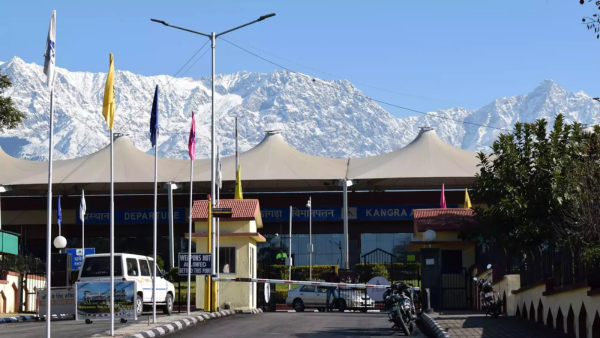
'Tourist village' to be established in Kangra
- Nov 08,2023
- ET Travel World
Modern facilities with like electric buses, water sports, theme parks, wayside amenities, h end food courts, beautification of heritage sites and eco-tourism would be created at tou places in addition to upgrading Asia's biggest natural ice skating rink in Shimla and developing ice and roller skating rink in Manali, it added. A 'tourist village' will be established in Kangra to promote local art and culture and create employment opportunities for the youth, according to an official statement issued here on Tuesday. Permanent employment opportunities can be created by connecting local youths with tourism which will not only ensure tourism development but also increase the revenue of the state, Himachal Pradesh Chief Minister Sukhvinder Singh Sukhu said in the statement. Employment opportunities will be provided in the 'tourist village' to the local youth for showcasing local art, culture, handicrafts, music and other things, it said. A large zoo is being constructed in Bankhandi at a cost of INR 300 crore and besides establishing the 'tourist village', a golf course of international standards will also be developed in Kangra, the statement said. Modern facilities like electric buses, water sports, theme parks, wayside amenities, high-end food courts, beautification of heritage sites and ecotourism would be created at tourist places in addition to upgrading Asia's biggest natural ice skating rink in Shimla and developing ice and roller skating rink in Manali, it added.
Read more