
Greece Now Accepts Negative COVID-19 Rapid Antigen Tests for Entry
- Jun 22,2021
- Schengenvisainfo News
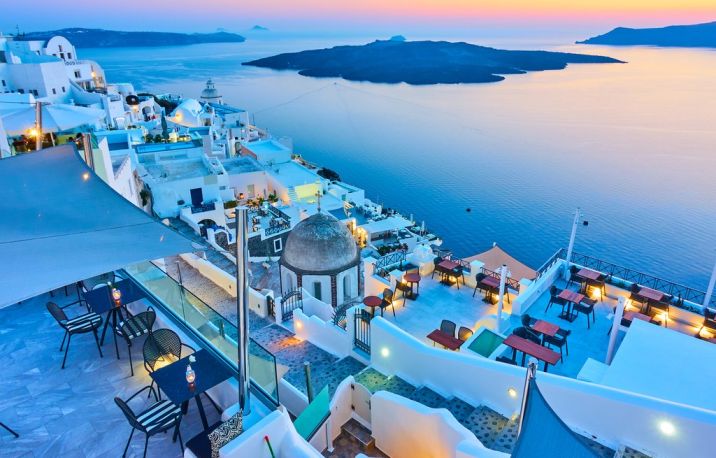
Travellers from other countries can now enter Greece without being subject to restrictive measures imposed to halt the spread of the virus if they present a negative result of the COVID-19 rapid antigen test, as the latter’s authorities have decided to recognize such tests. In addition, the Hellenic Republic’s authorities have also decided to exempt children under the age of 12 from the COVID-19 requirements, including proof that they have tested negative for the virus, SchengenVisaInfo.com reports. According to an announcement published by Greece’s Ministry of Tourism, the changes mentioned above will be applied to citizens from countries in which travel for tourism purposes to and from Greece has been permitted. Such measures introduced by the Greek authorities also contribute to making the travel process easier for internationals during the summer season. The Hellenic Republic allows entry for all tourists who obtain the EU’s COVID-19 vaccine passport in digital or printed form. “The purpose of all control protocols is to facilitate travellers who wish to visit our country, along with the constant and absolute priority care for the preservation of health safety, both tourists and Greek citizens,” Greece’s Ministry of Tourism has announced. Authorities in Athens continue to apply an entry ban for third-country nationals to prevent the further spread of the virus. “The temporary prohibition of entry into the Country of all third-country nationals from any point of entry into the country and in any way or by any means, including air, sea, rail and road connections,” the statement reads. However, there are some exemptions applied in this regard. Greece’s government has announced that citizens of the European Union Member States and the Schengen Area are not included in the ban. Permanent residents of the following countries will also be exempted from the entry ban; Albania, Australia, Northern Macedonia, Bosnia and Herzegovina, United Arab Emirates, United States of America, United Kingdom, Japan, Israel, Canada, Belarus, New Zealand, South Korea, Qatar, China, Kuwait, Ukraine, Rwanda, Russian Federation, Saudi Arabia, Serbia, Singapore, Thailand. Seasonal workers engaged in agriculture, fisheries and third-country nationals who obtain valid residence permits are also excluded from the ban. Greece has recorded a total of 417,253 COVID-19 cases of infection, and 12,494 deaths, according to the figures published by the World Health Organization. However, yesterday authorities in Greece reported the number of COVID-19 infections almost halved, which figures pushed the country’s leaders to continue to lift current restrictions. In order to help the Balkan country recover from the damages caused by the virus, earlier this month, the European Commission, under the State aid Temporary Framework, approved a total of 800 million financial support. Last month, Greece launched the European Union’s Digital COVID-19 Certificate to ease the travel process and welcome more tourists during this summer.
Read more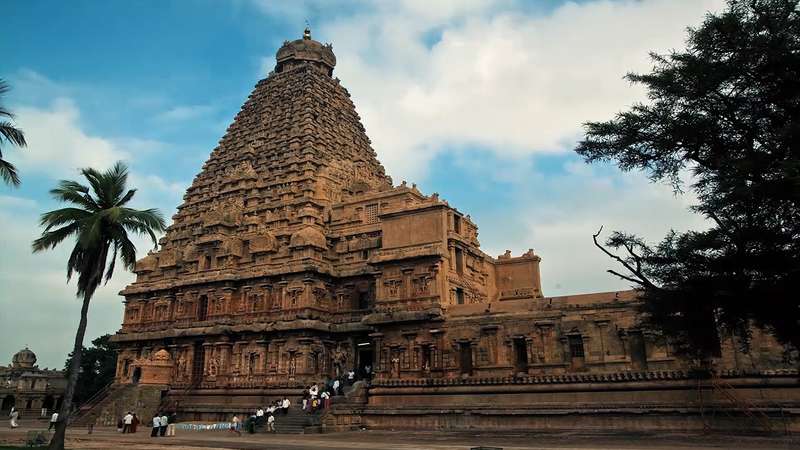
Tamil Nadu lockdown relaxations: Who requires an e-registration to travel?
- Jun 22,2021
- The Indian Express
Tamil Nadu Chief Minister MK Stalin on Sunday announced that the lockdown across the state will be extended by another week. However, he did give a host of relaxations to the existing norms. Based on the number of Covid-19 cases, the 38 districts of the state have been divided into 3 categories. As per the earlier order, people would still need e-registration to commute from one place to another, but now, this rule has been differentiated for districts depending upon the caseload. Districts that fall under Category 1: Coimbatore, Nilgris, Tiruppur, Erode, Salem, Karur, Namakkal, Thanjavur, Tiruvarur, Nagapattinam and Mayiladuthurai. Districts that fall under Category 2: Ariyalur, Cuddalore, Dharmapuri, Dindigul, Kallakurichi, Kanniyakumari, Krishnagiri, Madurai, Perambur, Pudukkotai, Ramanathapuram, Ranipet, Sivaganga, Theni, Tenkasi, Tirunelveli, Tiruppatur, Tiruvannamalai, Thoothukudi, Tiruchirapalli, Villupuram, Vellore and Virudhunagar. Districts that fall under Category 3: Chennai, Kancheepuram, Chengalpet and Tiruvallur. E-registration rules for districts in Category 1: 1. Transportation services attached to homes providing shelter to children/differently-abled/ mentally challenged/senior citizens/destitute/women/widows will require e-registration. 2. People travelling from their residence to railway stations and airports would require e-registration 3. Employees at observation homes, aftercare homes and places of safety for juveniles 4. Volunteers and caregivers providing food and other services for persons with special needs, differently-abled, senior citizens 5. Passengers coming in by air and train from other countries or states 6. Private security services for maintenance and upkeep of office, including housekeeping services in residential complexes Services provided by self-employed persons (electricians, plumbers, motor technicians, carpenters, etc). They have been allowed to work from 9 am to 5 pm 7. Passengers travelling in auto-rickshaws and rental taxis 8. Employees who commute to their workplace on two-wheelers 9. Inter-state or inter-district travel for medical emergencies or funerals last rites are permitted with e-registration. Intra-district travel for medical emergencies, funerals or last rites are permitted without e-registration 10. Travel between districts for marriages is not permitted in areas that fall under this category. E-registration rules for districts in Category 2: All the aforesaid rules apply to people living in districts that fall under this category. However, the only relaxation is regarding marriages where travel between districts is allowed after getting an e-pass from the concerned authorities. E-pass can be applied for up to 50 persons by the bride, groom or the head of the family on either side. E-registration rules for districts in Category 3: 1. E-registration not required for transportation services attached to homes providing shelter to children/differently-abled/ mentally challenged/senior citizens/destitute/women/widow and others 2. E-registration is not a must for employees working at observation homes, aftercare homes and places of safety for juveniles. 3. People who wish to travel from their residence to railway stations or airports are allowed to do so without an e-pass. 4. E-registration not needed for volunteers, caregivers providing food and other services for persons with special needs, differently-abled, senior citizens 5. E-registration not required for private security services for maintenance and upkeep of offices, including housekeeping services in residential complexes 6. E-registration not needed for passengers travelling in auto-rickshaws and rental taxis Rules for employees travelling to their workplaces on two-wheelers and people attending marriage ceremonies, however, remain the same as the ones for districts falling under Category 2.
Read more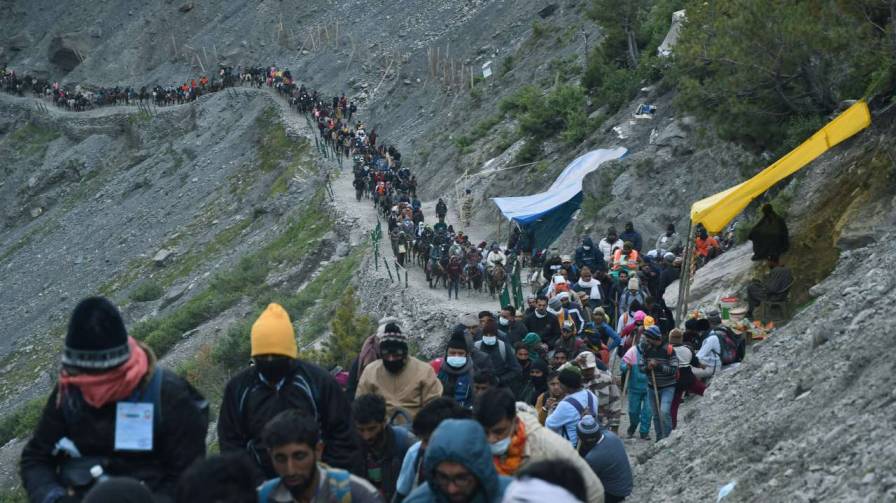
Amarnath Yatra cancelled due to Covid pandemic
- Jun 22,2021
- The Financial Express
In the wake of the Covid pandemic, the Jammu and Kashmir administration has decided that the annual Amarnath Yatra will be kept symbolic, Lieutenant Governor Manoj Sinha said on Monday. He also directed officials to make arrangements so that devotees can virtually attend the morning and evening aartis’ at the Himalayan cave shrine. This will allow them to pay obeisance while avoiding travel and exposure to the infection, the lieutenant governor (L-G) said . Sinha said that at the shrine all traditional religious rituals shall be performed according to past practice. The decision to keep the pilgrimage symbolic was taken after discussions with members of the Shri Amarnath Shrine Board, officials said.
Read more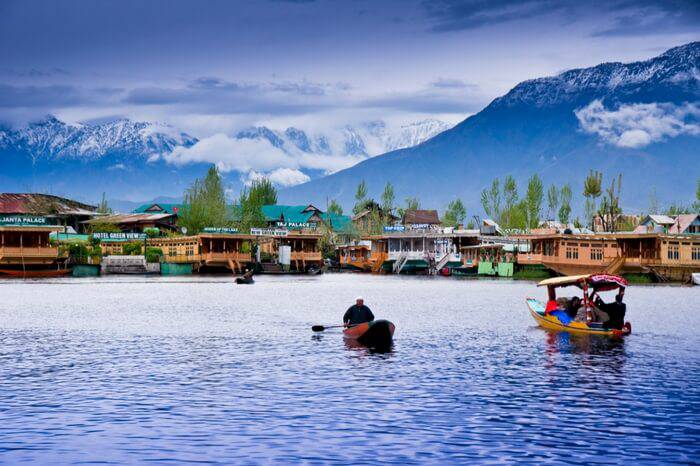
Kashmir tourism in top gear towards revival
- Jun 21,2021
- The Kashmir Monitor
One of the most important sectors of Jammu and Kashmir’s economy is tourism. Being the largest service industry in the UT, tourism contributes significantly to GDP, provides employment, yields tax revenue and also earns some foreign exchange for the country. Like all vital sectors of J&K, tourism suffered huge losses ever since the outbreak of separatist violence in Kashmir. Many European countries and the US issued advisories to their citizens not to travel to Kashmir, the place was categorised as ‘an unsafe travel destination’. This brought misery into the lives of thousands of locals, including hoteliers, guesthouse owners, houseboat and Shikara operators in addition to taxi owners, Ponywallahs, tourist guides and others connected with this industry like shawl makers, Papier Machie artisans, carpet weavers, wood carving artisans etc. For more than 6 years after 1990, when violence took centre stage in Kashmir, tourism virtually came to a grinding halt. Revival of this major local industry was a huge challenge for various successive governments that came to power after 1990. It was not only the main tourist activity that came to halt, but even the pilgrimage tourism like the annual Amarnath Yatra to the Himalayan cave shrine also remained a highly subdued exercise. One silver lining to the dark cloud was the pilgrimage to the Mata Vaishno Devi shrine in Reasi district of Jammu division. The rush of pilgrims to the deity’s abode in Trikuta Hills kept increasing with each passing day. It is estimated that each year over 2.6 crore devotees visit the Mata Vaishno Devi shrine. There are places of tourist attraction in the Jammu division that were not adversely affected by the violence in the Valley, but there is no denying the fact that the major tourist attractions with worldwide popularity are in the Valley. The Mughal Gardens around the Dal Lake in Srinagar, the floating palaces called the houseboats, Nigeen, Wullar and Manasbal lakes. Ski resort of Gulmarg, Sonamarg, the golden meadow and Pahalgam, angler’s paradise with abundance of trout fish in its mountain streams, trekkers dream peaks like the Harmukh, Mahadev, Kolahoi Peak, lakes like the Gangabal, Sheshnag, Vishnusar, etc. These are some places that are generally mentioned in travel brochures and catalogues of tour and travel operators, but the fact remains that Thomas Moore’s ‘Land of Lalla Rookh’ is an unending tourism pageant the moment one crosses the Pir Panjal Mountain range to enter the Valley. In his endeavour to bring tourism back to its past glory from where it would be taken forward to compete with world class destinations, Lt. Governor, Manoj Sinha said during a tourism promotion event recently, “For the transformation of tourism sector, five pillars will remain in focus which include sustainable development for the tourism industry, strengthening the hospitality sector, Human Resource development, development of golf and popularisation of food.” In J&K Budget 2021-2022 Rs 1,000 crore shall be taken up under the PM development programme for tourism infrastructure in addition to the Capex budget allocation. Officials said the budget for tourism and culture, the two are allied departments, was Rs 283 crore in 2020-2021 and it is Rs 780 crore for 2021-2022. Sarmad Hafeez, secretary of the tourism department told IANS, “We are following a collective approach to tourism revival combining it with our art, culture and cuisine. “We are planning to give the tourists an experience like they never had before. Like the ‘Dounga’ ride on the Dal and other lakes, living with locals in natural habitat, having ethnic food like not only the traditional Kashmiri ‘Wazwan’ but a lot of other local foods. “In phase one of the vaccination drive even in the prioritised sector of 18 to 45 years, we have already vaccinated more than 80 per cent of our travel trade including hoteliers, taxi operators, Shikarawallahs, Ponywallahs, etc. “We are training all tourism players for Covid protocols, etc.” Asked whether the government is expecting tourism revival this year or next year, the official said, “We are expecting revival soon and already some good signs are there, but it all depends upon how the Covid situation plays out. “Already Covid situation is improving and we are getting to know from hoteliers and travel agents that they are getting enquiries and they have started taking bookings as well. “We find an opportunity in the present situation because those travelling as tourists abroad from India cannot do so because of flight restrictions. They are now looking towards Kashmir. “Our winter tourism was fantastic this year because those not able to travel abroad came to us. “Even Pahalgam had winter tourism this year for the first time. We have created a lot of positivity outside.It is safe to travel to J&K during the pandemic than it is to any other tourist destination.” Asked about the tourism infrastructure, the official said, “The budget for JKTDC has also been increased manifold. Our publicity grants have gone up significantly. “We planned several events last year. We did ‘Badamwari’ festival, winter carnival, ‘Khelo India’ etc. “This year we are focusing on adventure tourism like camping, trekking, white water rafting and water sports. “We are focusing on outdoor activities because outdoor tourism is the safest in the present situation.” Sarmad said in addition to this, efforts to woo Bollywood back to its choice outdoor location of Kashmir have already started bearing fruit. “We had Bollywood units shooting films in the Valley even during the ongoing pandemic. We are sure that Bollywood is coming back to Kashmir in a big way,” the tourism secretary asserted. The tourism department is also embarking on Saffron and Horticulture tourism to provide additional avenues to the industry in Kashmir. “Eco circuit tourism, film tourism, golf tourism, heritage tourism, religious/spiritual tourism, wellness tourism, lake tourism, rural/village tourism, wedding destination tourism, commercial corporate conference, etc. the potential is immense and we are sure to put the industry back on the rails,” the secretary added. With no dearth of funds and given the determination and hard work put in by officers of the Lt governor administration like Samad Hafeez, one has reason to believe that the dark days of Kashmir’s tourism are going to end very soon.
Read more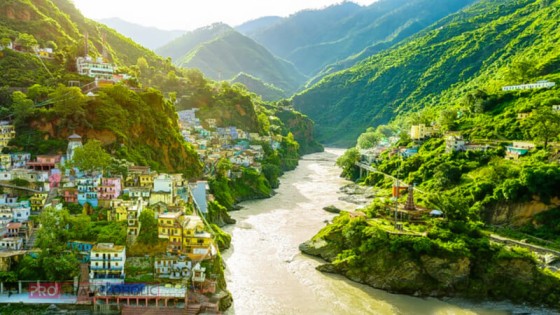
Covid lockdown extended for one more week in U'khand
- Jun 21,2021
- ET Travel World
The Uttarakhand government on Sunday decided to extend the Covid lockdown in the state for another week from June 22 but allowed hotels, restaurants and bars to open at half their capacities. It also decided to open the chardham yatra for locals from July 1 and for people from the rest of the state from July 11, Cabinet minister and state government's official spokesperson Subodh Uniyal said. Bringing a negative RT-PCR or Rapid Antigen test report, however, will be compulsory for the pilgrims, he said. "People of Chamoli district can visit Badrinath temple for a darshan from July 1 if they have a negative RT-PCR or Rapid Antigen test report," he said. "Similarly, people of Rudraprayag and Uttarkashi districts can also visit Kedarnath, Gangotri and Yamunotri temples respectively from that date with a negative RT-PCR or Rapid Antigen test report," the minister said. The yatra will be opened for people from the rest of the state from July 11 on the same condition, he said The state government had decided to open the chardham yatra partially for locals last week too but had to withdraw the decision in view of the Covid situation. The decision to extend the curfew from June 22 to 29 with some important relaxations was taken at a meeting chaired by Chief Minister Tirath Singh Rawat, Uniyal said. The period of current lockdown in the state was to come to an end at 6 am on June 22. The famous four Himalayan temples in Uttarakhand though open since May for daily prayers are still not open for pilgrims. Bringing a negative RT-PCR or Rapid Antigen test report will be compulsory also for people coming to the state from outside or those going to hill areas from the plains, Uniyal said. General stores and groceries will now be open for five days in a week closing only on Saturdays and Sundays, he said. Hotels, restaurants and bars can open with 50 per cent of their capacity till 10 pm, he added. All government, semi-government and private offices can also open with 50 per cent of their capacity. However, offices connected with essential services will open with full capacity.
Read more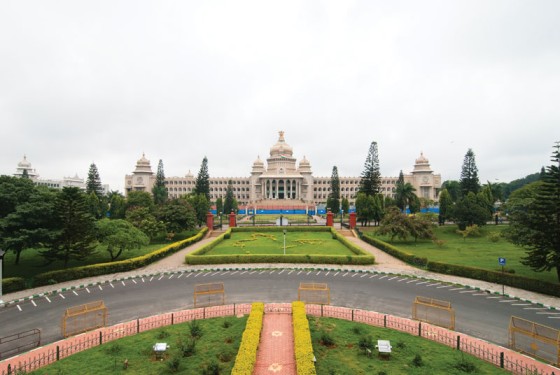
Bengaluru Unlock 2.0 from today: Guidelines and list of relaxations
- Jun 21,2021
- Live Mint
The Karnataka government has announced a further easing of lockdown restrictions in 19 of the 31 districts from June 21 in view of the positivity rate falling below 5% and a decline in others. State capital Bengaluru will also see the ease in relaxations of covid-19 related curbs from today as the number of new covid-19 cases is on the decline. Here is the list of updated guidelines for Bengaluru: What is allowed? - All shops, commercial establishments, vehicle showrooms till 5pm - Parks to remain open till 6pm - Metro trains and buses will operate with 50% capacity, outdoor shooting of film and television serials also allowed. - All government and private offices to function with 50% staff - Resorts, hotels, restaurants and bars can serve food till 5pm with 50% capacity but without air conditioners. What's not allowed? - Cinema Halls, swimming pools, malls,amusement parks,pubs, places of worship, schools and colleges. Chief Minister B S Yediyurappa told media persons that We have taken certain decisions on easing restrictions, based on the advice of the Technical Advisory Committee on COVID-19 and after discussions with my cabinet colleagues. Out of the 4,517 new cases on Sunday, 933 were from Bengaluru Urban, as the city saw 1,902 discharges and 12 deaths. Bengaluru Urban district headed the list of positive cases, with a total of 12,05,259, followed by Mysuru 1,62,083 and Tumakuru 1,13,685. Among discharges too, Bengaluru Urban was on top with 11,18,531. The COVID-19 restrictions were imposed from April 27 when the daily infections breached the 50,000 mark. When the cases did not come down, the government imposed a lockdown from May 10, allowing sale of essential goods from 6 AM to 10 AM. It eased restrictions on June 11, allowing shops selling essential commodities from 6 AM to 2 PM after the number of cases started declining.
Read more