“Italy Will Not Close off to Tourism This Year”
- May 06,2020
- Schengen Visa Info
The president of the Italian National Tourist Board (ENIT) Giorgio Palmucci, says that Italy will not close off to tourists this year. Palmucci’s announcement came in after reports that Italy was going to shut down its borders to tourists, until 2021, SchengenVisaInfo.com reports. “Tourism in Italy will start again, with all precautions and in maximum safety, Dario Franceschini, (minister of cultural heritage, activities and tourism) did well to clarify that no border closure is expected. Those who love Italy must be allowed to return to enjoy it, in compliance with governmental and regional guidelines,” he pointed out. Italian National Tourist Board’s president clarified that he never said that Italian borders should remain closed to tourists, even though Italy is the third most affected country from the Coronavirus outbreak. “I have never spoken, nor ever thought, of closing the Italian borders to tourists for 2020. I am working on the exact opposite. I proposed at the meeting of Tourism Ministers of the European Union, a European uniformity of the safety rules with respect to the risk of contagion, allowing the free movement of tourists within the European Union,” Palmucci added. He said that during this delicate phase is essential to defend Italy also through correct communication. According to him, misinformation and fake news risk creating serious damage and “unjustified alarmism”. The head of ENIT said that its important to follow institutional sources and reliable news as much as possible, such as those provided by the Italian National Tourist Board, which provides an official bi-weekly update on the situation in Italy and the world. As Italy is starting to see signs of slowing in infections, there have been reopened three border crossing points between Italy and Canton Ticino, which have been closed since mid-March as part of efforts to halt the spread of Coronavirus outbreak (COVID-19). According to the announcement, from now on, crossing points at Ponte Cremenaga, Brusino and Ligornetto will be opened from Monday to Friday and will be passable at specific periods.
Read more
Wildlife tourism workers in limbo as Sri Lanka’s COVID-19 shutdown continues
- May 06,2020
- Mongabay
TISSAMAHARAMA, Sri Lanka – Yala National Park in southern Sri Lanka is the most visited wilderness area in the country. From the nearby town of Tissamaharama, would-be visitors leave before sunrise to reach the ticketing counter early. At a makeshift food outlet along this route, an elderly couple starts making crispy hoppers, a pancake-like snack, at 4 a.m. every day to serve these early birds. But since Sri Lanka closed its national parks in response to the COVID-19 pandemic in mid-March, the couple has lost their regular clientele, and their regular income. “There are a lot of people like this elderly couple who make a living by serving tourism that centers around Yala,” said H.G. Bandara, better known as Ali Banda, who works in the area as a safari jeep driver. “From curd sellers to those who repair safari jeeps, [people] are affected due to closure of the national park. I don’t have work these days, so I stay at home and plant some vegetables as it would at least help fulfill some of our daily needs.” More than 700 safari jeeps offer tours inside Yala National Park. Most are financed through leasing facilities, leaving the owners struggling to pay the installments due to loss of income. This is despite the Sri Lankan government giving a grace period for such payments, P.D. Keerthi, the president of Independent Jeep Drivers Association, told Mongabay. According to Keerthi, half of the jeep drivers depend on the income they make daily, and are now adversely impacted by the shutdown. “Some of them have begun working as day laborers to earn some money,” he said. The volunteer guides of the island’s Department of Wildlife Conservation of Sri Lanka (DWC) are another group hit by the closure of parks. Chaminda Ranamukage, secretary of the Voluntary Guide Union, said there are 354 such guides islandwide who earn a daily stipend of about 700 rupees ($3.70). They often get even more than that in tips from tourists. “Voluntary wildlife guides are given the facility to report to the closest regional DWC unit and be paid for days reporting to work. But there are no tourists these days, so the additional income is lost,” Ranamukage said. According to the Sri Lanka Tourism Development Authority, wildlife parks earned a combined revenue of rupees 2.14 billion ($11.3 million) in 2018, accounting for 17% of total tourism receipts. Some 47% of all foreign visitors to the island also visited a national park in 2018. While workers engaged directly in wildlifepark operations may qualify for some form of compensation due to the COVID-19 shutdown, those in informal jobs and dependent on park visitors may have to bear their losses on their own. A complete collapse The employees and owners of small guesthouses, bungalows and camping sites close to national parks are one such group affected by the current situation. Namal Kamalgoda operates a small luxury camping site near Wilpattu National Park. He said that currently he employs four fulltime workers at the site and continues to pay them their basic salaries with the intention of retaining them. “We used to source our needs such as vegetables and fruits locally and employ local people for all the other work ranging from laundering to cutting grass at the camping site,” he said. He has had to stop using their service, he said, as have other hotels in the area, “causing them loss of employment.” While he remains stuck at his Colombo home, Kamalgoda says he also fears for the condition of his campsite. “Our tents need regular maintenance, and in the absence of humans, wild rodents such as rats and squirrels try to damage the interior,” he said. Kamalgoda, a well-known figure in the environmental community, said the loss of livelihoods may turn some of the people affected toward illegal activities such as poaching as a means of survival. A group of wildlife lovers is donating relief supplies for those affected in Wilpattu. The supplies are expected to last two weeks for a family of four. “Wilpattu National Park has 45 day-waged families living in close proximity to the park, 55 jeep drivers and 21 volunteer guards,” said group member Raajiv Dyiya Wanigasekera. “The response was really great where wildlife lovers who regularly visit these parks came forward enlisting to provide necessary relief within few hours.” Like those working close to the terrestrial parks, other Sri Lankans engaged in whale- and dolphin-watching operations are also reeling from the impact of the COVID-19 shutdown. Prabanath Piyadigama in the southern coastal town of Mirissa sold his 35-seater boat and took out a loan in January to buy a new 70-seater cruiser specially designed for whale-watching. “As there are no tourists now, I must anchor the boat at the harbor and also employ a guard at night. When boats are not used, they also require servicing more often,” Piyadigama told Mongabay. “In a way, recovery for the daily wager may be easier than those of us who invest a lot of money in the industry.” Sri Lanka’s tourism industry had been on a steady rise since the end of 30-year-old civil war in 2009, but was hit hard by the Easter Sunday terrorist bombings in April 2019. “Even though foreign visitors dried out, we had local tourists to earn some money that helped us to keep our nose above the water,” Banda, the jeep driver at Yala National Park, told Mongabay. “But this pandemic is worse than bombs as it impacted everybody, so we fear that COVID-19 would drown us this time.” Sumith Pilapitiya, a former director-general of the Department of Wildlife, said jeep drivers should be allowed to find employment within the closed parks, undertaking different jobs for the time being, such as maintaining water sources, weeding out invasive plant species, and repairing safari tracks.
Read more
Kick-starting Assam’s tourism sector post-COVID19
- May 05,2020
- North East Now
The COVID19 outbreak has left a debilitating impact on the tourism scenario of India and Assam in particular. It has also led a crippling blow to the global tourism and associated sectors. The World Travel & Tourism Council (WTTC) estimates that 75 million travel and tourism jobs are at risk globally due to COVID19 pandemic. The Indian scenario is also not satisfactory with the assessment by Confederation of Indian Industries (CII) of an impact of around 60-65% of projected revenue of $28 billion from October 2019-March 2020 in the tourism sector. Given the backdrop of the above scenario, Assam is one among the hard-hit states with regard to the tourism industry. The whole tourism value chain across hotels, restaurants, resorts, travel agencies, tour operators as well as dhabas and fast food businesses directly or indirectly associated with the tourism sector in the state have hobbled. There is an estimated loss of around 60 crores of income by the tour agencies alone in the state. A loss of revenue of around Rs 500 crore is estimated by the government from the state tourism industry. Assam tourism engages, directly or indirectly, around 1 million of its population. Therefore, the pandemic is expected to leave a huge surge of unemployment rate in the state in the coming days. This downslide in the state’s tourism already started off during the anti-Citizenship (Amendment) Act protests and the coronavirus crisis just added to the already heavy losses that the sector was incurring. Though Assam sees an all-weather inflow of tourists in different parts of its region, yet the current period from November to April is estimated to be the best period for tourism in the state. This is also a period of rejoice and joyfulness due to the onset of Bohag Bihu and the colourful transformation of natural beauties, flora and fauna. In such a crucial period for the state’s income and revenue generation, the COVID19 pandemic has been a bane for the state and its people. Experts opine that this would bear an impact, not too short. Under the backdrop of such a critical juncture, it is high time to sort out a future course of action and an effective parameter to revive our tourism sector. This calls for an unprecedented effort from all sections of the society, from the government to the policy-makers as well as a helping hand from the community as a whole. For this, the first thing that we need to emphasise upon is harnessing the local tourism potential. Due to the travel restrictions and other associated regulations, which might be going to stay for long, we can’t expect the inflow of tourists from outside states, except the Northeastern region. Therefore, the readily approachable target would be the local tourist and travellers. Given the fact that Assam is surrounded by all other Northeastern states and Assam serves the purpose of being the gateway for them, the targeted jurisdiction should also include inhabitants from the Northeastern region. For this purpose, the tourism sector needs to promote local tourism vehemently to attract revenues and income. This seems to be the only way out to revive our tourism at present. The next big move that the tourism department needs to take is to engage the local popular figures and icons like Zubin Garg, Papon, etc. for the promotion of state tourism. Instead of paying a hefty amount on outside celebrities and stars, people love to see more to their heartthrobs like Zubin and other popular faces of the region. As the impact on the tourism industry of the state is going to stay for a couple of periods, it is, therefore, desirable to envision for long term revival strategies. Emphasis should be given to promote local beauties, flora, fauna, geography, culture, history, etc. in schools, public broadcasting, advertisements as well as mass media and social media platforms. This would have a lasting impression among the young minds who are the forerunners in promoting and cherishing their own regional beauties and historical achievements. Moreover, schools, colleges, universities and other academic institutions should emphasise more on local tourism, excursion and education tours for their students. An inter-departmental approach and engagement will also incur desirable results in understanding the need and value of promoting local and regional tourism. The tourism sector in Assam settles more than 100 registered tour operators and several other unregistered tour operators, enterprises, online travel platforms, other service providers, along with several hundreds of employees directly or indirectly engaged below them. It is true that the issues like paying EMIs for bank loans, rents, covering fixed expenditures like salaries, etc. of its employees are hard hit, given the fact that there are very limited sources of revenue generation for the sector in the next several months to come. This is not going to be altered overnight once the lockdown is over. Therefore the government needs to step in and take appropriate initiatives like short term interest-free loans for business restructuring, deferment of all statutory compliances and other relaxations in the levying of fees for any upcoming licences or permits, etc. And last but not the least, the responsibility of the society and responsible citizens come into play in this regard. It is their turn to apply their necessary expertise to carry forward the herculean task of reviving our tourism sector through the best usage of technology and social media platforms. The social media tools like Facebook, Instagram, Twitter, Telegram as well as video-sharing platforms like YouTube should be thoroughly used to promote and advertise our tourism potentials. This would be a great opportunity for social media influencers and video creators to best use the expertise that they are good at. This time is a ruthless time for each and every sector of mankind. All sections of society need to provide a helping hand to each other. And tourism is such a sector which runs through the engagement of goodwill of all. If we realise it and act accordingly, this tough time too shall pass, real soon.
Read more
Dubai Expo 2020 postponed to October 2021
- May 05,2020
- 13News
DUBAI, United Arab Emirates (AP) — Dubai's Expo 2020 world's fair will be postponed to Oct. 1, 2021, over the new coronavirus pandemic, a Paris-based body behind the events said Monday. The announcement by the Bureau International des Expositions came just hours after police in Kuwait dispersed what they described as a riot by stranded Egyptians unable to return home amid the coronavirus pandemic. The riot was the first reported sign of unrest from the region’s vast population of foreign workers who have lost their jobs over the crisis. Dubai, a sheikhdom in the United Arab Emirates, has bet billions of dollars on Expo 2020 to rejuvenate its troubled economy. Since the pandemic grounded flights by its long-haul carrier Emirates and disrupted its real estate market, Dubai has been seeking to delay the event until next year. Countries belonging to the bureau had been voting on the requested delay for days, with a final tally expected by the end of May. On Monday, however, the bureau said a required two-thirds of the countries in the organization had voted to approve the delay, meaning it would be granted. The bureau’s executive committee voted unanimously in April to back the proposal, which will see the event run from Oct. 1, 2021, until March 31, 2022. Sheikh Ahmed bin Saeed Al Maktoum, the chairman and CEO of Emirates who also serves on Dubai's Expo committee, welcomed the announcement in a statement. This skyscraper-studded city won the rights to host the event in 2014. That helped boost Dubai’s crucial real-estate market and had officials hoping for more tourists in this city-state that is home to the world’s busiest airport for international travel. Now, the pandemic has jeopardized global tourism and caused further panic in a real-estate market already down by a third since the 2014 announcement. It remains unclear how the delay will affect its staff, who in theory would need to be paid for at least another year, nor construction. Expo 2020 did not respond to questions from The Associated Press. However, some countries taking part still are at the preliminary stages of building their pavillions for the expo, giving them much-needed extra time. Among them is the U.S., whose pavillion costing at least $60 million is being built through “the generosity of the Emirati government.” Meanwhile, Kuwait's state-run KUNA news agency reported on Monday a confrontation, describing it as a “riot” carried out by Egyptians corralled at a group shelter. “Security officials intervened and took control, arresting a number of them” KUNA's report said. It did not acknowledge what level of force police used to put down the unrest, nor how many people authorities ultimately arrested after the incident. Kuwait's Information Ministry did not immediately respond to a request for comment. Videos purported to show the Egyptians in a shelter, armed with pieces of furniture at one point of the confrontation. The shelter appeared to be in an industrial setting, surrounded by a chain-link fence topped with barbed wire. KUNA earlier quoted Egypt's ambassador to the oil-rich, tiny Kuwait as saying that Cairo planned repatriation flights for those stranded later this week. Kuwaiti officials also have said they would suspend fines and jail time for those who had overstayed visas in order to help those wanting to leave return to their home countries. Kuwait, like many of the oil-rich Gulf Arab states, relies on a vast population of foreign workers for jobs ranging from domestic help, construction work to white-collar work. Long a lifeline for families back home, those migrant workers now find themselves trapped by the coronavirus pandemic, losing jobs, running out of money and desperate to return to their home countries as COVID-19, the illness caused by the virus, stalks their labor camps. Some 35 million laborers work in the six Arab Gulf states of Bahrain, Kuwait, Oman, Qatar, Saudi Arabia and the United Arab Emirates, as well as in Jordan and Lebanon, according to U.N. figures. Foreigners far outnumber locals in the Gulf states, accounting for over 80% of the population in some countries. In Kuwait in particular, a growing sense of xenophobia has seen authorities push for more deportations of foreigners for everything, including traffic violations. In all, countries in the Middle East have reported more than 342,000 cases of coronavirus, with at least 11,445 deaths, more than half of them in Iran. Iran's health ministry spokesman Kianoush Jahanpour said Monday that the death toll from COVID-19 rose to 6,277 in Iran, after 74 more people died since the previous day. Iran has reported 98,647 virus cases. In Sudan, the state minister for transportation and infrastructure, Hashim Ibn Auf, tested positive, the highest-ranking official to do so, the government said late Sunday. Sudan has reported 678 cases and 41 deaths from the virus.
Read more
Prahlad Singh Patel, Union Minister of State for Culture & Tourism, talks about the future of travel and tourism
- May 05,2020
- Outlook Traveller
The COVID-19 Pandemic has been very hard on the travel and tourism industry. How do you see the industry recovering after the lockdown? Overall, the industry will recover in a phased manner over a period of time. Having said that, domestic tourism will recover faster than international tourism. And in domestic tourism, for all the reasons that we very well know, city tours and day-drive tours will be the first to recover. Domestic hotels will unlock the opportunity from the drop in international tourism. This will be typical globally, where the travel will be domestic primarily in the form of driving trips which offer safety, hygiene, clean air and water. International tourism is very difficult to predict; it will depend on how the foreign governments react in terms of allowing their citizens to leave their shores to distant lands. The Investment Promotion Corporations of various states will do their job and the Trade Fair promotion board will ride with them for sure; and the tourism industry can support them if they end up attracting international footfalls. Quarantines are not going to go away. Safety, hygiene and security will be the path to recovery. Does the Ministry of Tourism have any plans to help ease the pain? Any special incentives or schemes for the Indian tourism industry?Given the diverse impact of COVID-19 as well as the different realities in different states, one single balm will not mitigate the impact. Both the central Ministry of Tourism and state tourism authorities have to take action. We have constituted a National Tourism Task Force for the revival of the hospitality and tourism industry which is headed by me. This task force includes state tourism ministers, joint secretary-level officers of the concerned central ministries, and representatives from associations like FICCI, CII, ASSOCHAM, WTTCII as well as heads of tourism and hospitality associations. We will be holding the first meeting of the task force shortly and make appropriate recommendations for the revival of the tourism sector in the country. This does not mean, however, that we have not acted earlier. Ever since the pandemic started to spread and borders started closing across the world, we have been continuously in touch with the tourism industry of the country. The demands of the industry are already before the Government and I am sure positive outcomes will come. Within the means of my own Ministry, I have requested my officials to work out reforms in the existing schemes like Market Development Assistance, extending it to promote domestic tourism, and work out schemes to jointly support the marketing efforts of tour operators and the hospitality industry. Going forward, will the very nature of tourism change in the post-COVID-19 world? Your thoughts? Let’s for a moment park international, both outbound and inbound, out of these conversations and focus only on domestic. Absolutely. Tourism will totally change. Seen from a demand side, safety, hygiene, and security will be the top concerns. Clients will travel to a destination only if they have proof that the place they are visiting and the bed they are sleeping in is absolutely virus-free. A safety license from the local municipality (like a fire license) will not satisfy clients. They will need continuous monitoring of all the assets and people they will be encountering during the tour—like an Aarogya Setu app, they will need something to scan a location before they enter. One will see more couples, small groups and trusted family vacations. People will stop travelling in mass group tours. So industry suppliers must make adjustments accordingly. In this time of crisis, the world is also turning to Eastern and Indian healing practices, so I expect this will boost wellness tourism in a big way. Our Himalayan and Northeastern states have largely emerged as safe zones during the COVID-19 crisis, so I anticipate some tourism opportunities there, but we have to work out new modalities in terms of safe trekking routes and advanced communication networks, etc. What role will tourism play in the recovery of the economy? It can play a great role—both internationally and domestically. Let’s first admit that the global campaign ‘Incredible India’ has created a greater impact than any other campaign. But we need a new brand called ‘Namaste Incredible India’ because the whole world is going to be using our greeting symbol. Namaste should be Safety, Hygiene, Peace and Harmony and this should be equal to India. That should be the umbrella campaign. Under this we should attract companies leaving China, we should attract infrastructure investors and we should attract MNCs to offshore and outsource services. And, eventually, ‘Namaste Incredible India’ should also attract tourists when the time is right. In other words, it will be foolish to say India is a better investment destination because we can help you earn more profits or offer a better supply chain. Instead, we should appeal to basic human instincts by saying ‘Namaste, I am India, I have been around for 5,000 years. Namaste means Safety, Namaste means Hygiene, Namaste means Peace and Namaste means Harmony...invest in us because we give you all this and a greater profit and greater market and more knowledgeable people.’ This campaign should be done in the same manner Incredible India was done. A domestic tourism thrust should be given to co-create holidays with farmers and rural India. This way new wealth will be created and distributed. So the typical packages will be: ‘do a weekend to a village, stay in a one-acre farmland, in your mud house, pluck mangoes, buy fresh veggies, spend the weekend in nature and return back home on Sunday night’. Tourism can work with Self-Help Groups to create experiences. Most importantly, the safety and hygiene standards practiced by the tourism industry will have an impact in the FDI space. In a sense, if an investor reads more good things about the safety and hygiene practices in the Indian tourism industry, more will he buy the concept of Namaste Incredible India and invest in India. After the lockdown, will your focus be more on promoting domestic tourism? Domestic Tourism has the attention at the highest level of this government. None other than our own Prime Minister has time and again appealed to the fellow citizens to travel and explore the country. Guided by his vision, in November 2019, we had launched the Dekho Apna Desh programme, which was all about promoting domestic tourism. We are further working on giving shape to this initiative and firming up the guidelines for the same. If you see, globally, a number of destinations have managed to overcome their international inbound tourism losses during the period of recessionary decline by focussing on their domestic tourism offering. We in India did so in 2008 when our inbound tourism dropped due to the Mumbai attacks and the global economic meltdown. Our tourism economy is highly dependent on domestic tourism. Focussing on domestic tourism potential, encouraging fellow countrymen to explore their own country, taking a much-needed break within their own borders will be a winning strategy for India.
Read more
Delhi airport to resume flights from Terminal 3 post lockdown, ultraviolet tunnel to clean bags
- May 04,2020
- New Indian Express
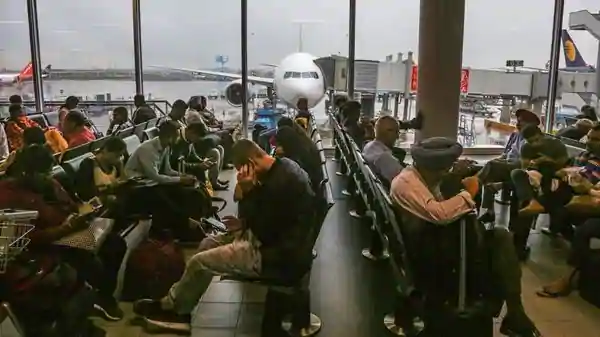
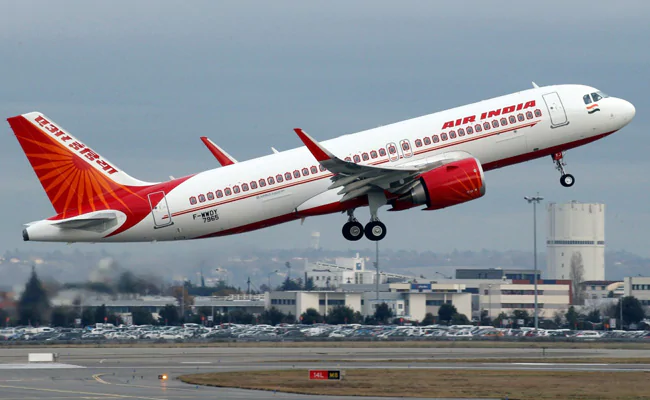
NEW DELHI: Commercial passenger flights at Delhi airport will initially operate from Terminal 3 after the lockdown ends, said a senior official of its operator DIAL on Sunday, adding that entry gates, self check-in machines and check-in bays will be allocated to airlines to avoid overcrowding by air travellers. The airport will keep all food, beverage and retail shops open to avoid overcrowding at one place and use "ultraviolet disinfection tunnels" for all incoming baggage, according to a plan prepared by the GMR group-led Delhi International Airport Ltd. The plan said the passengers of Vistara and IndiGo would enter the airport through gates 1 and 2 only. These two airlines will have check-in rows A, B and C among them, it said. AirAsia India and Air India passengers will use entry gates 3 and 4. These passengers will then go to rows D, E and F where the staff of these two airlines would assist them check-in, according to the plan. SpiceJet and GoAir passengers would enter through gate 5 towards the staff of these two airlines at rows G and H for check-in. Passengers of all other domestic airlines will enter through gate 5 and will head to row H, the plan said. All international airlines' passengers would be entering the airport using gates 6, 7 and 8. The staff of these airlines would be sitting at rows J, K, L and M for check-in at Terminal 3. The DIAL's exit plan stated that entry gates, self check-in machines and check-in bays would be allocated to airlines to ensure smooth flow of passengers from forecourt into check-in hall and security thereafter. India has been under a lockdown since March 25 to curb the spread of the novel coronavirus, which has infected around 40,000 people and killed more than 1,300 people in the country till now. All commercial passenger flights have been suspended for the lockdown period. However, cargo flights, medical evacuation flights and special flights permitted by the aviation regulator DGCA are allowed to operate. "Initially, once the lockdown is over, the commercial passenger fights will be operating from Terminal 3 only. Later, once the number of flights increase, other terminals will be used," the DIAL official said. The DIAL would be preparing stringent standard operating procedures (SOPs) for food, beverage and retail shops in order to ensure social distancing, the exit plan noted. The operator will promote digital payments and digital menus at various outlets to minimise human contact. Moreover, DIAL would encourage usage of self-ordering kiosks at the food court to reduce queues.
Read more