Bullet train to connect Delhi and Ayodhya soon

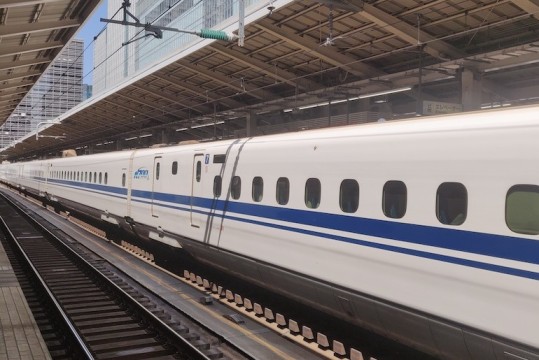
As per the latest developments, Ayodhya is all set to get bullet train connectivity. Reportedly, the Delhi-Varanasi corridor, for which the detailed project is being chalked out, will connect popular spots such as Mathura, Ayodhya, Varanasi, Prayagraj, Kanpur, Agra, Jewar airport. According to the National High Speed Rail Corporation Ltd (NHSRCL), which is responsible for preparing the detailed report, the train will also connect Lucknow, Etawah, Bhadohi, and Raebareli. Reports state that the corridor will cover highways, ghats, densely populated urban and rural areas, roads, and green fields. The NHSRCL is also implementing the Ahmedabad-Mumbai bullet train project. Light Detection and Ranging Survey (LiDAR), which is a laser equipment on a helicopter for ground survey, shall be implemented for the Delhi-Varanasi corridor. It will be crucial for implementing the fastest possible route for the train. Till now, the LiDAR technology has been used in the highways sector for ground survey and finalizing alignment, and to get approximate details on the ground in the quickest possible time. The said technique further uses a combination of GPS data, laser data, flight parameters and actual photographs to give accurate survey data. It has been witnessed that the said technology has helped to create DPRs for highway projects, which has helped to zero down on the acquisition of the exact land for construction purposes. LiDAR was also used for the Mumbai- Ahmedabad High Speed Rail Corridor, majorly because of its high accuracy.

Read more

Tamil Nadu frames COVID safety guidelines for its tourist spots

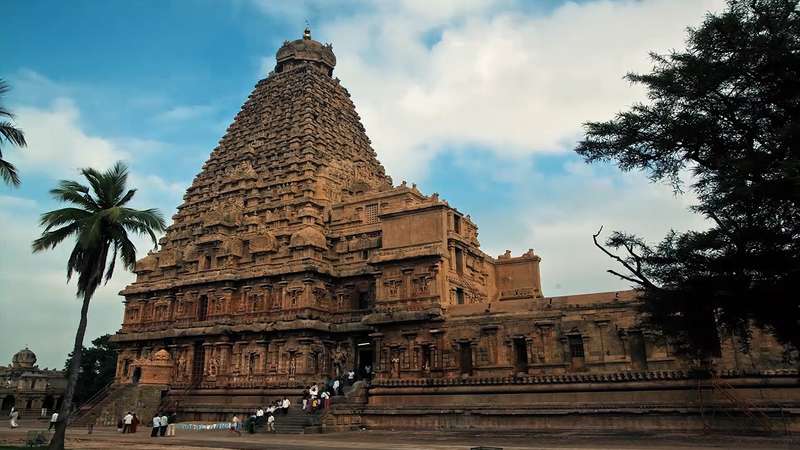
The Tamil Nadu government has lately reopened its tourist places, and has now come with proper COVID guidelines for tourists. In addition, news has it that the beaches in Tamil Nadu are expected to reopen on December 14. Below are the tourist protocols every visitor is expected to follow. - All furniture and surfaces will be sanitised by the staff at the tourist places on a daily basis. Areas will be marked to ensure proper physical distancing. Also, restaurants at public places will try to offer a contactless menu and payment. - The tourist places will permit only half the number of visitors of their total capacity to allow social distancing. Entry of visitors will be in a staggered and phased manner. There will also be a designated waiting area outside the entry gate . - The authorities will consider you as a single group if you are travelling with friends and family. In such cases, the group will have to observe six feet distance from other visitors’ groups. - The tickets can be booked online for available time slots. To avoid crowding at the ticket counters, no physical tickets shall be issued. If issuing physical tickets is really required, proper physical distancing shall be observed in the queue. - Single entry and exit points shall be designated for visitors. The premises will have CCTV cameras to keep a track of visitors. Hand sanitisers, hand gloves and masks can be purchased from the reception. All staff members will have to wear face masks and other protective gear. - Posters will be put up with relevant information such as emergency contact numbers and the COVID rules. If the visitors or staff are found to be suspected of COVID infection, they shall be immediately sent to the isolation facility. - A Rapid Response Team will be designated to keep charge of preventing incidents and managing the impact in cases of incidents. - Tourists will not be allowed to visit the containment zones.

Read more

Indian government to start an 'air bubble' with Nepal

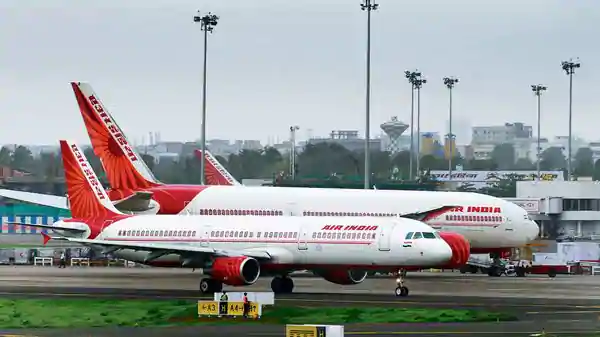
In a fillip to people ties that will allow the resumption of travel for business, medical reasons and meeting family members, the Indian government has decided to start an “air bubble" with Nepal. The Indian foreign ministry, it is learnt, has agreed to a proposal from Nepal to restart flight operations between the two countries in a phased manner to ensure people of the two countries are not inconvenienced due to covid-19 related embargos. This is seen as one of the outcomes of Foreign Secretary Harsh Vardhan Shringla’s visit to Nepal last month to reset ties after a bitter row over a Nepalese map that had shown Indian territories lying within Nepal’s boundaries. Under the plan to operate the “air bubble," there will be two flights a day between Kathmandu and New Delhi initially, one each by Nepal Airlines and Air India. Flights coming into India can bring in Indian and Nepalese nationals, overseas citizen of India (OCI) cardholders and Person of Indian Origin cardholders holding passports of any country. Third country nationals including diplomats intending to travel to India for any purpose and their dependents will also be allowed under certain conditions. Flights from India can ferry Indian and Nepalese nationals to Kathmandu. “It would be for the airlines concerned to ensure that there is no travel restriction for Indian nationals to enter Nepal before issue of ticket/ boarding pass to the Indian passenger," says one of the provisions. Third country nationals including diplomats who have a valid permit to enter Nepal can also travel by the flights out of India. All flights operated under the “air bubble" will adhere to the strict norms issued for the covid-19 pandemic. Travellers to Nepal will have to fill up a form and carry a negative covid-19 test that is issued not more than 72 hours prior to landing in Kathmandu, says another of the provisions. It is learnt that the air transport bubble will be effective immediately and will remain valid till resumption of scheduled services between the two countries. Tickets for the flights can be sold through the airlines' websites or through sales agents.

Read more

Indians can now avail visa-free 10-day entry to Oman

Oman will exempt nationals of 103 counties from needing an entry visa for a stay of up to 10 days, police said on Wednesday, in a move to support tourism and shore up its struggling economy. Visitors must have a confirmed hotel reservation, health insurance and a return ticket, Royal Oman Police said on its Twitter account. "Nationals of 103 counties are exempted from entry visas into the Sultanate for a period of ten days," it said. Oman last week said it would resume granting tourist visas to people visiting on trips arranged by hotels and travel companies, after they were suspended due to the coronavirus pandemic. The Gulf state resumed international flights on Oct. 1, but only citizens and people holding valid existing residency and work visas could enter. Oman, rated sub-investment grade by all major credit rating agencies, faces a widening deficit and large debt maturities in coming few years. It has recently embarked on a new fiscal plan to wean itself off its dependence on oil revenues.

Read more

Rajasthan Tourism, UNESCO adopt ‘Art of Life’ to develop cultural tourism hubs

Now, under the ambit of Cultural Tourism, the art for life links culture with skilling, enterprises, and economic development. With an aim to tap the potential of Rajasthan’s cultural heritage, the state Tourism department has tied up with UNESCO and implemented a project. Around 10 cultural tourism hubs are being developed in Jaisalmer, Jodhpur, Bikaner, and Barmer districts. The tourism hubs are being developed by adopting the ‘Art of Life’ methodology. The project is adding prosperity to the life of 884 performing artists and 594 handicraft artists and safeguarding the traditional art forms. In an effort to support heritage education and cultural enterprises, an ecosystem is being developed through capacity building and facilitating direct market linkages for the folk artists and craftspersons. Songs of Langas, Manganiyars, Mirs, Kalbelia song and dance, Puppetry, Pottery, Handloom, Durrie, Jutti, Kasidakari embroidery, Applique work, and other crafts that were once part of the day-to-day life of local folks have now become limited to few families that carry on the tradition. These art forms, however, charm the visitors as much as the royal palaces and majestic forts. The UNESCO and Rajasthan Tourism collaboration envisions to promote these arts on a global platform and connect the artists with admirers of their work, the Tourism Department said in a statement.

Read more

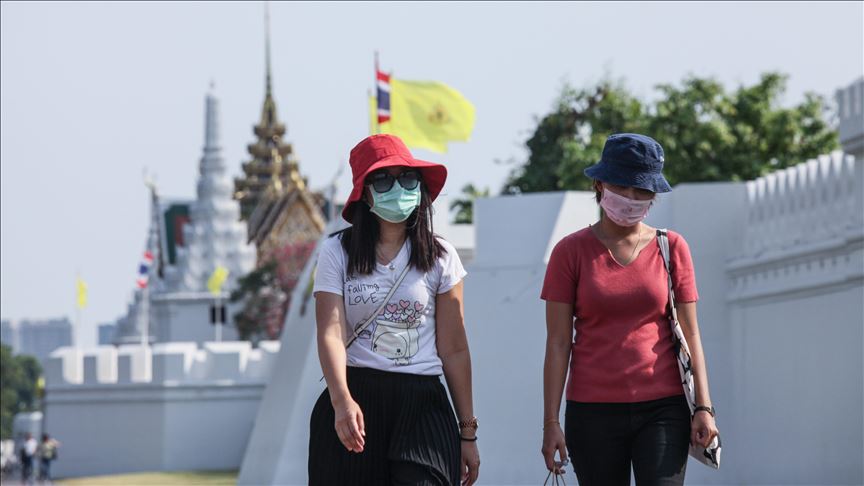
Thailand allows entry of all tourists with mandatory 14-day quarantine

Tourists from everywhere are now welcome to visit Thailand, irrespective of their countries' Covid-19 situation, under a newly amended Special Tourist Visa (STV) long-stay programme, reports Chatrudee Theparat in Bangkok Post. However, these travellers still need to comply with Thailand's 14-day mandatory quarantine, deputy government spokeswoman Rachada Dhnadirek said on Tuesday. The more liberal policy represents a government U-turn and is designed to help the ailing tourism industry. STVs were previously only available to people from low risk-countries but that stringent condition was blamed for the low number of tourists taking advantage of the programme, with only 825 people from 29 countries and only six luxury yachts using it, said Dhnadirek. The Cabinet has also resolved to extend the stay period for yacht visitors holding an STV for another 30 days, or 60 days in total, she said. Meanwhile, Prime Minister Prayut Chan-o-cha insisted on Tuesday that Thailand was not experiencing a second wave of the pandemic, nor dealing with any challenge of super-spreaders, as rumoured. The truth was that a small group of infected Thais had illegally sneaked back into the country and visited places, which merely prompted routine checks as to whether they had infected anyone else, he said. The PM urged people not to panic, saying that would only worsen the situation, and he cited the fact that a large number of hotel bookings had been cancelled in recent weeks due to an overreaction to media reports of a possible super-spreader. Dr Chakrarat Pittayawonganon, of the Disease Control Department, meanwhile, revealed that among those now being treated for Covid-19 were four healthcare workers who were infected at alternative state quarantine facilities and private hospitals in Bangkok. Their infections prompted an investigation as to how healthcare workers could have contracted the virus and whether it was their own fault or another cause, he said. Health authorities on Tuesday recorded 19 new Covid-19 infections, one of which was a man in the northern province of Chiang Rai who thus became the 39th person to have caught the virus at an entertainment venue in the Burmese border town of Tachileik. The Chiang Rai patient is the latest Thai national to catch Covid-19 abroad before sneaking back into the country illegally, said Dr Chakrarat, and was asymptomatic.

Read more