
Air travel to reach pre-COVID level by early January: Puri
- Nov 17,2020
- Travel biz Monitor
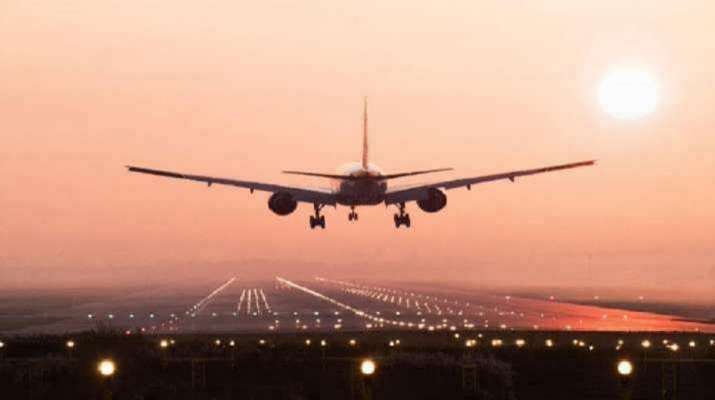
Air travel in India will reach pre-COVID level by the end of current year or early January, Civil Aviation Minister Hardeep Singh Puri said on Monday. He also urged people to continue to maintain safety protocol with self-discipline. "We opened civil aviation on 25th May, a good two months and two days after we had completely locked down, with 30,000 passengers a day. Two or three days ago, just before Diwali, we carried 225,000 people," Puri said at the Deccan Dialogue organised by Indian School of Business (ISB) in collaboration with the Ministry of External Affairs. "At a scale at which we are opening up in a calibrated manner, we have already reached 70 per cent capacity and I have asked my colleagues to look at 80 per cent. I am confident that by 31st December or soon thereafter...means a week or two thereafter, we will be back to pre-Covid levels," he added. Puri said he was committed to bring aviation GDP back to India. He was confident that the sector would get a boost in the next few years with the country getting 100 new airports and the fleet size reaching up to 2,000 from around 750 now. "Our fleet size today should be around 750. I know airlines when they come across a pandemic like this, they try to curtail the size of their fleet orders. But, I can say with seven per cent penetration which means out of every 100 Indians, only seven fly and a 17 per cent rate of growth which we experienced pre-Covid at one time. We will move from 750, not to the 1,200 which everybody says, but to 2,000 aircraft. We will do it pretty quickly," he said. He said that there is a massive opportunity for investors across the aviation ecosystem including airports, airlines, ground-handling, maintenance, repair and overhaul. The minister also revealed that Indian carriers get a mere 17 per cent of the value of traffic between India and the US. "The value of traffic between India and the US is roughly 7 billion dollars annually. How much do Indian carriers get out of that traffic, a mere 17 per cent. It is not as if American carriers are getting the remaining 83 per cent. I am not going to say who is getting it. But I see no reason why Indian flagship carrier and private carriers should not be earning more money flying passengers," he said while terming this as a distorted business model. Puri, who is also the Minister of State for Commerce and Industry, hoped that the country would be able to reposition itself as an economic player in the global supply chain before long. He said even during the times of pandemic, global technology majors like Google, Amazon and Mubadala announced USD 20 billion investment in India. He also said that the Aatmanirbhar Bharat concept and process would definitely lead to a stronger India post-Covid.
Read more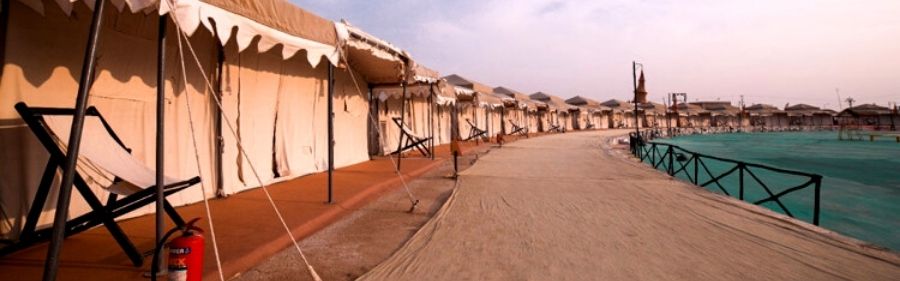
Odisha govt to promote homestays at eco-tourist spots
- Nov 17,2020
- Outlook India
Bhubaneswar, Nov 16 (PTI) The Odisha government on Monday decided to promote homestay facilities at nature trails and eco-tourist spots to attract tourists to remote areas of the state. At a high-level virtual meeting held under the chairmanship of Chief Secretary A K Tripathy, it was decided that homestays would be supported from the 2021-22 fiscal for a period of ten years, an official said. "Nature trail and experiential tourism is the current fad, and Odisha has much to offer in this sector. Develop homestay facilities in the remote areas untouched by hotel network," the chief secretary said. Places like Diamond Triangle Buddhist Circuit (Ratnagiri Udayagiri Lalitgiri), Onkadelli in Koraput district, Khola, Gupti, Dangmala and Bhitarkanika national park in Kendrapara district, Daringibadi, Belghar in Kandhamal, and Simlipal, Pithabata, Jashipur in Mayurbhanj have been prioritised for development of homestay facilities in the first phase. The other locations include Tikarpada, Satakosia in Angul, Magalajodi, Chilika in Khurda district and Dhodrokusum, Zero point in Bargarh district, he said. Around 80 homestay providers at these places would be incentivised each year with financial support, the chief secretary said. Mentioning that homestays have the potential to promote local entrepreneuship, Tripathy said, quality hospitality, hygiene and safety of the tourists should be ensured. Each homestay unit can let out 1-6 rooms (up to 12 beds) to guests. The rooms must be located in the premises where the owner or his family members normally resides. The owner or his family should be directly involved in providing hospitality to the guests. A room should be at least 120 sq ft in size for twin sharing with attached bathroom. There should be proper fan and air cooler arrangements, kitchen, power back, pest control and first aid facilities in the homestay units. Officials of the tourism department were asked to work out details for providing one time financial support to the owners for proper furnishing and addition of amenities. He also suggested that the facilities should be linked with global online travel aggregators and integrated to their websites. The chief secretary asked the departments of Tourism, Forest and Environment to train the local homestay unit owners and field level officials properly so that they could provide best cultural, cuisine and social experiences to the tourists. Development Commissioner S C Mohapatra said, "Presently homestay facilities in Magalajodi near Chilika lake and Dangmala in Bhitarkanika sanctuary area are showing encouraging results. "Such facilities at other places will attract more tourists and will expand economic activities in the rural sector. It can be tapped as a sustainable source of livelihood and income generation activity."
Read more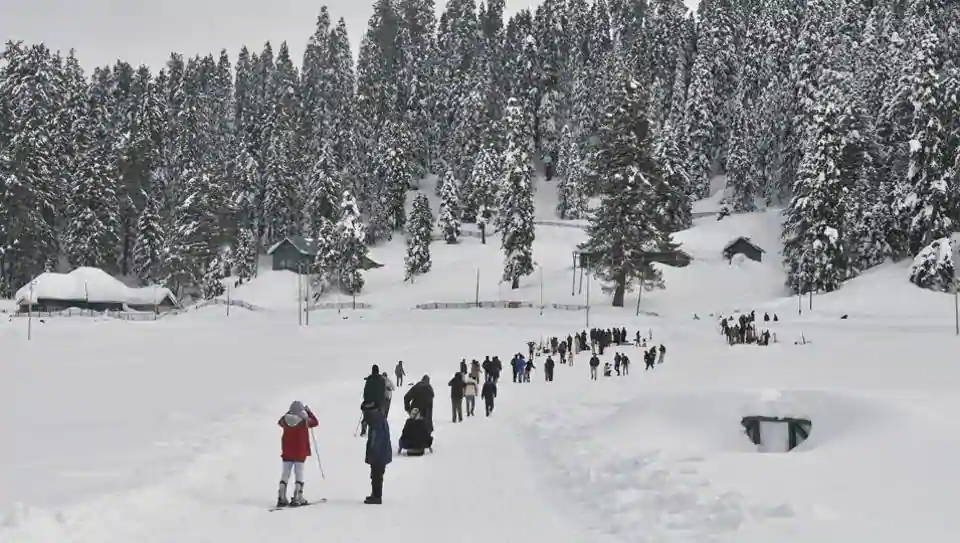
Winter tourism to attract tourists in Kashmir
- Nov 17,2020
- Economic Times
The slow-paced tourism seems to be slightly upsloping in Kashmir, as winter marks its arrival. The autumn is considered to be the one of the best seasons to witness the beauty of valley in an altogether different shade and the winters caters to the circuit for Gulmarg Pahalgam and Srinagar. “For the autumn as well as winters, the bookings are being incurred relatively well. The reddening of Chinar stays the main attraction for autumn. While for the winters Gulmarg bears more inflow due to the snow activities,” says Furqan, a tour operator from Kashmir. From the past one and a half months the bookings have scaled and been better. And more inclination for the winter season has been registered. “Kashmir portrays its beauty differently for every month of the year,” adds Rubina, a manager for a travel agency in Srinagar. She, firmly, states of decent travel bookings into the region for the autumn and a better pre bookings and turn out for the winters as well. “The business has picked up a little and it has been faring preferably,” she adds. However, some tour operators continue to opine of a significant fall in the traffic, comparative to the figure, the Kashmir valley has hosted over the time. The business is negligible and mostly, the guests with cancelled bookings for the month of April and May are turning up now. There is a trifling or no new bookings being registered, states Ejaz Pakhtoon, another tour operator from Kashmir. While another tour operator, Nazeer also opined similarly. Autumn attracted a substantial footfall but the charm and fervour seems to be a little lost this time. He says that the enquiries are adequate but an exact conversion rate falls short. While the most inflow is likely to be drawn towards the snow laden valley of Gulmarg for adventure sports activities. Sajid, a tour operator from Gulmarg says that the average footfall which measured around 400-500 per day is now being recorded at 100-150 each day. It has been building up gradually. The time around Christmas and New year is expected to be serving even better as there are pre bookings and enquiries both are being incurred, moderately. The operators expect the sector to further embolden through the winter tourism.
Read more
Mass tourism will be roaring back by summer, says Expedia CEO
- Nov 17,2020
- Hindustan Times
Its third-quarter earnings report shows a company that’s still pulling in $1.5 billion in quarterly revenue, exceeding mid-pandemic expectations, even if that it represents $221 million in losses. Parts of the business, such as airfare sales, may have tanked, but others, like rental home platform VRBO, are compensating. Instead of looking back at the last few months of bumpy business, though, Chief Executive Office Peter Kern—who assumed leadership of the company in April—would rather look forward. Even in comparison to other bullish industry leaders, Kern is steadfast in his conviction that travel’s recovery isn’t just on the horizon but around the corner. And it won’t be just on forested hiking trails and scenic byways but in big, dense, boarded-up cities, too. “Rome has been through a plague or two,” he says, repeating an idea he’s expressed during many engagements through the pandemic. “And it’s still there. New York has been through all kinds of things. It’s not the first time we’ve had civil unrest,” he explains. “It was a much different place, in terms of safety, when I was growing up in the ’70s, yet we still went there.” And while it’s true that a quieter New York still holds the vibrancy of many small towns combined, Kern feels that this arc of history will bend sharper and faster toward full recovery than any before. “This is a time with more science, more technology. We’re not going to give up.” “This is just one man’s opinion,” he continues. “This [process] will be less than the three to five years others are predicting. If you said tomorrow that there was a vaccine with 100% efficacy, and everyone gets it, do people want to live on a cul-de-sac or in a city? They’d rush back and realize there was a reason they weren’t living in a cul-de-sac before.” Dim prospects for the suburbs aside, here are Kern’s broader (and rosier) predictions for the short-term future of travel, from a due-any-minute spike in bookings to a “re-upping” of investment into urban restaurants and culture. Building confidence to book, if not confidence to travel Kern firmly holds that news of an impending vaccine—rather than the vaccine itself—is what will jump-start travel again. “People will think, ‘Well, by the summer Europe might be open, or I might have the vaccine, so let’s book it,’” he explains. Pfizer’s announcement last week that its vaccine candidate was 90% effective has not yet shown a quantifiable impact on Expedia’s sales, but it did send the company’s stock price up 22.5% that morning—along with similar spikes for such travel companies as Marriott International and Park Hotels & Resorts. A shift in consumer confidence doesn’t happen overnight, but it’s been steadily rising, Kern says. “Barring the vaccine, my sense is that people were getting increasingly comfortable with how safe air travel and hotels are—the precautions that the industry has been taking—and the numbers [of bookings] have been creeping up [as a result],” he says. “Of course, it helps if everybody does their part [to keep the virus in check].” The latter half of that thought is crucial: Trusting in airline and hotel protocols matters only when people are physically able to travel. With a second wave forcing lockdowns in much of Europe (and possibly the U.S., soon), consumer confidence may well be a moot point. Like others in the industry, though, Kern sees his decent-enough summer sales as proof that there is pent-up demand and reason to be hopeful that business can swell quickly again. “It’s all terrible—but it’s way less terrible than one might have imagined,” he concedes. Businesses die, entrepreneurship doesn’t As travellers decide to take a gamble on 2021 bookings, they’ll take comfort in Kern’s predictions for their favourite urban destinations—regardless of where they may be. That’s because entrepreneurialism is inherently resilient, as Kern puts it. “Some people will lose money, restaurants, hotels, but I’m not really a believer that a hotel disappears so much as that someone with capital comes in and rescues it,” Kern explains. That doesn’t mean that small businesses are being swallowed by conglomerates, he claims. He’d prefer to see them serve more as amicable partners. “Local colour is what makes places great. But in New York City, many, many restaurants are financed not by the chef or the person with the idea, but by people with capital.” (Don’t tell that to any of the 2.6 million people who live in Brooklyn, where neighbourhood pride and indie loyalty go hand in hand.) Money, he says, is not a scarce resource—even if strapped mom-and-pop operators might disagree right now—nor does it have to fund necessarily upscale businesses, which so far have proven to be a bit more resilient to the pandemic’s pinch. “There is still plenty of capital in the world. There will always be people to finance theater and restaurants and all those things,” Kern asserts.
Read more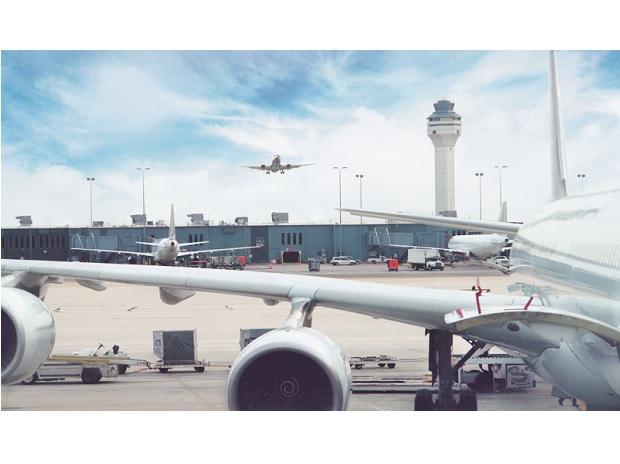
Domestic air traffic reaches new high on Friday over Diwali rush
- Nov 16,2020
- Business Standard
Indian airports handled the highest passenger volume this season on Friday as residents headed out to native places and leisure destinations for Diwali festival. Civil aviation minister Hardeep Singh Puri tweeted that domestic aviation operations reached a new high on occasion of Diwali as 2,25,097 passengers flew on 1,903 flights. Domestic air travel resumed on May 25 with limits on number of flights and caps on fares. The civil aviation ministry has now allowed the airlines to operate 70 per cent of capacity. The country’s busiest airports in Delhi and Mumbai saw highest footfalls on Friday as seat occupancy rose from around 60-65 per cent to over 70 per cent. While Delhi handled 81,570 passengers, Mumbai saw 46,442 passengers. "Month on month we are seeing an improvement in traffic. Business on Diwali has been better than Dussera," said a senior executive of a private airline. Seat occupancy has remained stable as the government has allowed for gradual ramp up in capacity. However traffic is still 50 per cent of pre-Covid level. "Its a good trend and we hope traffic will sustain," head of another airline added. "Last year's top routes during Diwali were dominated by routes between Mumbai, Delhi, and Bangalore. This year, we see routes from business centers in the West and South to destinations in the North and East feature in the top 10 routes. These routes include Delhi-Patna, Mumbai-Varanasi, Bangalore-Patna feature consistently. This trend indicates that customers this year are preferring to return homes and spend time with their families," online portal Cleartrip.com said. The portal said customers are preferring to book closer to the date of travel this year and this is in line with trends witnessed since the pandemic, where uncertainty around travel restrictions has made customers book closer to travel dates. Advance booking share greater than four weeks has dropped from 44 per cent last year to 25 per cent this year," the portal said.
Read more
Karnataka issues new quarantine rules for international passengers
- Nov 16,2020
- India TV News
As the number of coronavirus cases is showing downwards trends in Karnataka for the past few days, the state government is easing the COVID-19 restrictions. Recently, the administration issued new guidelines for international passengers which allows exemption from home quarantine by submitting a negative RT-PCR test report. An undertaking should be submitted to the Ministry of Civil Aviation on the portal that they would abide by the decision of an appropriate government authority to undergo facility or home quarantine, or self-monitoring of their health for 14 days, as warranted. Specifications for exemption RT-PCR testing facility will be available at the airports for passengers and they must undergo covid tests from these facilities only to get an exemption from 14-days home quarantine. Guidelines for symptomatic patients Meanwhile, international passengers who develop symptoms that are - fever, cough, cold, sore throat, loss of taste, loss of smell, weakness, body ache, diarrhoea, difficulty in breathing, and others, will be sent to a Dedicated Covid Health Centre (DCHC) for COVID-19 testing. Besides, if any symptomatic international passenger tests negative in Rapid Antigen Test (RAT), his/her results of the RT-PCR test will also be checked and the patient shall be shifted to a Covid hospital or for home isolation. On being tested negative through the RAT and RT-PCR test, the passenger will be advised to seek medical consultation and self-monitor health for 14 days. If they are symptomatic on arrival, mandatory testing by collecting three swabs and consequent protocol will be followed. Exemptions from quarantine rules International passengers with serious illness, pregnant, parents with children below the age of 10 or arrived in after a death in the family, are exempted from quarantine rules. However, they will have to self-monitor their health for 14 days and seek medical assistance if they develop symptoms. Further, business travellers, short-term travellers, and students who are writing exams in Karnataka will be exempted from quarantine on furnishing a negative RT-PCR test report for a test conducted 72 hours before travel.
Read more