
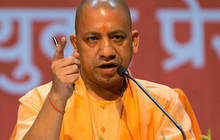
Yogi to lay foundation of UP tourist guest house in Uttarakhand
- Nov 16,2020
- Economic Times
UP Chief Minister Yogi Adityanath, who is on a two-day visit to Uttarakhand, will lay the foundation stone of UP Tourism guest house at Badrinath Dham on Monday. The proposed 40-room tourist guest house in Joshimath tehsil in Chamoli district will be a green building constructed in the Garhwal style of architecture and is to be completed in two-year time. The estimated cost of the project is Rs 11 crore. A UP Tourist Department project, it is proposed to be constructed on one acre land and will have a restaurant, conference hall, dormitory, and parking. It will cater to the domestic and foreign tourists and devotees coming to visit Badrinath Dham. Adityanath, accompanied by his Uttarakhand counterpart Trivendra Singh Rawat, is scheduled to make a night stay at Kedarnath and attend the 'Kapat' closing ceremony at the temple in the early hours on Monday. He will proceed to Badrinath after the programme.
Read more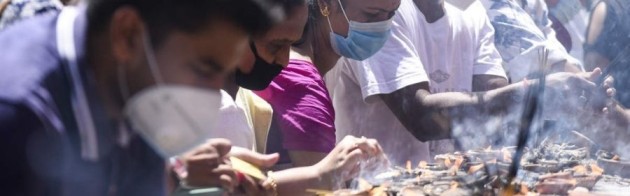
Places of worship to reopen in Maharashtra from Today
- Nov 16,2020
- Times Of India
Religious shrines and places of worship will now reopen for devotees from Monday, November 16 onwards as per the latest order passed by the Maharashtra government. However, everyone visiting places of worship in the state will have to adhere to all the safety norms issued by the state government to avoid spread of the Coronavirus. According to the reports, Maharashtra Chief Minister Uddhav Thackeray has asked the people to avoid crowding at religious places. Shoes will have to be removed at designated points and everyone should mandatorily wear a face mask. As laid down in the Standard Operating Procedures or SOPs, the governing bodies of all the places of worship will be in-charge of crowd management and elderly people above 65 years of age and children below 10 years. Pregnant women have been advised to stay at home. Maharashtra is home to a large number of small and big shrines including shaktipeeth temples, jyotirlingams and the famous rock-cut Kailash Temple. In Mumbai alone, Siddhivinayak Temple attracts countless devotees every other day. Mumba Devi Temple, Haji Ali Dargah, Basilica Of Our Lady of The Mount are some of the other foremost places of worship in Mumbai.
Read more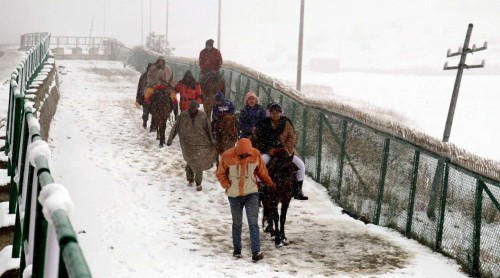
Fresh spell of snowfall in Kashmir's Gulmarg, Sonamarg raises hopes of tourism revival
- Nov 15,2020
- DNA India
Fresh spell of snowfall was observed in the higher reaches of Jammu and Kashmir on Saturday, forcing the Srinagar-Leh road to shut for traffic. Snowfall was reported from the ski-resort of Gulmarg, Baramulla, popular tourist resort Sonamarg and Ganderbal district. Snowfall was also witnessed in Gurez in north Kashmir's Bandipora district. The minimum temperature in the valley has plummeted 4 degrees below normal due to snowfall in the region. Snowfall has brought the entire Kashmir valley to life. Tourism which is the mainstay for the people of the region was hit hard due to the COVID-19 pandemic but with restrictions easing and popular tourist destinations like Gulmarg and Sonmarg witnessing snowfall the tourist inflow has increased. A tourist from Dehli Ranudeep said "I feel like in paradise it's like a snow blanket. I got tested for covid at the airport and I am not scared now. We have to look forward. The covid has already hit the industry hard and it's now time to fight. People should come out and start visiting this place." Another tourist from Mumbai said, "It's a different Diwali for us. We have come here with family and it is definitely going to be a memorable Diwali for us in Kashmir.” The locals were also ecstatic over the changing weather and tourism picking up pace. Zahoor Ahmad a tourist guide in Gulmarg said, "It's a moment of joy for us. Business was hit hard due to the lockdown since March but tourism is slowly picking pace and this snowfall is a Diwali gift to us. We want more and more tourists to come here and therefore we are taking all necessary COVID-19 precautions." Meanwhile, the meteorological department has forecast more rain and snow in the valley till Sunday. A good amount of rain is also expected in the plains. The weather will ease out Monday onwards but drop in temperature will increase the chill factor in the region.
Read more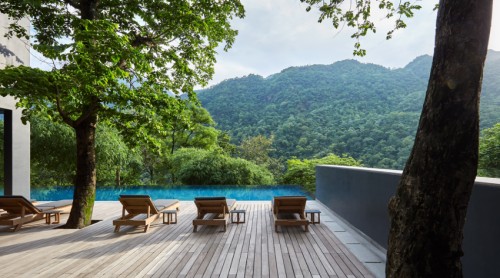
Staycations Are Becoming The Most Popular Tourism Trend During Covid-19
- Nov 15,2020
- Outlook India
The world is moving towards a new normal – there’s still dubiety regarding international travel, however, the search volumes for domestic staycations definitely uphold an appetite for going on vacation. No surprise that it’s one of the biggest holiday trends currently. A staycation means ‘stay’ and ‘vacation’ – A vacation that you take near your home for a slightly longer period of time than a regular holiday. Guests want to surround themselves with greenery and nature and get some fresh air with good weather after being locked inside their homes for months now. They also look forward to diversity in cuisines including immunity booster drinks/ dishes and indulge in outdoor physical activities including in Yoga and Meditation. The Covid-19 situation and the impact of lockdown have had a disastrous impact on the country’s tourism sector for now and perhaps forever. Vibhas Prasad, Director Leisure Hotels Group tells us, “Massive cancellations in March lead up to the lockdown and closure of all our hotels has ensured complete erosion in all revenues up to September as Himachal and Uttarakhand Government did not allow access into the state with Covid test which deterred travelers into the state.” Kush Kapoor, CEO, Roseate Hotels & Resorts adds, “One thing that’s certain in these unprecedented, uncertain times is that Covid-19 will continue to be the determining factor on the road map to the recovery of hospitality. While it might take time for the industry to fully recover, Hoteliers are coming up with innovative solutions to generate revenues. The Hotel Industry is presently witnessing a surge in demand for Staycations’ – The answer to weary millenniums and work from home employees who are in dire need for a vacation but want to be assured of the best hygiene standards. Restaurants are focusing more on takeaways with contactless delivery services.” However, in the near future, we expect domestic leisure to pick up wherein people would travel in their own cars to areas where there are limited cases or chances for exposure. Prasad believes that small boutique properties would be attractive for customers due to their layout which provides privacy and protection. The hill areas of Himachal and Uttarakhand have many such properties in close proximity to Delhi/NCR, Western UP, and Punjab. Hotels and restaurants are taking extra efforts to make sure they are giving safe for people. Prasad tells, “We are committed to offering guests a safe environment, utmost convenience, and a warm and delightful experience across all its properties. We are the only hotel chain to offer Covid RT-PCR test at home when the State Government needed travelers to get tests before crossing state borders.” “All touchpoints in public areas like a door handle, elevator buttons, countertops, tabletops, railings, etc. are cleaned continuously using a sanitizer/disinfectant. Stringent Protocols are in place for staff in the kitchens, restaurants, in-room dining, business centers, and banquet halls to sanitize their hands every time they serve food or touch food-related items.” He adds, “Correctly formulated hand sanitizers are in place in all guest rooms and at all public spaces and include the entrances, lobbies, corridors, business centers, cloakrooms, etc. Our cars are disinfected after each use, as is luggage, before entering the hotel. Masks and disposable gloves are being worn by all team members at all times and changed frequently. Housekeeping staff uses fresh gloves for every room they service.” On the other hand, Kapoor tells us, “We have been certified by Bureau Veritas, leading certification body for our safety precautions and hygiene practices, which is the most important factor especially in these Covid times.” “We ensure that every guest is thermally screened at entry gates. Display of ‘Safe’ status in the Arogya Setu app for staff & guests and the wearing of masks that be a must to enter the hotel premises. All hotel vehicles are disinfected at entry points and after every use. Sanitizers are kept in all prominent locations within the hotel. Guest luggage is thoroughly disinfected from outside upon arrival. To enable seamless, remote check-ins, touchless check-ins is being facilitated via an app, in which all information is pre-registered.” “After check out, the same room is allocated only after 24 hours post being thoroughly disinfected. Also, touchless dining is paramount which involves ordering and making payments via an app,” he adds. Work from home is here to stay and keeping this in mind, hotels are coming up with the Work From Hotel concept. Kapoor tells us, “Work From Hotel allows working people to step out of their house in a safe environment to conduct their meetings, conferences or just solo working with respite from the prevailing lockdown at home and self-indulge in a cocooned, luxurious yet safe environment. A dedicated versatile work station equipped to power your work gizmos during technical meetings with Wi-Fi, and an in-room tea-coffee making facility to stimulate your senses when you take a quick break, make it just perfect. Guests can even indulge in inspiring views outside amidst safe and sublime surroundings. A wholesome working lunch curated by our in-house chefs is also included to complete a fulfilling day.” Lessons from the ongoing pandemic are loud and clear. Social distancing, the importance of hygiene, and sanitation cannot be overstressed. It is also now deeply ingrained in the human psyche at large how large-scale meddling was the precursor of the crisis and people want to move more towards nature. In these times, sustainable travel assumes a depth and meaning which were absent before. People want to reduce their carbon imprint and staycations out of cities are becoming one of the most popular trends. Staycations are ideal options for families that are deciding what to do for their holidays; trying to balance concerns about their finances and their fear of Covid-19, with their desire for fun and relaxation. The pandemic may instead be pushing a revival of creative holiday making nearer to home, with potentially huge benefits for crisis-hit local economies.
Read more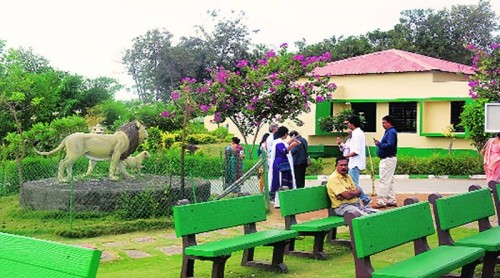
Gujarat: Over 1 lakh tourists visit Ambardi lion safari park in 3 years, no dip in footfall at Devaliya
- Nov 15,2020
- The Indian Express
The Ambardi Safari Park, which, was planned to distribute the Asiatic lion tourism flow in Sasan in Gir (west) forest, has attracted more than one lakh tourists since it was opened three years ago. But data suggests that tourist footfall at Devaliya Interpretation Zone (GIZ) near Sasan, the village in Gir (west) forest known for its lion safaris, has remained unaffected with officers saying that the new safari park could have tapped into new tourist circuit. Located on the scenic bank of Khodiyar dam near Dhari village of Amreli district, Ambardi Safari Park was inaugurated by Chief Minister Vijay Rupani in October, 2017. By March this year, 1,32, 895 tourists had visited the park, as per data from forest department. According to the data, 44,823 tourists visited the park in 2017-18. Another 50,126 visited it in 2018-19 and 37,946 in 2019-20 even as the park was closed to tourists 10 days prior to end of the financial year due to the Covid-19 outbreak. The tourism generated total Rs2.23 crore revenue for the forest department. Despite around 50,000 tourists visiting the Ambardi park annually, tourist footfall at GIZ, which is popularly known as Devaliya safari park, has remained unaffected. In fact, in year 2017-18, the year in which the Ambardi lion safari park thrown open to tourists, number of tourists who visited Devaliya safari park was 4.19 lakh, the highest in the past five years. The following year, 3.69 lakh tourists visited Devaliya and another 3.80 lakh in the truncated year 2019-20. While the number of tourists at Devaliya in 2015-16 and 2016-17 was 3.85 lakh and 3.93 lakh respectively, data shows. Data suggests that tourist flow at Ambardi park has been roughly 10 per cent of Devaliya but the footfall at the latter hasn’t seen any significant dip. “It seems tourists going to Tulshishyam and Diu are the ones who are preferring to watch lions in the Ambardi park whereas those visiting Devaliya are following a different circuit. Data seems to suggest that tourist flow has not diverted from Devaliya to Ambardi,” Dushyant Vasavada, Chief Conservator of Forests (CCF) of Junagadh wildlife circle said. While inaugurating the Ambardi park, Rupani had expressed hope that the new 400 hectare safari park carved out of the Ambardi reserved forest on the edge of Gir (east) forest would decrease pressure of eco-tourism at Devaliya safari park as well as lion safaris inside the tourism zone inside the Gir National Park and Wildlife Sanctuary in Gir (west). Both parks, however, exhibit almost same kind of animals in similar surroundings and having same rates of entry tickets. “Facilities and animals at both the parks are very much similar save the leopard enclosure in Devaliya. We are constructing a similar enclosure in Ambardi,” Vasavada further said. Gir forest and other protected areas are the only natural home of Asiatic lions in the world. The world’s only sub-population of this species of big cats is surviving in this landscape spread across Junagadh, Amreli, Gir Somnath and Bhavnagar districts. In these two safari parks, captive-bred lions and other wild animals are kept in semi-captivity in their natural surroundings. The parks resemble much the Gir forest except for the pucca tracks on which tourist vehicles transact. Eco-tourism at Sasan has been growing at rapid pace, especially after actor Amitabh Bachchan highlighted the prestine forest and Asiatic lions in the Khooshbu Gujarati Ki promotional campaign of the Tourism Corporation of Gujarat Limited (TCGL). The increasing rush of tourists has persuaded the state government to open Girnar Wildlife Sanctuary, a protected forest overlooking Junagadh city, to tourism.
Read more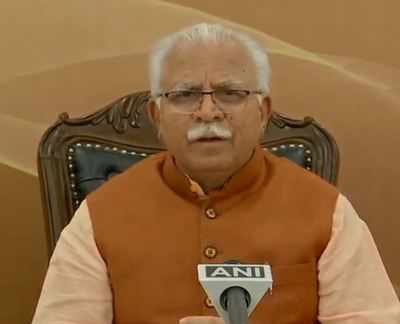
Promote heritage sites for tourism, says Haryana CM Manohar Lal Khattar
- Nov 14,2020
- Times of India
To encourage tourism in the state, Haryana chief minister, Manohar Lal has Khattar directed the officers concerned to take strategic initiatives to bring ancient heritage sites like Kurukshetra, known for the battle of Mahabharata, Lohgarh the first Capital of the Sikh empire to the Civilizations that existed even before the Harappan and Mohenjodaro times, on the world map. These directions were given by CM on the occasion of release of special cover made by the department of archaeology and museums in association with the Indian Postal Department on Rakhigarhi, the world famous archaeological site of the Indus Valley Civilization. Minister of State for Archaeological and Museums (Independent Charge) Anoop Dhanak was also present on this occasion. The CM while wishing the people Dhanteras and Diwali said that mythology, culture, and history have their own importance. Elaborating on it further he said that any country or state can be on the path of progress only if its youth is aware about its history and culture. Laying emphasis on the importance of history he said that Haryana has more than 100 sites with historical and mythological prominence and the state should work towards preserving such sites with a motive of promoting the importance of ancient culture for future generations. Besides this, tourism will also be encouraged at these sites. Sharing historical anecdotes, the chief minister said that the battle fought against Mughals by Baba Banda Singh Bahadur, who was the first commander of the Sikh Empire, has its roots in Haryana. Moreover, Lohgarh which was the capital of Yamunanagar, under Banda Bahadur will also be developed so as to promote tourism in that area and a museum along with a martial arts school is also being established there. Sharing more details he said that the place of origin of the Saraswati River, Adi Badri is also being developed majestically.
Read more