Varanasi-Kolkata Expressway To Slash Journey Time By Six Hours

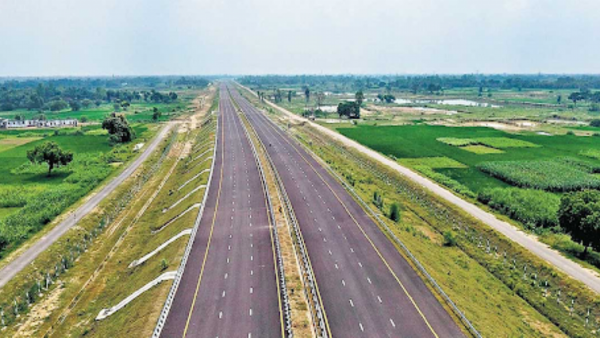
NEWS VARANASI-KOLKATA EXPRESSWAY TO SLASH JOURNEY TIME BY SIX HOURS Varanasi-Kolkata Expressway To Slash Journey Time By Six Hours The upcoming six-lane Varanasi-Kolkata expressway is set to reduce travel time to the east of India from 15 hours to 9 hours. ADVERTISEMENT BY YASHITA VASHISHTH Published on Feb 28, 2024, 10:01 AM IST Representational Image Credit: UNIKYLUCKK/Shutterstock The upcoming Varanasi-Ranchi-Kolkata expressway, also known as the Varanasi-Kolkata expressway, will reduce the travel time between Varanasi and Kolkata by six hours along its 610 km stretch. Currently, the journey takes about 15 hours, but with the expressway, it’ll only take about nine hours from Varanasi to reach Kolkata. The foundation stone for this expressway was laid by Prime Minister Narendra Modi on February 23, 2024. During the launch event in Varanasi, PM Modi shared that this initiative will bring Uttar Pradesh, Bihar, Jharkhand, and West Bengal closer together. “In the future, the travel time between Varanasi and Kolkata is going to be almost halved,” he remarked. The starting point of the six-lane expressway will be Varanasi, Uttar Pradesh. From here, it’ll enter Bihar from Chand, pass through Imamganj in Gaya, and exit the state after covering approximately 160 km. Authorities have also proposed a five-km-long tunnel through the Kaimur Hills, which will cross the Sone River in Sasaram and Tilauthi. The Varanasi-Kolkata expressway will then enter Aurangabad through the Grand Trunk Road. Scheduled to be completed in the next five years, the expressway will draw INR 1,317 crore in the first tranche of the project, known as Package 1. According to a report by News18, most of this sum will be used to acquire land for the highway. The primary aim of this expressway is to connect major trade routes, thereby reducing logistical costs. Additionally, it will also link two culturally rich destinations, both situated along the banks of the sacred river Ganges. The holy city of Varanasi, or Kashi, is an established hub of art and design, while Kolkata is a melting pot of cultures, architecture, festivals, and music.

Read more

Nepal embraces digitalisation: Trekking permits go online

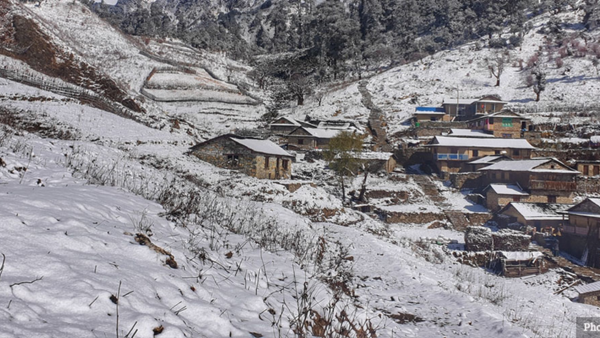
In a ground-breaking move, Nepal has bid farewell to decades of paper-based trekking permit applications, ushering in a new era with the introduction of an online system. Effective since February 23, 2024, this transition is geared towards simplifying the permit issuance process for foreign visitors, bringing about time savings for both trekkers and government officials. Previously, the cumbersome process involved physically visiting immigration offices and navigating queues. With the advent of the online system, trekkers can now conveniently apply for permits from the comfort of their homes through a dedicated digital platform. Despite the positive shift, there is a current limitation in the payment process, restricting transactions to Nepali payment channels such as mobile banking apps or local platforms like Connect IPS, E-sewa, and Khalti. Recognising this constraint, the government has expressed its intention to address the issue through legislative changes, potentially allowing payments in foreign currencies. Furthermore, in adherence to regulations prohibiting solo trekking in restricted areas, permits for these regions will continue to be exclusively issued through authorised tour operators. The tourism industry has warmly welcomed this digital transformation. Nilhari Bastola, President of the Trekking Agencies Association of Nepal, lauds the convenience and efficiency brought about by the online system, despite acknowledging an initial learning curve. He also highlights the positive impact on reducing bureaucratic hurdles. This online platform represents the latest in a series of initiatives aimed at facilitating visitor entry into Nepal. Notably, the recent implementation of an electronic travel authorization (ETA) system allows tour operators to electronically obtain visas for their clients, eliminating the need for physical visits to immigration offices.

Read more

Telangana: Two 1300-year-old temples unearthed in ancient Nalgonda temple

As per the latest development, two temples dating back to 1300 years have been uncovered. If reports are to go by, in the village of Mudimanikyam, nestled along the banks of the river Krishna in Nalgonda district, a team led by Dr. M A Srinivasan and S Ashok Kumar from the Public Research Institute of History, Archaeology, and Heritage (PRIHAH), made some remarkable archaeological discoveries. Along with two Badami Chalukya temples, dating back over 1300 years to the Badami Chalukyan period, a 1200-year-old label inscription was also unearthed. Reports add that the label inscription, in all likelihood, dates back to the 8th or 9th Century AD, which is during the Badami Chalukya era, as it bears the intriguing term 'Gandaloranru' and is engraved on a pillar within a cluster of five temples. While the precise meaning remains elusive, Dr. Munirathnam Reddy, Director of Epigraphy at the Archaeological Survey of India, suggested that the initial letters ‘Ganda’ in Kannada might signify ‘hero,’ possibly implying a heroic title. Dr. M A Srinivasan, General Secretary of PRIHAH, explained the historical significance of the Krishna river valley, which has been further accentuated by the newfound artifacts in Mudimanikyam village. At the end of the village, two temples dating between 543 AD and 750 AD stand as exceptional relics from the Badami Chalukyan rule. Dr. Srinivasan noted their uniqueness as Badami Chalukyan temples adopting the Kadamba nagara style in the Rekha nagara format—an architectural rarity in Telangana. He is of the view that with minimal conservation and restoration work, these temples can serve as testimonies to the Badami Chalukyan period in Telangana. An additional inscription from 1673 AD adorns the pillar of the Rama temple in Mudimanikyam. Dr. D Surya Kumar, an epigraphist and vice-president of PRIHAH, highlighted its historical significance, offering detailed insights into donations made to the Rama temple by diverse communities from nearby towns like Tangeda and Nagarjunakonda to more distant places like Warangal. Despite its age and partial abrasion, this inscription enriches the understanding of the region's historical connections and philanthropic practices.

Read more

Will Tuvalu disappear in the next few years?

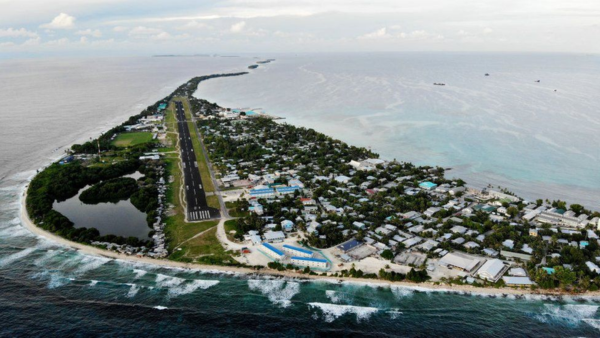
Tuvalu, famed as one of the world's most enchanting island destinations, not only receives the least number of visitors, but is also facing the unfortunate possibility of becoming inaccessible in the foreseeable future. The cause for concern is the potential disappearance of the nation at an accelerated rate. Situated in the west-central Pacific Ocean, Tuvalu occupies a strategic location approximately halfway between Hawaii and Australia. The country is characterised by a ring-shaped coral reef encompassing a lagoon, adorned with islands With a reported population of around 12,000 residents, Tuvalu holds the distinction of being the world's least visited country. Despite its diminutive size, it stands as one of the smallest nations globally and has its own currency. If reports are to go by, Tuvalu is fragile and low-lying, with elevations barely exceeding 15 ft above sea level. This vulnerability makes it easy to fall prey to the relentless waves washing over them. As the world's fourth-smallest nation, Tuvalu faces an uncertain future due to climate change. Reports suggest that rising seas and severe storms are gradually submerging the islands, fostering concerns that Tuvalu might become uninhabitable or completely disappear within a few decades. The challenge lies in navigating through the rhetoric and conflicting scientific perspectives to discern where global climate theory intersects—or doesn't—with the lives of Tuvalu's people. Gaining clarity proves difficult, as many experts providing opinions on the matter have not visited Tuvalu, and those who have often bring their own agendas. If numerous reports are to go by, it becomes evident that the nation and its nearly 10,000 residents are indeed grappling with significant challenges, with rising seas representing just one facet of a multifaceted problem.

Read more

Uttarakhand witnesses inauguration of new heli service in Haldwani, Munsiyari, Pithoragarh, and Champawat

Chief Minister Pushkar Singh Dhami has recently inaugurated heli service in Uttrakhand to boost connectivity within the state. The newly launched helicopter service will link Haldwani with Munsiyari, Pithoragarh, and Champawat. This initiative is a part of the Regional Connectivity Scheme which aims to reduce the distance between these remote regions. The helicopter service is a much-awaited development in the region's transportation infrastructure. Chief Minister Dhami, speaking at a virtual ceremony, also highlighted its role in connecting remote areas that will help provide relief and rescue efforts during emergencies. Uttarakhand is noted for its natural beauty but given its challenging terrains, aerial connectivity will help with both everyday travel and critical emergency response capabilities. This launch follows the recent inauguration of a new terminal building at Jolly Grant Airport. Chief Minister Dhami also announced upcoming air routes, including Dehradun to Amritsar, Dehradun to Pantnagar, and Dehradun to Ayodhya. Beyond the Haldwani-Munsiyari-Pithoragarh-Champawat route, the Chief Minister also shared the plans to extend helicopter services to other tourist destinations like Trijuginarayan and Lansdowne. On the other hand, the introduction of helicopter services is also going to transform local communities in these regions by providing faster and efficient transport. The launch of the helicopter service from Haldwani to Munsiyari, Pithoragarh, and Champawat signifies a milestone achievement for Uttarakhand, showcasing the state's dedication to improving connectivity and fostering economic and social development.

Read more

WTTC Celebrates Saudi Arabia's Milestone Surpassing 100 Million Tourists

London, UK: The World Travel & Tourism Council (WTTC) congratulates Saudi Arabia's achievement of welcoming over 100 million tourists, a testament to the Kingdom's strategic reforms, visionary investments, and resilience in the face of global challenges. This milestone exemplifies the success of Saudi Arabia's efforts to transform its Travel & Tourism sector into a key driver of economic diversification and growth. The introduction of tourist visas in 2019 and the strategic formation of the Ministry of Tourism in 2020 have been pivotal in aligning the Travel & Tourism sector with the ambitious goals of Vision 2030. The National Tourism Strategy and subsequent regulations introduced in 2022 to enhance service quality and development have further propelled the sector forward, setting a strong foundation for sustainable growth and innovation. Saudi Arabia's Travel & Tourism sector has demonstrated remarkable resilience, achieving a 156% increase in international tourist arrivals in 2023 compared to 2019. This recovery highlights the effectiveness of the Kingdom's strategic initiatives, including the streamlined E-visa program and significant investments in tourism infrastructure, which have collectively enhanced the country's appeal as a premier global tourism destination. The achievement of attracting over 100 million tourists underscores the success of Saudi Arabia's proactive strategy and reform-driven approach to cultivating a vibrant tourism ecosystem. This milestone not only showcases the sector's appeal but also Saudi Arabia's strategic foresight and adaptability, achieving a significant goal seven years ahead of schedule. Saudi Arabia strategic reforms have created a supportive and flexible regulatory environment that encourages investment and innovation. Key among these reforms is the restructuring of tourism license fees, tailored to meet specific needs and operations of investors. The Kingdom has also taken significant steps to alleviate the financial burden on the Travel & Tourism sector by reducing annual government fees by almost 22%, with a commitment to further reductions of up to 70%. These initiatives are integral to Saudi Arabia's broader economic diversification strategy and its aim to position tourism as a leading employment sector by 2030. As Saudi Arabia continues its path of expansion and strategic reforms within the Travel & Tourism sector, WTTC recognises the Kingdom's significant achievements and is committed to supporting its ongoing ambitions. The global tourism body looks forward to Saudi Arabia's continued growth and success in establishing itself as a global tourism powerhouse, contributing to the sector's global recovery and prosperity.

Read more