Sikkim all set to get its first railway station after a long wait of 49 years!

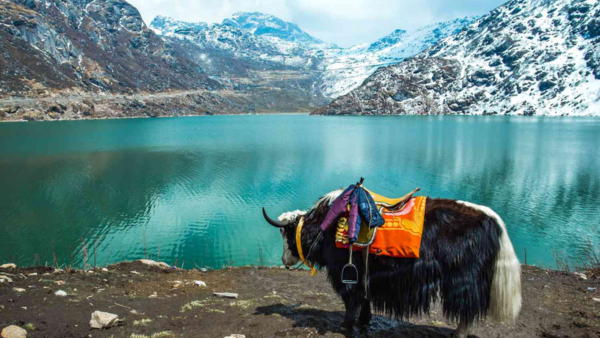
Sikkim is all poised to undergo a transformation in connectivity. It’s the only Indian state that doesn't have railway access, and this is soon going to change. As per the latest news reports, Prime Minister Narendra Modi is scheduled to lay the foundation stone for the state's inaugural railway station on Monday, February 26. Deputy Railway Manager of Alipurduar, Amarjeet Agrawal, highlighted the dual significance of the Rangpo station for Sikkim and India. He explained that the railway station will serve both tourism and defense purposes. If reports are to go by, this ambitious railway project will unfold in three phases: the Sevoke to Rangpo rail project in the first phase, Rangpo to Gangtok in the second phase, and finally, Gangtok to Nathula in the third phase. Sikkim officially became India's 22nd state on May 16, 1975, following the abolition of the monarchy. The Sivok-Rangpo railway project spans 45 km and predominantly features tunnels, bridges, and open cutting/filling of station yards. An outstanding aspect of this project will be the application of the latest NATM (New Austrian Tunnelling Method) technique for tunneling, with tunnels covering 86% of the total length and bridges making up 5%. Reportedly, the upcoming railway station in Sikkim will mark a significant milestone in the broader Sivok-Rangpo railway project, promising enhanced connectivity and accessibility for the region. The development reflects not only a groundbreaking achievement for Sikkim, but will also contribute to India's railway infrastructure by introducing innovative elements like its first underground railway station.

Read more

Nepal to make carrying e-chips mandatory for Everest climbers

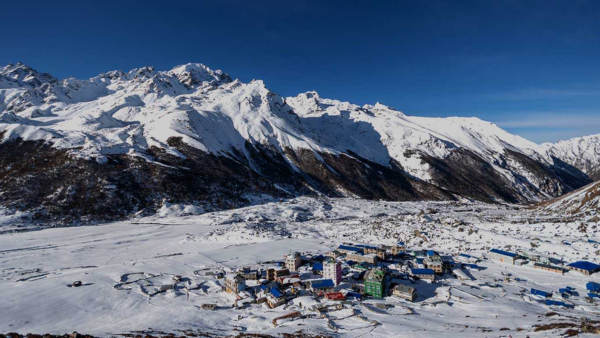
Nepal is all set to introduce a mandatory safety measure for all those climbers who head on to the challenging journey to Mount Everest, the world's highest peak. If reports are to go by, beginning this Spring, all climbers will be required to carry an electronic chip, a rule that aims to enhance rescue operations in case of emergencies during the ascent or descent of the 8,849 metres (29,032 ft) high mountain. As such, the government is in the process of devising a regulation that will mandate the use of such a chip. Reports add that it’s anticipated that this initiative will come into effect from the upcoming Spring season, which will be coinciding with the commencement of the climbing season on Mt. Everest. This period marks the opening of the limited time frame suitable for ascending to exceptionally high altitudes. With the opening of the narrow climbing window that occurs during the Spring season, thousands of climbers worldwide, including those from India and Nepal, are drawn to Mt. Everest, also known as Sagarmatha in Nepali. While many manage to successfully reach the summit, reports of unfortunate incidents of fatalities and serious injuries have also been recorded over the years. Since 1953, Nepal government data indicates that around 300 individuals have lost their lives on Mt. Everest. Further reports add that in the Spring season of 2023 alone, up to May 22, 12 climbers, including four Nepalese, one Indian, and one Chinese, lost their lives during expeditions to Mt. Everest. The challenging terrain and extreme weather conditions, including snowstorms and avalanches, make search and rescue operations from the Everest base camp, which is situated at an altitude of 18,000 ft. To address safety concerns, the Nepali government plans to provide electronic chips to all climbers at a nominal cost, which as of now, is estimated to be between USD 10 to USD 15. Rakesh Gurung, the Director at the Department of Tourism, emphasised that the fitting these chips into the climbers' jackets will not only contribute to safer expeditions, but will also facilitate more efficient emergency rescue operations. Reports add that some reputable climbing agencies have already adopted this safety measure by providing electronic chips to their climbers ahead of the official implementation of the rule.

Read more

Mexico City will likely run out of water in a few months!

Mexico City, one of the world’s biggest cities that serves as home to nearly 22 million inhabitants, is not facing a pressing water crisis, which is further accentuated by a complex interplay of numerous factors. The challenges stem from geographical constraints, deteriorating infrastructure, chaotic urban development, all compounded by the impacts of climate change. If reports are to go by, this region has been facing prolonged periods of abnormally low rainfall, further extended dry spells, and elevated temperatures have strained an already burdened water system grappling with surging demand. Consequently, authorities have gone ahead to implement substantial restrictions on water extraction from reservoirs. Despite politicians downplaying the severity of the situation, experts, including atmospheric scientist Christian Domínguez Sarmiento from the National Autonomous University of Mexico (UNAM), warn that Mexico City is on the brink of a potential "day zero" scenario in a matter of months. This ominous prospect arises from critical water shortages that have plagued several neighborhoods for weeks, further made worse by the anticipation of four more months before the rainy season begins. Mexico City's precarious situation is deeply rooted in its historical development. Originally built on a high-altitude lake bed, the city, situated around 7,300 ft above sea level, has been facing challenges, such as sinking due to clay-rich soil, seismic vulnerabilities, and heightened susceptibility to climate change. The city's expansion over the years has witnessed the transformation of wetlands and rivers into concrete and asphalt, resulting in flooding during the rainy season and drought in the dry season. As per the records, approximately 60% of Mexico City's water is sourced from its over-exploited underground aquifer, contributing to the city's alarming subsidence rate of around 20 inches per year. The remaining water supply is inefficiently pumped over long distances from external sources, with nearly 40% lost through leaks. The Cutzamala water system, vital for supplying about 25% of the city's water, currently languishes at around 39% of its capacity, a historic low that has been caused by severe drought.

Read more

Stunning visuals of new T3 Terminal at Lucknow's CCS International Airport takes internet by storm

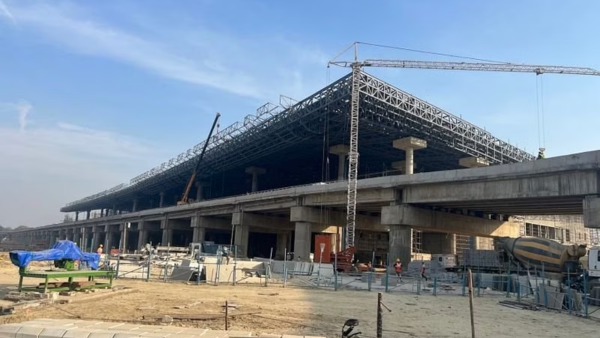
A recently released video offering "breathtaking views" of the T3 Terminal at CCS International Airport in Lucknow has captured the attention of numerous individuals, stirring admiration for its architectural grandeur and modern design. Among those impressed are Minister Shantanu Thakur and prominent business figure Anand Mahindra, both of whom shared their reactions on platform X. Their responses underscore the widespread appeal of the newly constructed terminal, which represents a significant addition to the airport infrastructure in Lucknow. The video's release has sparked discussions about the terminal's aesthetic appeal, functionality, and potential impact on travel experiences for passengers passing through the airport. Minister Shantanu Thakur, who holds the portfolio for India's Ministry of Ports, Shipping, and Waterways, recently took to social media to share this awe-inspiring video. The footage provided a glimpse of the magnificent new T3 Terminal at CCS International Airport in Lucknow, Uttar Pradesh. Accompanying the video was a caption penned by the Minister himself, in which he described the visuals as "breathtaking."

Read more

14 new temples built in Jamnagar, Gujarat ahead of Anant Ambani-Radhika Merchant wedding

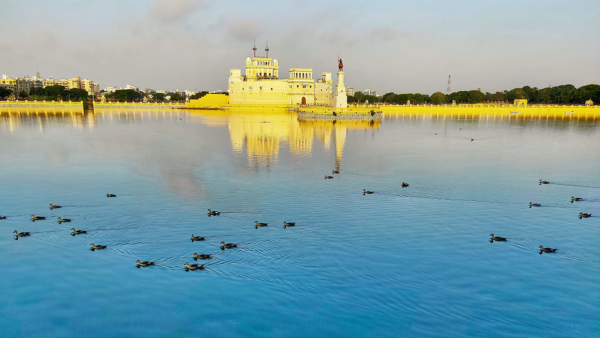
Anant Ambani-Radhika Merchant wedding is one of the much-awaited events of 2024! But before the wedding of the year, the Ambani family has taken a remarkable initiative of building 14 new temples in Jamnagar, Gujarat. These temples are an architectural wonder, and are adorned with intricately carved pillars, sculptures of different deities, and colourful fresco-style paintings. Reflecting architectural styles passed down through generations, it serves as a poignant symbol of artistic mastery and cultural legacy. Master sculptors, along with local artisans, have meticulously built these temples using traditional techniques. Nita Ambani, the Founder & Chairperson of Reliance Foundation, has championed this endeavour, emphasising the importance of preserving and celebrating India's rich heritage. Before the wedding, which is scheduled for July 12 in Mumbai, the Ambani family has contributed to the construction. Recently, Nita Ambani personally visited the temple complex to inspect the progress and engage with the artisans and devotees involved in the project. The initiative aims at preserving Indian heritage, tradition, and culture. The entire complex is a beautiful reminder to India's rich cultural and spiritual identity. The Reliance Foundation shared a video on YouTube and the description written alongside reads, “Ushering in Anant Ambani and Radhika Merchant’s much-awaited wedding, the Ambani family has facilitated the construction of new temples within a sprawling temple complex in Jamnagar, Gujarat.”

Read more

International Yoga Festival 2024 to be held in Rishikesh from March 8-14

The very famous International Yoga Festival is all set to be held from March 8 to 14 in Rishikesh’s Parmarth Niketan Ashram. The fest celebrates the true essence of Yoga, combining ancient Indian practices with global yoga traditions. The 70 hours of yoga classes led by Yoga teachers across various disciplines, including Kundalini, Power Vinyasa, Iyengar, and Kriya Yoga. This enriching experience is further enhanced by the spiritual leaders. What to expect? Yoga Practice: Attendees will get a chance to experience over 70 hours of Yoga classes from world-class teachers practicing. Workshops: The festival will also see workshops on various aspects of Yoga from both Indian and international teachers. Cultural events: Attendees will also get a chance to enjoy a special evening Ganga Aarti, cultural performances, dance workshops, music performances. Spiritual discourses: The festival is a unique opportunity to learn from the Satsang and teachings of spiritual masters and Yogacharyas. Cultural beauty: Evenings at the festival are alive with vibrant cultural performances, ensuring participants not only practice yoga but also celebrate its spiritual dimensions. Ashram stay: Parmarth Niketan, the festival’s venue, offers a serene and holy setting along the Ganges, surrounded by the Himalayas’ natural beauty, providing a perfect backdrop for yoga and meditation.

Read more