

Air travel hit at Delhi Airport due to foggy conditions and low visibility – Check details
- Jan 29,2024
- Financial Express
Northern states of the country have been experiencing thick fog conditions for a few days. On Monday morning, fog engulfed the national capital disrupting flight operations at Delhi International Airport. Several domestic and international flights have been delayed owing to the foggy conditions in several parts of the country, the Flight Information Display Board (FIDB) at Indira Gandhi International (IGI) Airport mentioned. The delays have been reported from international flights from Riyadh, Bangkok, Frankfurt, and Copenhagen Kashtrup among others. Domestic operations too got hit due to dense fog and adverse weather conditions, Delhi Airport FIDB showed. Fog to prevail over parts of the country Dense to very dense fog and cold day to severe cold day conditions are very likely to continue in isolated pockets of Punjab, Haryana, Chandigarh, and Uttar Pradesh. Dense fog conditions in isolated pockets are very likely to prevail for a few hours in the morning over Uttarakhand, north Madhya Pradesh, Sub-Himalayan West Bengal, Nagaland, Manipur, Mizoram & Tripura on January 29. On Sunday, Delhi recorded the maximum temperature of 18.6 degrees Celsius, normal for the season’s average. The minimum temperature of 6.0 degrees Celsius, three notches below the season’s average, was recorded in the morning. According to the IMD, from January 31 to February 1, the weather conditions will be generally cloudy with light rain or drizzle. From January 29 to 30, the city may witness moderate fog.
Read more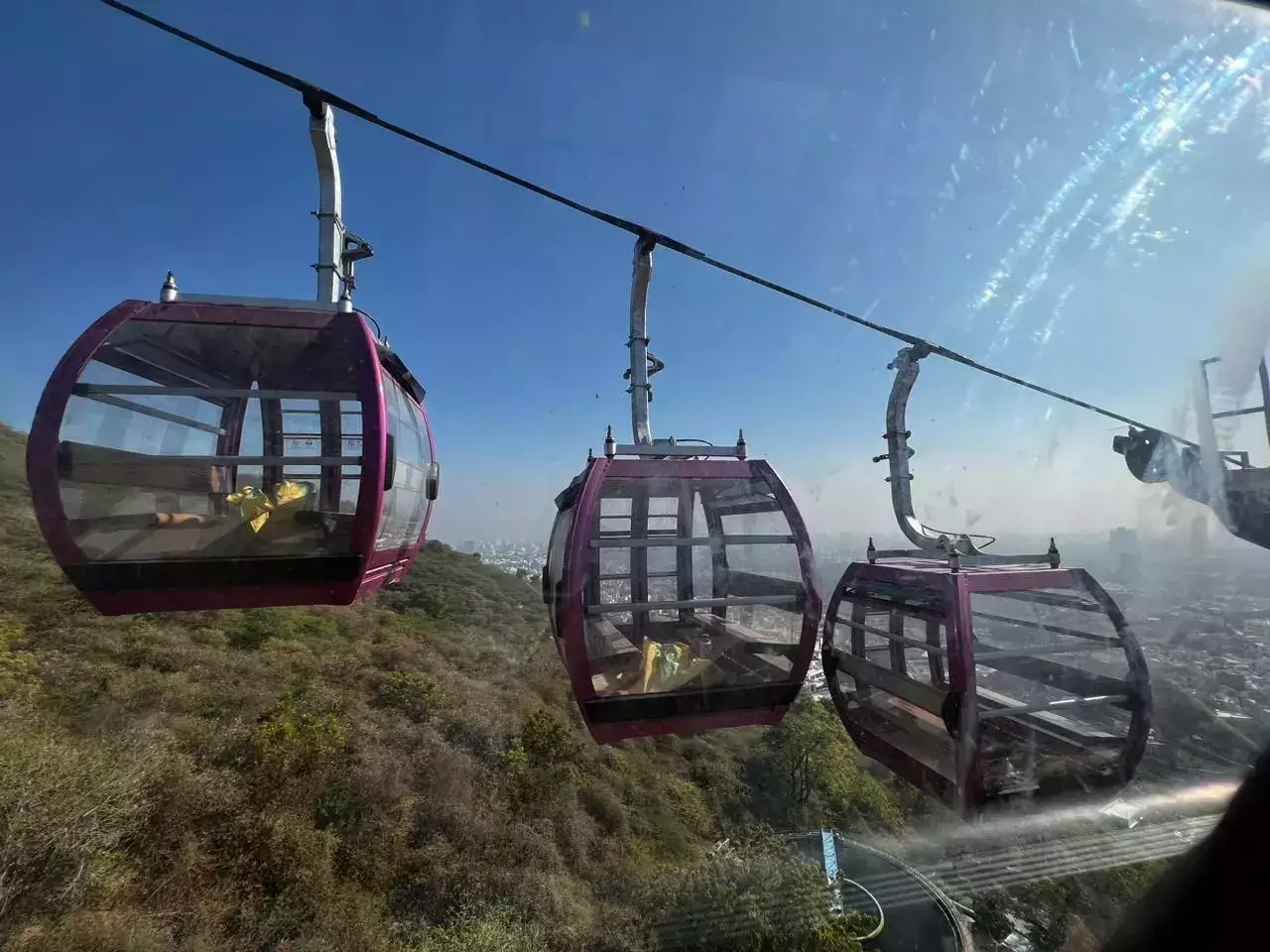
Damodar Ropeways inaugurates Neemach Mata ropeway project worth INR 20 crores at Udaipur
- Jan 27,2024
- Economic Times
Damodar Ropeways and Infra Ltd (DRIL) has inaugurated the Neemach Mata ropeway project at Udaipur, Rajasthan which is built on an investment outlay of INR 20 crores. This project is situated at the picturesque Fateh Sagar Lake and will transport passengers to the Neemach Mata temple, which is dedicated to the revered deity of Udaipur. A journey on the ropeway offers picturesque views of Udaipur and is expected to become an integral part of every Udaipur itinerary. The significant date of January 22nd was selected for the inauguration to dedicate this ropeway to the Ram Utsav, a festival celebrated throughout the country. This is the second ropeway project completed by DRIL in Rajasthan after the Savitri Mala Ropeway in Pushkar. TheGovernor o f Assam, Shri Gulab Chand Kataria, inaugurated the ropeway project in the presence of Tarachand Jain, MLA, Udaipur, Govind Singh Tank, Mayor, Udaipur; Phool Singh Meena, MLA, Rajasthan; and Paras Singhvi, Deputy Mayor, Nagar Nigam, Rajasthan. Other dignitaries present at the occasion were Rajendra Bhatt, Chairman & Commissioner, Udaipur Development Authority; Ajay Pal Ji Lamba, Inspector General, Udaipur Police; Arvind Poswal, District Collector, Udaipur. The event was also graced by leaders from travel and tourism industry associations, all of whom were captivated by the introduction of another gem in the beautiful city of lakes, Udaipur. Damodar Ropeways and Infra, established in 1974, stands as one of the oldest and most experienced market leader in the ropeway industry. The company has been responsible for constructing more than 60 per cent of the ropeways in the country from 2015 onwards. It has undertaken iconic ropeway projects across various locations including the mighty river Brahmaputra in Guwahati, Vaishnodevi, and at numerous religious sites like Maihar, Chitrakoot, Jammu, Dewas, Pushkar, Nainadevi, as well as in tourist destinations such as Gangtok over the years. The ropeway operations will be open to the public starting from 2 PM on January 22. Throughout January, the regular operating hours for the ropeway will be from 7 AM to 8 PM daily. The ticket prices will be INR 185 for a round-trip journey per passenger. This ropeway, featuring a mono cable fixed grip system, spans over a 500-foot elevation, ensuring a robustly engineered and secure travel experience. It is equipped with 12 ventilated cabins with automatic doors and has the capacity to transport 400 passengers per hour. The ropeway will save the passengers from the laborious and time-consuming climb, which typically takes 45 minutes to an hour. The company has also implemented measures to ensure its eco-friendliness and has taken great care to minimise the impact on the surrounding greenery. During the inauguration of the Neemach Mata Ropeway in Udaipur, Aditya Chamaria, Managing Director of Damodar Ropeways and Infra, expressed his gratitude, stating, "The Neemach Mata Ropeway marks our second ropeway project in Rajasthan, and we are optimistic about the state's remarkable prospects in tourism and infrastructure. We eagerly anticipate our other upcoming projects in this state, as Rajasthan holds a special place as my ancestral home, and we remain committed to its development." "Ropeways serve as a significant catalyst, unlocking numerous job opportunities, boosting tourism and pilgrimage activities, and enhancing the earning potential for small and medium-sized businesses, including food stalls, local restaurants, inns, motels, and hospitality service providers. Our goal is to offer unforgettable and scenic journeys," he further added.
Read more
India ranks fifth among top passenger markets for Singapore's Changi Airport
- Jan 27,2024
- Economic Times
India was ranked fifth among the top five largest passenger markets for Singapore's Changi Airport, which handled 328,000 flights and 58,9 million passengers in 2023, rebounding to 83 per cent of traffic levels seen before the Covid-19 pandemic, according to official data released on Wednesday. Indonesia topped the airport's passenger market in 2023, followed by Malaysia, Australia, Thailand and India, as per the latest figures released by the Changi Airport Group (CAG). India was the sixth travel traffic generator for the Changi Airport in 2019. Before the pandemic hit in 2019, the airport had registered 68.3 million passenger movements. The 2023 traffic passing through Changi airport was also an 83 per cent increase from the 32.2 million passengers the airport handled in 2022. About 328,000 flights took off from or landed at Changi Airport in 2023, the data stated, as against 382,000 flights it handled in 2019. Between October and December 2023, the airport recorded 16.1 million passenger movements, surpassing 90 per cent of pre-pandemic levels. December was the busiest month of the year, with 5.8 million passengers moving through the airport. This was 91 per cent of traffic levels in December 2019. The airport recorded its busiest day of the year on Dec 22, the Friday before Christmas, with 203,000 passengers passing through its terminals. In December, 30,400 flights landed at or departed from the airport. Quoting CAG, The Straits Times newspaper reported that all the regions to which the airport is connected are recording healthy recovery in passenger traffic from pre-pandemic levels. North America was the region that recorded the greatest growth of more than 25 per cent, compared to 2019. Meanwhile, Europe, the South-west Pacific (comprising Australia, New Zealand and the Pacific Islands such as Fiji) and South Asia are near full recovery, rebounding to more than 90 per cent of passenger traffic levels in 2019, the report said. Compared to 2022, North-east Asia was Changi Airport's leading region in 2023, with passenger traffic increasing more than four times that of the previous year. This was mostly due to a rise in travel between China and Singapore. China had gradually loosened its Covid-19 controls from January 2023. Singapore later became one of the first countries China allowed its citizens to travel to in tour groups. Last July, China reinstated 15-day visa-free entry for Singaporeans. Among the airport's top 10 markets, China, Japan and South Korea were the fastest growing in 2023 compared to 2022. The busiest routes to and from the airport throughout the year were Kuala Lumpur in Malaysia, Bangkok in Thailand, Jakarta in Indonesia, Denpasar in Bali, Indonesia, and Manila in the Philippines. However, Changi Airport's cargo flows dipped 6 per cent compared to 2022 amid global economic uncertainty and inflationary pressures, the report said.
Read more
Canada announces 2-year cap on international student visas; move likely to impact Indians
- Jan 27,2024
- Economic Times
Canada has announced that it is imposing an immediate two-year cap on new international student visas to tackle a housing crisis and target institutional "bad actors", a move that is likely to impact Indians planning to study in the country. Immigration Minister Marc Miller said as part of the cap there will be a 35 per cent reduction in new study visas in 2024. The cap is expected to result in 364,000 new approved permits in 2024. Nearly 560,000 such visas were issued last year. The cap will be in place for two years; the number of permits to be issued in 2025 will be reassessed at the end of this year, he said. "To maintain a sustainable level of temporary residence in Canada, as well to ensure that there is no further growth in the number of international students in Canada for 2024, we are setting a national application intake cap for two years from 2024," Global News quoted Miller as saying. The move comes amid pressure on the federal government from provinces on the increasing numbers of non-permanent residents entering Canada while the country struggles with a housing crisis, CBC News said. Miller earlier this month said that a cap on international students would not be a "one-size-fits-all solution" to housing shortages across Canada. More than 800,000 international students were issued temporary study visas in 2022. Miller said last fall that 2023's numbers were on track to be more than triple the number accepted 10 years ago. The move is expected to impact students from India who see Canada as a preferred destination for higher studies. India was the first among the top ten origin countries of study permit holders in 2022 in Canada, with a total of 319,000 students. Miller said that by imposing the cap, the federal government is taking action against some small private colleges. The move will help the government to target institutional "bad actors", he said. "It's unacceptable that some private institutions have taken advantage of international students by operating under-resourced campuses, lacking supports for students and charging high tuition fees all the while significantly increasing their intake of international students," Miller said. In some provinces, Miller said, the total reduction in permits will be approximately 50 per cent. Provinces and territories will be left to decide how permits are distributed among universities and colleges in their jurisdictions. The cap will be in place for two years; the number of permits to be issued in 2025 will be reassessed at the end of this year. In an interview with CBC News on Monday, Miller spoke of "degreegranting institutions that are giving fake business degrees" to students who hope to stay in Canada. The minister said there could be "hundreds" of such schools operating in Canada and that the number has "exploded in the last couple of years." In addition to the cap, the federal government will also require international students applying for a permit to provide an attestation letter from a province or territory. "These measures are not against individual international students," Miller said. "They are to ensure that as future students arrive in Canada, they receive the quality of education that they signed up for and the hope that they were provided in their home countries." Miller also announced changes to the post-graduation work permit programme. Starting in September, international students who begin a programme that's part of a curriculum licensing arrangement (one where a private college has been licensed to deliver the curriculum of an associated public college) will no longer be eligible for a post-graduation work permit. Graduates of master's and other "short graduate-level programmes" will "soon" be able to apply for a three-year work permit, the government says. Open work permits will also be made available to the spouses of international students in master's and doctoral programs. The changes announced Monday come a little over a month after Miller first announced measures intended to target what the minister described as "the diploma equivalent of puppy mills." Conservative Leader Pierre Poilievre said the blame lies entirely with Prime Minister Justin Trudeau and called the prime minister "incompetent." "He is the one that granted the study permits. That is a federal responsibility," Poilievre said. Jenny Kwan, the New Democratic Party leader, also blamed Trudeau's "mismanagement." She also warned that the new cap "might punish talented students who seek to build a better life." In a media statement, Ontario's Minister of Colleges and Universities Jill Dunlop said her government recognises that "some bad actors are taking advantage of these students with false promises of guaranteed employment, residency and Canadian citizenship." The minister said Ontario has been engaging with the federal government on "ways to crack down on these practices, like predatory recruitment." A statement issued by Nova Scotia's department of advanced education said the province "will need to assess the impacts of the changes made by the federal government once we have more details, including provincial allocations."
Read more
Exploring Kenya's no-visa policy: 6 key facts
- Jan 27,2024
- Times Travel
In December, the Kenyan President, William Ruto, unveiled a new visa system, declaring that travellers from across the world would no longer need a visa to enter the country. His idea behind the need to eliminate the visa requirement visas was to turn Kenya into a hub for tourism and nonprofit activities. Ruto added that it shall no longer be necessary for any person from any corner of the globe to carry the burden of applying for a visa to come to Kenya. The initiative received acclaim, particularly from social media users, who believed that it would swiftly enhance tourism in a continent where travel between nations remains challenging due to stringent visa restrictions and other logistical hurdles. However, the implementation of the policy has prompted numerous travellers to assert that instead of simplifying travel to Kenya, the new visa policy has made it more complicated. The government has introduced a ‘digital platform’ designed to ensure the prior identification of all travellers to Kenya on an electronic system. Deputy President Ruto emphasised that all travellers will be required to obtain electronic travel authorization, with stringent background checks serving as a prerequisite for entry into Kenya. Meanwhile, Principal Secretary Korir Sing'oei stressed Kenya's right to admission, clarifying that entry into the country will not be granted to everyone. In lieu of traditional visas, Kenya has adopted the Electronic Travel Authorization (ETA), a measure the government claims was implemented to enhance security and establish a comprehensive database of individuals entering and leaving the country. Also, nationals from countries that previously enjoyed visa-free travel to Kenya are now required to pay between $34 and $52 for authorisation to enter the country. Nevertheless, for those who were previously subject to higher fees, the new ETA charges seem to be cost-effective. Kenya aspires to draw in five million tourists each year, a significant increase from the 1.75 million visitors recorded in 2023 and 1.48 million in 2022, as outlined in a report released by the Ministry of Tourism and Wildlife. Experts argue that the implementation of the no-visa policy is a calculated move by the government to achieve this target and generate revenue for the billion-dollar tourism industry. This comes at a time when the nation's financially strained economy is grappling with debt obligations and a depreciating currency, according to critics. The government's visa decision raises security concerns, as visas globally serve not only for travel facilitation and revenue generation but also to safeguard host country security, says Professor Macharia Munene of USIU-Africa. The implementation of the no-visa policy is a strategic move to boost Kenya's tourism industry and stimulate economic growth. By removing barriers to entry, Kenya aims to attract more tourists, encourage business investments, and enhance its standing as a global travel destination. Beyond tourism, the no-visa policy will also facilitate ease of doing business and encourages foreign investment. Business travellers will find it more convenient to explore opportunities in Kenya without the bureaucratic hurdles of obtaining a visa, thereby fostering economic collaborations and partnerships.
Read more
Japan to implement fee and visitor cap at Mount Fuji in effort to combat pollution
- Jan 27,2024
- Travel Trade Journal
Japan is taking decisive steps to address concerns about overtourism at Mount Fuji, one of its major attractions, by introducing new visitor restrictions. The move comes in response to a surge in visitor numbers leading to issues such as discarded rubbish and concerns over hiker safety. To protect the iconic site’s environment, Japanese authorities are implementing a fee and a daily visitor cap along the most popular trail, effective from July 1, 2024. Beginning July 1, 2024, visitors to Mount Fuji will be required to pay a fee to hike along the Yoshida trail, the most popular ascent known for its easy access from Tokyo and the availability of mountain huts providing accommodation and meals. The Yamanashi prefectural government, overseeing hiking activities at the UNESCO World Heritage site, has deemed the fee necessary to protect the environment. Additionally, a daily limit of 4,000 people climbing the mountain via the Yoshida trail will be enforced to alleviate congestion. Climbers will be prohibited from starting the ascent between 4 pm and 2 am. This restriction is aimed at managing the number of hikers and ensuring their safety during the climb. The Yoshida trail experienced an “unprecedented number” of climbers last year, leading to issues such as rubbish accumulation, traffic jams, accidents, and injuries. The government anticipates a similar influx of visitors in the upcoming climbing season. The fee amount has not been disclosed yet, but authorities plan to announce it by February. Plans include installing a gate at the entrance to the Yoshida trail for toll collection. Proceeds from the fee will be utilized to construct shelters along the path and maintain the hiking route, with a focus on volcanic eruption preparedness. Since 2014, climbers using any of Mount Fuji’s trails have been encouraged to voluntarily contribute ¥1,000 ($6.75) per person to support the preservation of the site.
Read more