Bookings closed for domestic, international travel till Apr 30: Air India

National carrier Air India on Friday stopped advance bookings for all flights till April 30 even as the lockdown is in effect till April 14. “Air India bookings are now closed till April 30. We are awaiting a decision post April 14, “ an Air India official said. To be sure, bookings for both domestic and international flights of only Air India have been stopped while private airlines continue to take advance bookings from April 15 onward. “Air India is a commercial organisation and needs to consider scenarios in case of advance books and cancellations in case the lockdown is extended. We don’t even know right now if the lockdown will be lifted phase wise or not. For now we are going to wait till April 14 and in case the lockdown is not extended bookings can begin the same day,” a senior government official said requesting anonymity. All modes of conveyance, including rail traffic, road and air transport, have been suspended after the lockdown came into effect. Initially, international flights were suspended for a week from March 22 but later extended until April 15 coinciding with the lockdown. Domestic flights were suspended from the day the lockdown started on March 25. Centre had dismissed the reports that claimed that the lockdown will be extended. This also comes a day after union civil aviation minister Hardeep Puri had said India will consider resuming international flight operations on a case-by-case basis from April 15. Airlines are open to start advance bookings as per their own discretion and contingency plan, the minister had said. “The ministry is proceeding on the understanding that the lockdown is in place till April 15. There is no directive from the ministry about the contingency planning of airlines. But, as an eternal optimist, I am hoping that on April 15, flights can at least start, if not all, then in a calibrated manner. But that is a decision that we still need to take,” Puri had said Thursday. At present advance booking for trains from April 15 onward are also open. “Certain media reports have claimed that Railways has started reservation for post-lockdown period. It is to clarify that reservation for journeys post April 14 was never stopped and is not related to any new announcement,” the ministry of railways said in a statement.

Read more

Indian Railways, Airlines And Hotel Chains Change Their Refund Policies

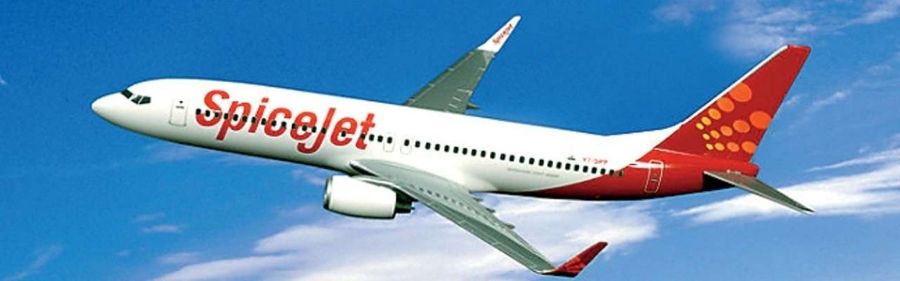
Airlines refund and cancellation policies: Indigo has introduced a “Plan B” to provide relief to its customers. According to Indigo, “With Plan B, you can change the time and/or date of your flight or cancel your booking and quickly process refunds at no additional costs.” SpiceJet through its website informed all the passengers about their air travel policies amidst coronavirus scare. For customers having a flight from 25th March, 2020 till 14th March, 2020 their bookings will be automatically cancelled with zero cancellation fee and a credit shell will be created for the the same. The credit shell can be used to make another booking for the same passenger(s) for travel on or before 28th February, 2021 on their website www.spicejet.com. GoAir suspended its international travel operations and opened the offer for its passengers to reschedule their flight without an extra fee. The offer applies to all those who planned a travel between March 8 and April 30 and want to reschedule 14 days prior to their flight departure. Air India has stopped booking till the end of April.This can be an indicator to the fact that the PM and his Council of Ministers plan to extend the national lockdown. However, private airlines will continue providing air services, starting from April 15. Indian Railways decided to cancel all train services in the wake of COVID-19. To avoid crowding of stations, Indian railways relaxed its ticket refund policy. Passengers cancelling their ticket scheduled between March 21 to April 15 can file for a refund up to 30 days from the date of journey. If a ticket scheduled between March 21 to April 15 is cancelled by Indian Railways, passengers can claim for a refund across counters up to 45 days from the date of journey. In addition to this, Indian Railways made an effort to start Special parcel trains to ensure uninterrupted flow of essential items like food and medicines. It would help e-commerce companies to transport its items as well. Indian railways has also converted its coaches into isolation wards for COVID-19 patients. The first sample ward is ready and many more such isolation wards would be added soon. This will reduce the pressure on hospitals to accommodate COVID patients if the number of people infected explodes. Hilton Hotels made some changes in their existing modification and cancellation policies to navigate their guests through this situation. They are providing maximum flexibility due to travel ban. All individual reservations – even those described as “non-cancellable or non-refundable”- that are scheduled for arrival on or before June 30, 2020 can be changed or cancelled at no charge, up to 24 hours before your scheduled arrival. Marriott Hotels through their official website explained how well being of their guests is of paramount importance. For all Marriott hotels, they are applying the following policies: For guests with existing reservations for any future arrival date, including reservations with pre-paid rates that are typically more restrictive, they will allow full changes or cancellation without a charge up to 24 hours prior to arrival, as long as the change or cancellation is made by April 30, 2020. Please note that any changes to existing reservations will be subject to availability and any rate differences. For guests making new reservations for any future arrival date, including reservations with pre-paid rates, between today and April 30, 2020, they will allow the reservation to be changed or cancelled at no charge up to 24 hours before your scheduled arrival date. Please note that changes to the reservation will be subject to availability and any rate differences.

Read more

The Costa Rican Tourism Institute Decrees a Moratorium for Companies With Regards To Payment of Taxes

A tax moratorium related to taxes of $ 15 and 5% for touristic companies that submit non-payment requests to the Costa Rican Tourism Institute (ICT) due to liquidity problems, has been decreed. Also, administrative charges and judicial receivables are postponed for three months for March, April, May, and June. They will have a term to make the payment of the due until November 30, 2020, term in which, they will not have to pay tax interests, nor will administrative or judicial collection processes be carried out. The decision is made in the context of the unprecedented health and economic crisis resulting from COVID-19 . This resolution was finalized this Tuesday with the agreement by the Board of Directors SJD-092-2020. The ICT charges a 5% tax for the sale of each air ticket that originates in Costa Rica for international travel. The other 5% tax applies to the purchase of tickets whose destination is our country. Also, the charge of $ 15 for each tourist who enters by air and who provides the budget content to the ICT. 'Aware of the zero-income season that will last for at least three months in the tourism sector, the Board of Directors of the Institution approved these measures to help alleviate the overwhelming blow of this crisis to the Costa Rican tourism sector and the country,' said María Amalia Revelo, Minister of Tourism and Executive President of the ICT. She added that 'the seven members of the Board of Directors are clear about the situation facing the tourism sector and we know that companies will have problems with lack of liquidity and therefore a decrease in their ability to pay and meet their expenditures.' The minister also pointed out that the Board of Directors took these 'measures to support those companies that for years have fulfilled their tax obligations with the ICT, allowing with their contributions, for the Institution to grow in its tourism development programs in our country'. It is a requirement to grant the moratorium that companies be up to date with their payments to the Costa Rican Social Security Fund and the Ministry of Finance as of February 29, 2020. Tax returns must be filed for the periods mentioned. Companies that do not qualify according to the above, have the possibility of requesting payment arrangements with the ICT. Other measures. For the companies that maintain other types of payment arrangements with the Institution, it was agreed to postpone these payments of the four installments corresponding to March, April, May, and June, without these accruing late interest, nor any administrative and judicial collection management. These four installments will be canceled in order every month, starting from the final date established in the payment arrangement formalized with the Institution. As part of the agreement, the Board of Directors may extend the postponements and the moratoriums approved, as deemed appropriate, taking into account the national economic reality as a consequence of the effects of the COVID-19 pandemic and justifying it in a reasoned manner.

Read more

Hotelier India reports what government across the world are doing to kickstart their COVID-19 ravaged economies

COVID-19 has brutally impacted over 160 countries, claiming 55,781 lives as on April 3, forcing people into extended lockdowns and putting a halt to the world economy. Among the industry’s worst hit are travel, hospitality and airlines. Uncertainty about the speed of the spread has sent financial markets into a tailspin, weighed on business across industries and sectors, and has likely plunged the global economy into recession. Many countries have begun offering economic stimulus packages to shore up their failing economies and help businesses survive. Individually, several hotels and travel companies have also begun to draw up plans to deal with the crisis or simply work with the community until things get better. The economic stimulus packages: Every industry is dependent on how a country’s economy, in particular, and the world economy in general, perform. This is particularly true for hotels and the hospitality industry. So, for the hospitality and travel industry to revive, the economy needs to revive. For which, countries need to offer economic stimulus as soon as things get normal. China: The country, which was the epicentre of the coronavirus breakout, is looking to strengthened its engagement with European nations hit by COVID-19. It has thrown open its cities to business. Bloomberg reported that China will increase its fiscal deficit as a share of gross domestic product, issue special sovereign debt and allow local governments to sell more infrastructure bonds as part of a package to stabilise the economy. The stimulus package is centred on a deficit of 3.5% of GDP and tax reductions of 2.5 trillion yuan ($352 billion), as well as special local debt boosted to 3.5 trillion yuan from 2.15 trillion yuan in 2019 China often falls back on “special” debt during a crisis; these financial bonds are accounted for outside the regular budgets and are a way to target the proceeds at specific sector stimulus, like infrastructure investment. According to Bloomberg, “By selling special sovereign bonds top policymakers are opting to expand the balance sheet of the central government since it is in a relatively better fiscal situation than local authorities.” Unites States: The hotel industry is projected to report a 50.6% decline in RevPAR in 2020 due to COVID-19 crisis, states a special forecast by Tourism Economics. The U.S. travel and tourism industry could lose at least $24 billion in foreign spending this year. That would be equivalent to about seven times more than the industry lost during the SARS outbreak in 2003, according to the data. The figures also imply 8.2 million lost visitors in one year, which would be even more than the 7.7 million international travellers lost in 2001 and 2002, after the 9/11 terrorist attacks, according to CNBC. President Donald Trump has already signed an $8.3 billion aid package aimed at helping states pay for the cost of fighting the outbreak and vaccine development. Lawmakers are also discussing putting together at least one more package aimed at stemming the financial loss, as well as the human toll. The White House has floated ideas such as possible payroll tax cut and small business loans. President Trump is looking at offering airline and cruise ship industries a big relief. Many have asked the government to offer stronger packages for the travel and hospitality industries, which have a large base in the US. Former Nasdaq CEO Bob Greifeld has warned that a significant blow to the tourism industry could launch a recession. “We never had this situation where you had tourism being such a large part of the global economy. Tourism has increased greater than GDP growth for the past 10 years,” Greifeld told CNBC. In response, the US announced a Covid-19 Relief Package known as the CARES for the travel industry, which would protect livelihoods and offer travel incentives once the crisis settles down. UK: Britain's Chancellor of Exchequer Rishi Sunak has said he’d do “whatever it takes” to prop up businesses and jobs as the country grapples with the coronavirus pandemic. His emergency package includes £9 billion ($11 billion) of support for the self-employed, bringing the total aid he’s announced since March 11 to £330 billion, including easier access loan facilities, liquidity assistance for businesses through the ongoing crisis period and a 12-month business rates holiday for the retail and hospitality sector. The stimulus stands at about 3% of GDP and he has promised that if the pandemic drags out, there’s the prospect of more to come. The UK is facing a fiscal crisis and will now have to deal with an economy that is expected to shrink at least 5% this year. Meanwhile, the UK travel sector is calling on the government to make immediate changes to package travel regulations to prevent innumerable company collapses and the loss of thousands of jobs. Association of British Travel Agents (Abta) is asking for an Emergency Government Consumer Hardship Fund to fulfil refund payments and is also requesting that credits should be allowed as an alternative to cash refunds. Germany: The German government has signed a €770 billion economic stimulus package, which includes loans, guarantees and government stakes in companies, as well as credit to keep businesses afloat. The government is intending to take on new debt to fund these emergency measures. Finance Minister Olaf Scholz needs the extra money to finance additional spending of 122.5 billion euros and close an expected gap in tax revenues of 33.5 billion euros. The extra budget includes a 50 billion euro programme to help small businesses and the self-employed threatened with bankruptcy, with direct payments of up to 15,000 euros ($16,225). According to a survey conducted in Germany in March 2020, 45 per cent of hotel and hospitality businesses have declared revenue losses between 10,000 to 50,000 euros. The German government said that it is planning to shield companies, including hospitality and travel companies, from going under because of the coronavirus pandemic, by suspending legal obligations for firms facing acute liquidity problems to file for bankruptcy. The suspension until the end of September is aimed at giving companies breathing space to obtain credit already promised by the government. Tourism and hotel group TUI has already stated that they will be applying for state aid to keep it afloat, as it suspended the "majority" of its operations. France: The country has offered €45 billion as a stimulus package for small businesses and other hard-hit sectors of the economy. France expects over 4 million businesses could be impacted by confinement measures. The country has decided on one trillion in guarantees from member states for bank loans to ensure that there is liquidity and cash flow. The stimulus project will take the form of reduced social security contributions and unemployed benefits linked to forced part-time employment. The government is expecting a 1 per cent drop in GDP. Italy: Italy, which is among the worst affected countries, has announced a €28 billion plan to cushion the devastated economy, which is centred on travel, hospitality and fashion. Among the measures announced is help for workers facing temporary layoffs, a guarantee fund for loans to small-and-medium-sized companies, compensation for firms whose turnover has plunged more than 25%, and some form of the moratorium for business and personal mortgage repayments. The good news is JPMorgan analysts see a modest pickup in the second quarter and a full rebound in the third. Singapore: Singapore is one of the few countries to have allocated a big sum of SGD440 Million under Resilience Budget to lift its crisis-ridden tourism sector as part of a larger SGD48 billion resilience budget to help mitigate the coronavirus pandemic’s impact on businesses and individuals. SGD350 million will be allocated under the Enhanced Aviation Support Package, which will provide rebates for airline parking and landing charges, as well as rental relief for cargo agents, ground handlers and airlines. The remaining SGD90 million will help the tourism sector to rebound. Hotels, serviced residences, restaurants, shops and attractions will receive full property tax waiver for the rest of 2020. Besides, the government will co-fund 75% of wages for firms in the aviation and tourism sector, 50% of wages for firms in the F&B sector, and other industries will receive 25% co-funding. Hong Kong: Meanwhile, the Hong Kong Tourism Board has pledged HKD400 Million to support tourism and MICE. The fund is expected to aid a wide range of players in the industry with a plan to focus on three major areas—boosting domestic consumer confidence, collaborating with trade partners to increase promotions in source markets, and attracting MICE businesses. HKTB will offer subsidies to the retail and catering sectors for joint consumer promotion, waive the renewal fee for Quality Tourism Services (QTS) Scheme accredited merchants, and offer a 50% reduction in the application fee for new joiners. The participation fee of over 40 trade activities organised by HKTB will be waived, and travel-related activities will also be subsidised. Event organisers will be subsidised to bid for large-scale conventions and exhibitions, the threshold for applying to finance will be lowered to help small and medium-sized meetings and incentives, and the tourism board will team up with the hotel sector on a new initiative, MeetON@HongKong, to provide groups with free meeting or dining packages. The proposed marketing budget in the 2020/2021 financial year, along with the additional funding, is worth about HKD1, 120 million (USD144 million). Backing these efforts by various countries are the ones made by the World Bank, which is moving quickly to provide fast, flexible responses to lessen the tragic impact on developing countries. The World Bank Group’s package of immediate support will fast track US$14 billion to help developing countries to strengthen health systems, disease surveillance and public health interventions, and work with the private sector to reduce the impact on economies. The travel and hospitality industry’s response: So drastic has been the effect of COVID-19 on the hospitality and travel industry that Marriott International Inc, one of the world’s biggest hotel operators, has started to furlough what it expects will be tens of thousands of employees, amid hotel closings globally due to the virus outbreak, the Wall Street Journal reported. The staff reductions will include everyone from general managers to housekeepers, as layoffs or furloughs at the corporate level are still under discussion, according to the report. While on furlough, Marriott will not pay salaries to its employees at some of its managed properties, which it has started shutting down. Hilton Worldwide Holdings Inc has been forced to abandon their full-year financial outlooks due to a rise in cancellations of room bookings. AccorHotels expects the coronavirus outbreak to hit revenues by €5 million. Many independent and small-to-mid-sized chains and resorts in remote or seasonal destinations rely on online travel agents (OTAs) such as Booking.com and Expedia, which control 70% of reservations in many markets. At the best of times, a challenge for small hotels, which fork out anything between 15 and 25% in commission to intermediaries, is cash flow. So, as the Coronavirus crisis has intensified and the OTAs have changed their terms of the agreement in response, it has become increasingly tough. Booking.com, for example, has issued this guidance: We expect you [the hotel] to refund any prepayment and waive any cancellation costs (fees, expenses and/or other amounts) in situations where the guests/travellers requested cancellations as a result of the Forced Circumstances (FC). World Travel & Tourism Council is now calling for a series of measures to enable the swift recovery of the sector once COVID-19 is under control. They have offered support to all governments implementing strong policies for a prompt recovery and reinforce the importance of strong public-private partnerships and greater international co-operation to respond and overcome the challenges faced. The global travel and tourism industry is asking for relief packages, which encompass tax credits for employee retention, which would give employers an income tax credit for paying workers even while their business is inoperable. Besides, they are pushing for deferment of quarterly tax payments and the ability to carry back net-operating-losses. Across the world, big hospitality groups such as Hilton, Four Seasons, Hyatt, InterContinental Hotels, Marriott International and Radisson Hotels have also begun waiving off cancellation fees hotels. Fighting back and giving to the community: Despite plummeting occupancy and revenues, several hoteliers have stepped out during the COVID-19 pandemic to help others. • The American Hotel & Lodging Association has announced the launch of ‘Hotels for Hope’, an initiative aimed at connecting hotel properties with the health workers and first responders in need of temporary housing. It has identified 6,500 properties near healthcare facilities that were ready to help. • Crisis-ridden hotels and restaurant have begun contributing to the community instead of sitting on their haunches and mourning the loss. Chef José Andrés, a celebrated LA chef a celebrated LA chef set up shop in California earlier this month to feed quarantined cruise ship guests. Andrés announced he will transform eight of his New York and Washington restaurants and some closed restaurants into community kitchens to help feed people during the pandemic. • Oyo Hotels & Homes in the US has announced it would offer free accommodations to doctors, nurses and other medical first responders who are helping fight COVID-19 starting Tuesday. The offer applies to all Oyo hotels in the U.S. • Hotel Engine, a hotel booking-management platform for business travel, has said it will partner with several hotel chains to provide discounted rates at 22,500 properties for health-care professionals and support personnel assisting in the fight against COVID-19. Participating companies include Wyndham Hotels & Resorts, Best Western Hotels & Resorts, RLH Corp., Red Roof, Motel 6, Studio 6 and Extended Stay America. • Ayre Gran Hotel Colón in Germany is one among dozens of hotels across Europe that are now being repurposed to fight the pandemic. Hoteliers in the Madrid region alone have offered authorities access to some 40 hotels to add 9,000 beds for future patients. • In the UK, major chains such as Best Western, Travelodge and Hilton are in talks with the National Health Service to gauge the viability of turning some of their properties into makeshift coronavirus wards. • Europe's largest hospitality company, Accor, opened up 40 of its hotels in France for nursing staff, vulnerable populations and anyone fighting the spread of coronavirus. • The US Army Corps of Engineers is working to create more than 10,000 hospital beds in hard-hit New York City by converting hotel rooms into makeshift care facilities. It's considering similar initiatives in California and Washington. • Many small hotels such as Interlude Hotels and Resorts are now proactively trying to manage the conditions imposed on them by their OTA partners by contacting guests directly and allowing them to use their reservation for a future stay one year from the original arrival date. • Starting April 1, Hyatt has rolled out a partnership with the Headspace meditation app. Guests will be able to get content on relaxation and sleep-guided meditation through the Hyatt loyalty program mobile app. The chain will also offer content from Headspace via TVs at its hotels.

Read more

EU Pushed to Guarantee Refunds for Travelers on Canceled Flights

European Union governments were pushed by a consumer group to guarantee refunds for travelers whose flights were canceled in the wake of the coronavirus pandemic. The Netherlands and other countries are allowing airlines to postpone refund claims or issue vouchers instead, European consumer organization BEUC said in a letter to EU officials. A fund backed by the EU or national governments to cover reimbursement claims “would be the most practical, most sustainable and most beneficial for both, industry and consumers,” BEUC said. Typically, passengers are entitled to refunds if flights are canceled. Thousands of flights have been scratched in Europe since governments imposed travel bans to halt the spread of the virus. While many airlines are paying customers back, some aren’t. Airlines will burn through as much as $61 billion worldwide in the second quarter, the International Air Transport Association says, with revenue set to plummet by 68%. EU Competition Commissioner Margrethe Vestager earlier today approved a fund set up by Denmark that grants a 200 million euro ($216 million) government loan to reimburse travelers. BEUC says travel issues account for up to two-thirds of all consumer complaints it has received in recent weeks. Passengers’ trust in the travel industry is eroding as rights are ignored. “If consumers are to start booking travel again in the near future to help the industry recover, they need to know” that “they are protected and will get their money back in case of cancellation,” it said in the letter. Consumer groups will urge people to accept vouchers as long as the vouchers are valid for two years and guaranteed by the government if the airline goes out of business. EU Consumer Affairs Commissioner Didier Reynders said regulators are “trying to advise consumers to accept a voucher rather than compensation” because tour operators, travel agents and airlines risk collapse, he told Belgian news channel LN24 on Friday. He said the EU favored a guarantee for vouchers, without giving any details.

Read more

Puducherry an early warrior in COVID-19 battle

In India’s ongoing battle against the novel coronavirus disease (COVID-19) pandemic, Puducherry seems to have stood out. The union territory (UT) with a population of 1.5 million and a thriving foreign and domestic tourism industry was significantly untouched by the virus (SARS-CoV-2) till last week. It was on April 1, 2020 that two men, who returned after attending Tablighi Jamaat congregation in New Delhi, tested positive and were admitted in state government hospital. “The government’s cluster containment plan to contain the spread of the infection is active,” said a senior officer from Pondicherry district administration. He added that family members of the affected are under quarantine. The UT’s first COVID-19 patient, a 68-year-old woman in Mahe district, has tested negative now, according to S Mohan Kumar, director of health services and mission director of national rural health mission, Puducherry. The government was quick to swing into action to curtail infection spread — even before the World Health Organization declared it a pandemic. It tightened its four-border checkposts — East Coast Road, Tindivanam Road, Cuddalore Road and Morattandi — well before the country started border checks. It was in the first week of March itself when people at checkposts were asked to provide their travel and contact history. Those having travel history to other countries were compulsorily put in 14-day home quarantine. More than 2,000 people have been quarantined and over 300 kept in isolation wards in hospitals so far, said Kumar. NRIs have also been asked to self-isolate for two weeks. “We are making multiple visits to Auroville. Not a single case has been reported from there so far. It’s a township having a mixed population of domestic and overseas residents,” said the senior district administration officer. As 4,000 foreign tourists visited Pondicherry district between February and March first week, the government had an uphill task at hand. In the first week of March, hotels were asked to implement a guest check-in declaration form. The form helped in identifying guests who had travelled to any high-risk country recently or displayed symptoms. Swift action Setting up of inter-district cell comprising health, revenue and other government officials, was another great intiative. The machinery could work closely with other districts such as Cuddalore and Villupuram to ensure safety measures are implemented. At a time when there is a mass exodus of migrant workers from cities, the Puducherry government stalled the migration of more than 4,000 workers. “A company in Pondicherry district wanted to send migrant workers back, but the government intervened. We urged the company that it was their responsibility to take care of workers and provide them food and shelter,” said a senior officer from the district administration. Pondicherry, Karaikal, Mahe and Yanam districts started awareness campaigns on the virus well before time. ASHA and anganwadi workers visited homes to disseminate information on the disease. Besides, announcements were made on mics fitted in autos and pamphlets were distributed. The government also used prime-time television shows and cinema halls (before they were shut across India) to spread awareness. The government started producing face masks and hand sanitisers by the second week of the month. With the help of women self-help groups (SHGs), more than 20,000 bottles of hand sanitisers were made.

Read more